
Colour Is No Longer the First Decision. What Defines the Character of Upholstered Furniture Today?
In April, at Salone del Mobile in Milan, Visionnaire presented the Bachi armchair, a 1960s design by Vittorio Vero, reissued by La Conca. The distinctive arrangement of interlocking seat and backrest modules remained unchanged. What changed were the materials. According to the fair’s editorial team, this alone was enough to bring out the character of the design, somewhere between sculpture and playfulness, even more clearly than in the original.
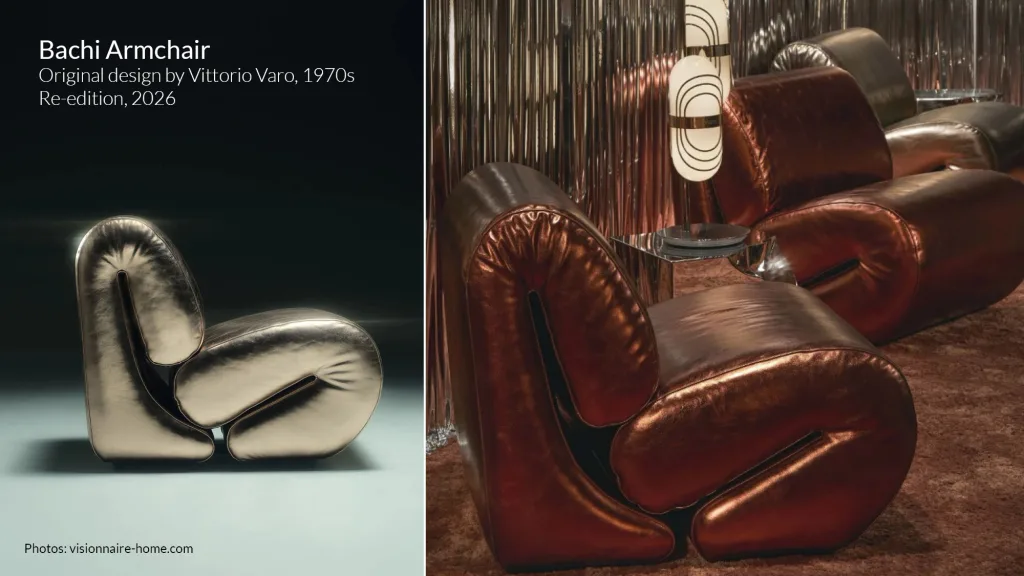
It is hard to imagine a better illustration of the shift that has been taking place in the furniture industry over the past few seasons. For years, discussions about upholstery began with colour. Today, they increasingly begin with the surface: how the fabric catches the light, how it behaves along the curve of a backrest, what can be seen up close and what becomes visible from across the living room.
Why Does the Same Piece of Furniture Look Like Two Different Products When Upholstered in Different Fabrics?
Because we do not perceive shape, material and light separately. The brain processes them simultaneously, and fabric is one of the main visual cues it uses to judge how soft, deep and substantial a piece of furniture appears.
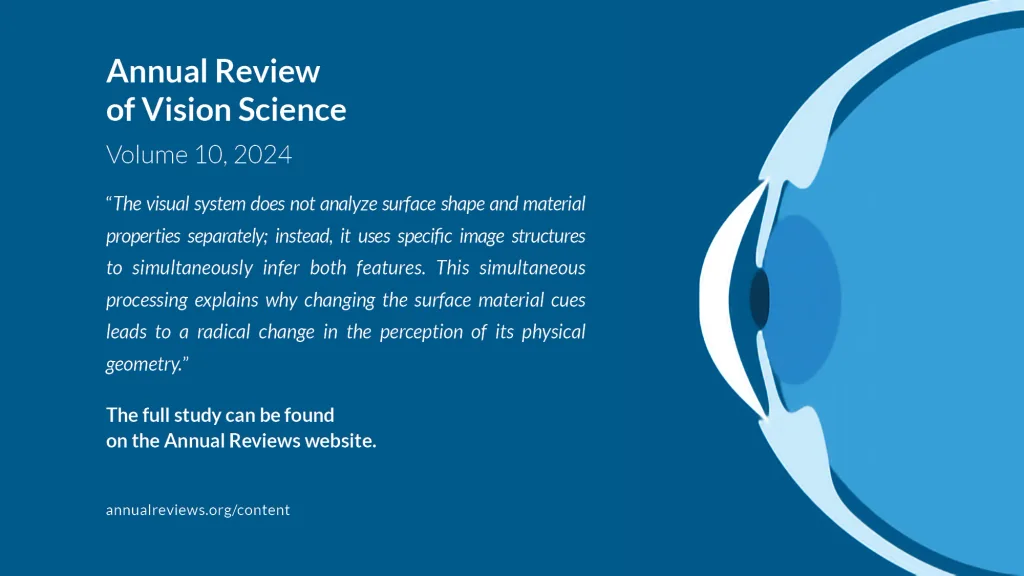
Phillip Marlow and Barton Anderson from the University of Sydney described this phenomenon in a review published in the Annual Review of Vision Science in 2024. From a computational perspective, the problem is virtually impossible to solve, as the same image can result from many different combinations of shape, material and lighting. Yet a single glance is enough for us to determine whether a surface is convex or matte. Our visual system extracts both pieces of information simultaneously, using the same shadows, tonal transitions and reflections.
On the production floor, this translates into a very specific observation. A smooth, uniform fabric on an armchair’s backrest gives the eye relatively little information to work with: the curve is perceived mainly through its outline and a single, gradual transition from light to shadow. A fabric with a pronounced texture breaks this transition into hundreds of tiny highlights and recesses. The same curve begins to appear softer, while the broad surface of the backrest is no longer perceived as a flat block of colour but gains depth.
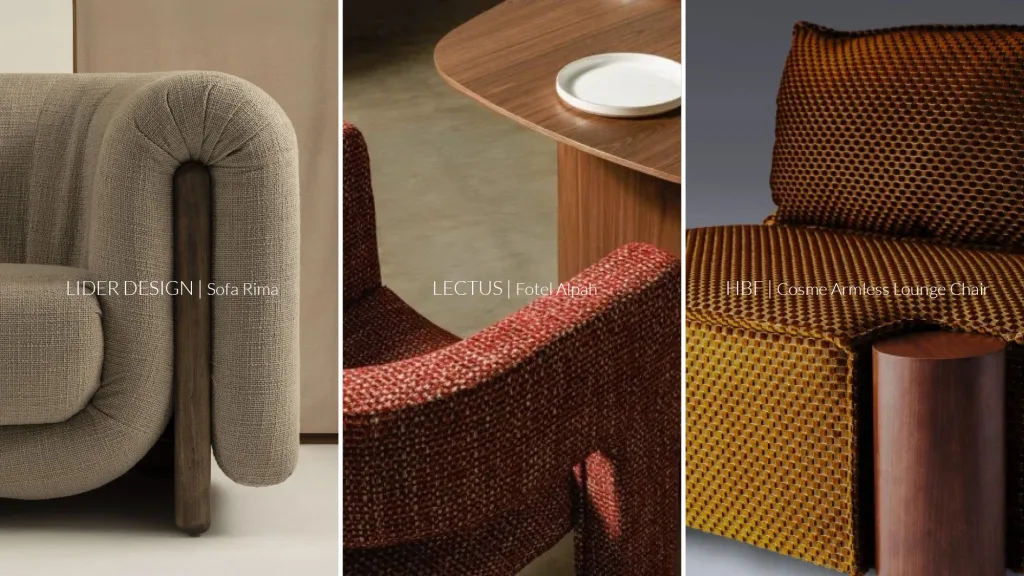
What Do the Major Trade Fairs of 2026 Reveal About Fabric Texture?
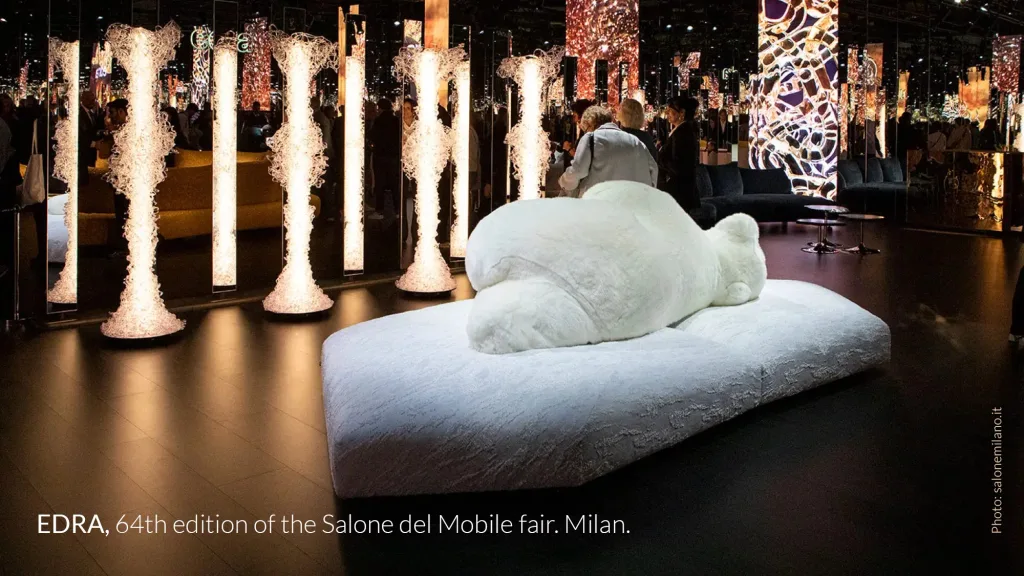
Both events send a surprisingly consistent message: surfaces should be tactile. Heimtextil in Frankfurt and Salone del Mobile in Milan have both shifted the focus away from colour alone towards how materials look up close and how they interact with light.
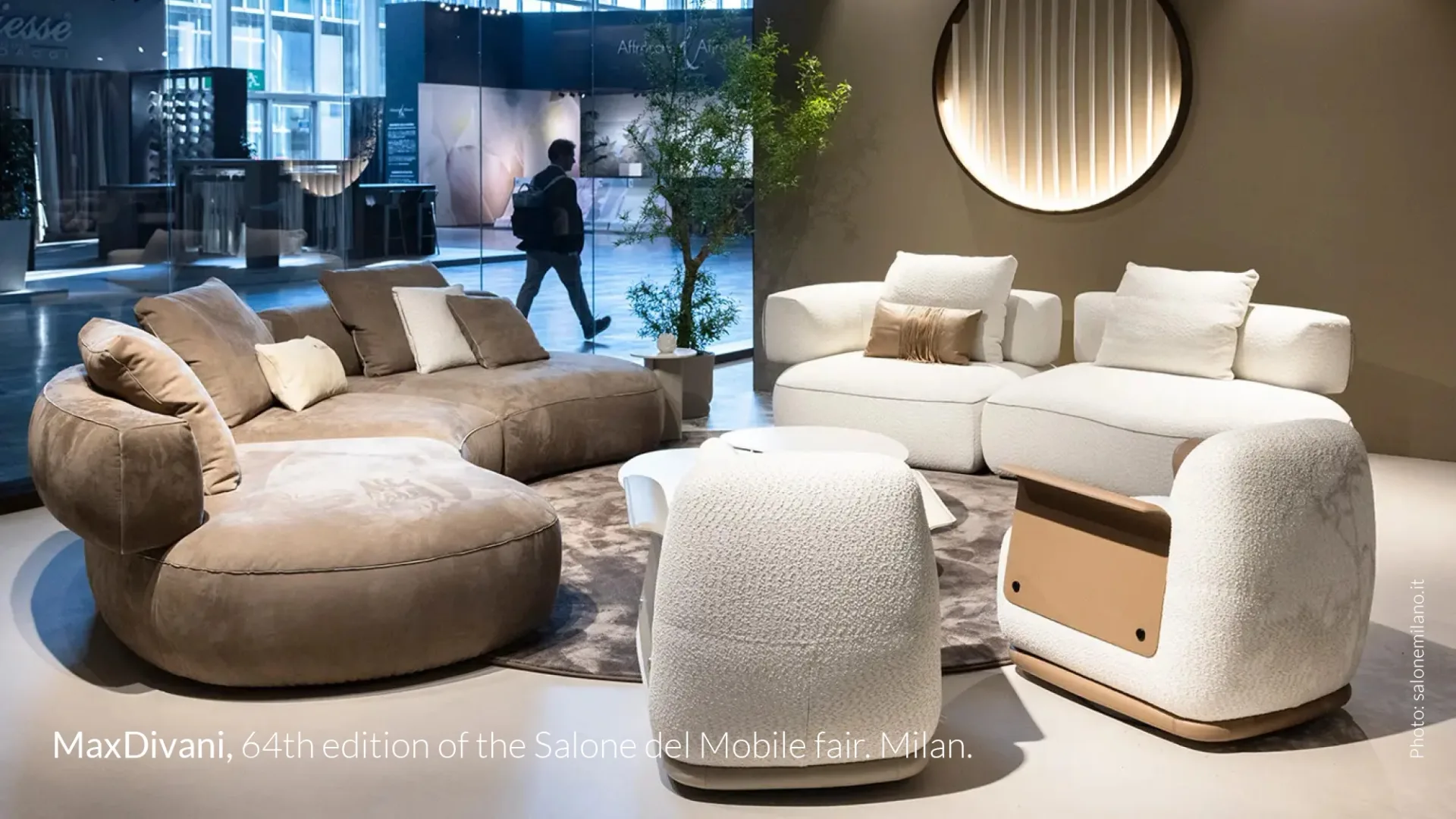
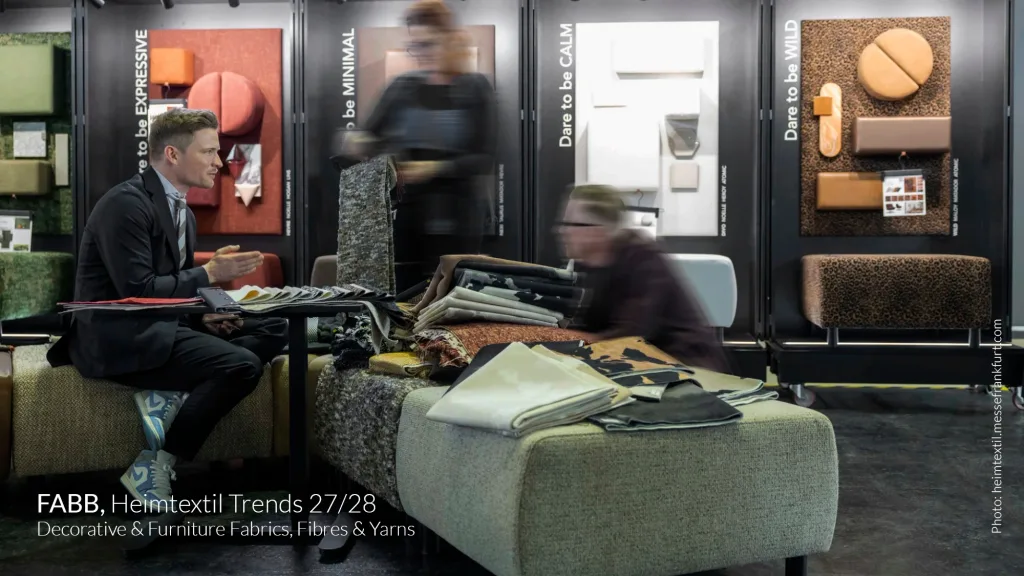
Heimtextil developed its trend forecast for the 2026/27 season in collaboration with Alcova, the Milan-based design platform, under the theme “Craft is a verb”. At its core lies the tension between the precision of AI-assisted design and a growing desire for craftsmanship, intuition and irregularity. One of the six trends, called Crafted Irregularity, focuses on fabrics that reveal how they were made: uneven dyeing, visible seams and asymmetrical finishes. The curators explicitly positioned this direction as a counterbalance to digital perfection. Equally revealing is the forecast’s colour palette: sand, clay, soot, olive and bark, punctuated by a few bold, synthetic accents.
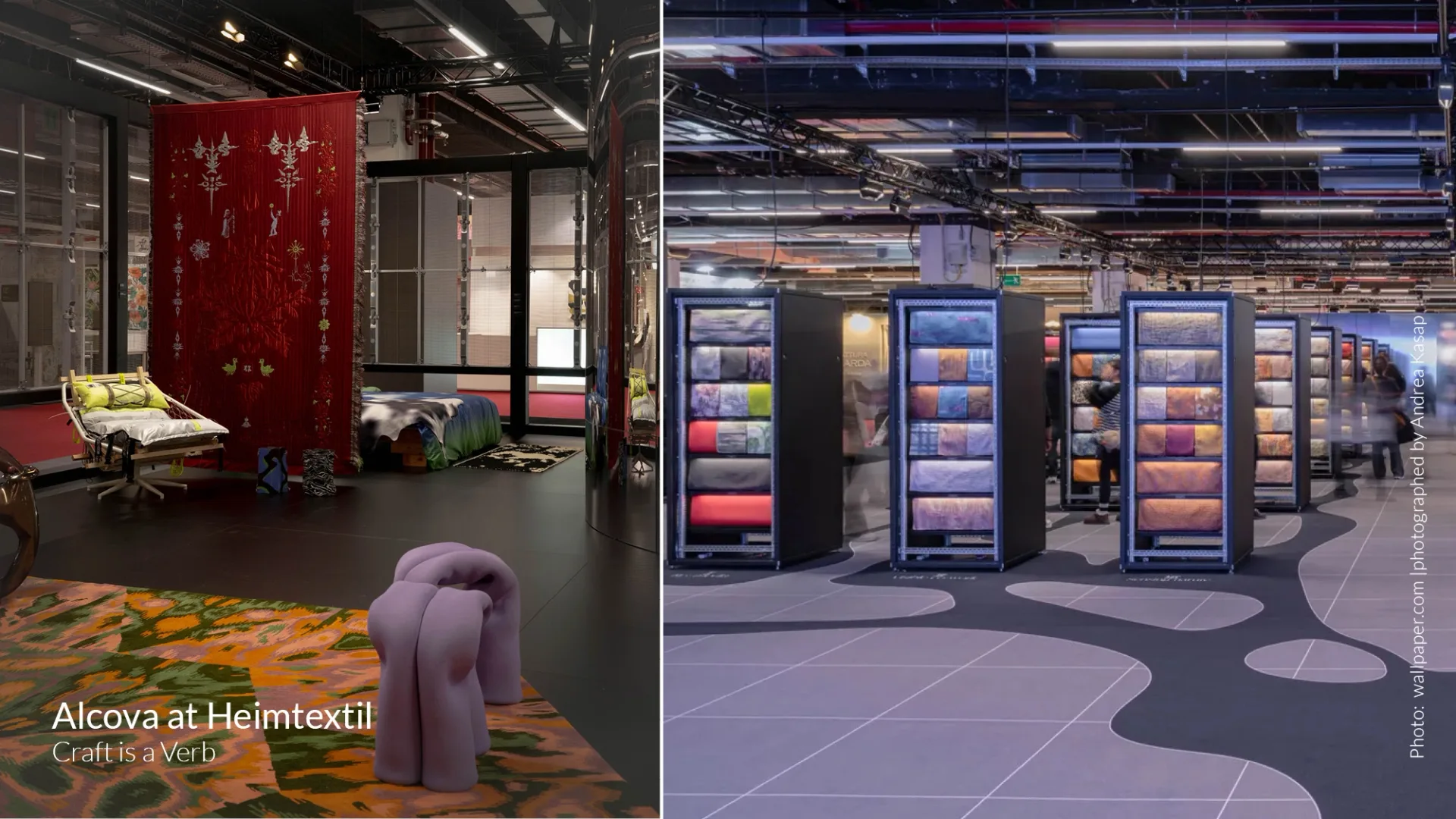
Similar observations emerged from Milan, although expressed in different terms. Reports from the April fair highlighted surfaces that create a sense of depth, colours moving away from cool, stark neutrals towards creamy, warm, almost tactile tones, and palettes built through layering rather than contrast. Houzz identified textures that invite touch as one of the key trends. Wallpaper drew attention to the way light moves across furniture, revealing the textures of wood, fabric and lacquer.
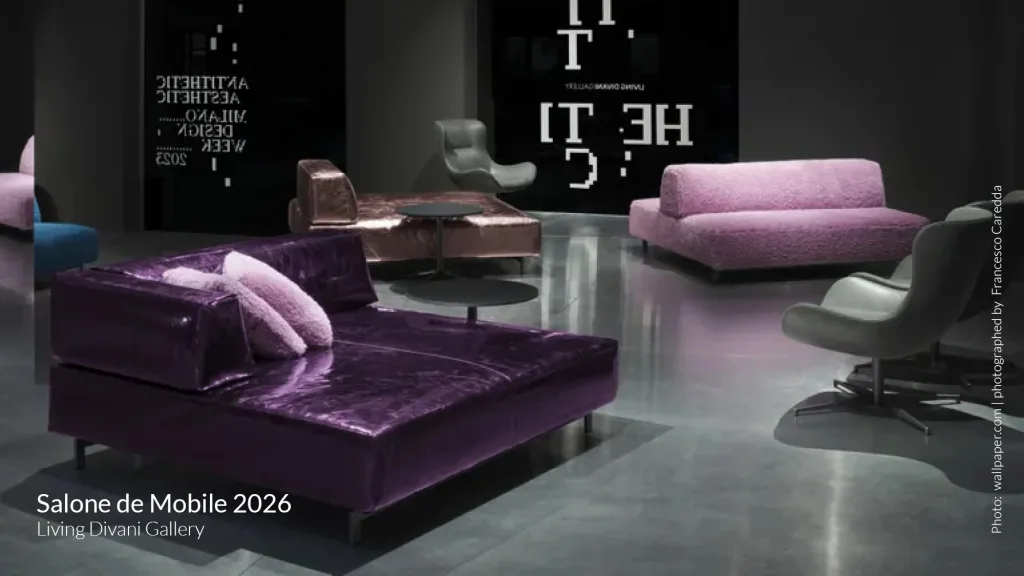
There is also a more practical reason. Today, almost every manufacturer offers curved, modular sofas, and furniture silhouettes are becoming increasingly similar. When designs begin to converge, the difference lies in the material. The question “What colour?” has not disappeared. It is simply no longer the first one asked.
When Should You Choose a Smooth Fabric, a Patterned Fabric or a Pronounced Texture?
It depends on the role the fabric is intended to play. A smooth fabric allows the shape to take centre stage, a pattern establishes a distinct identity at first glance, while texture adds character without visual clutter.
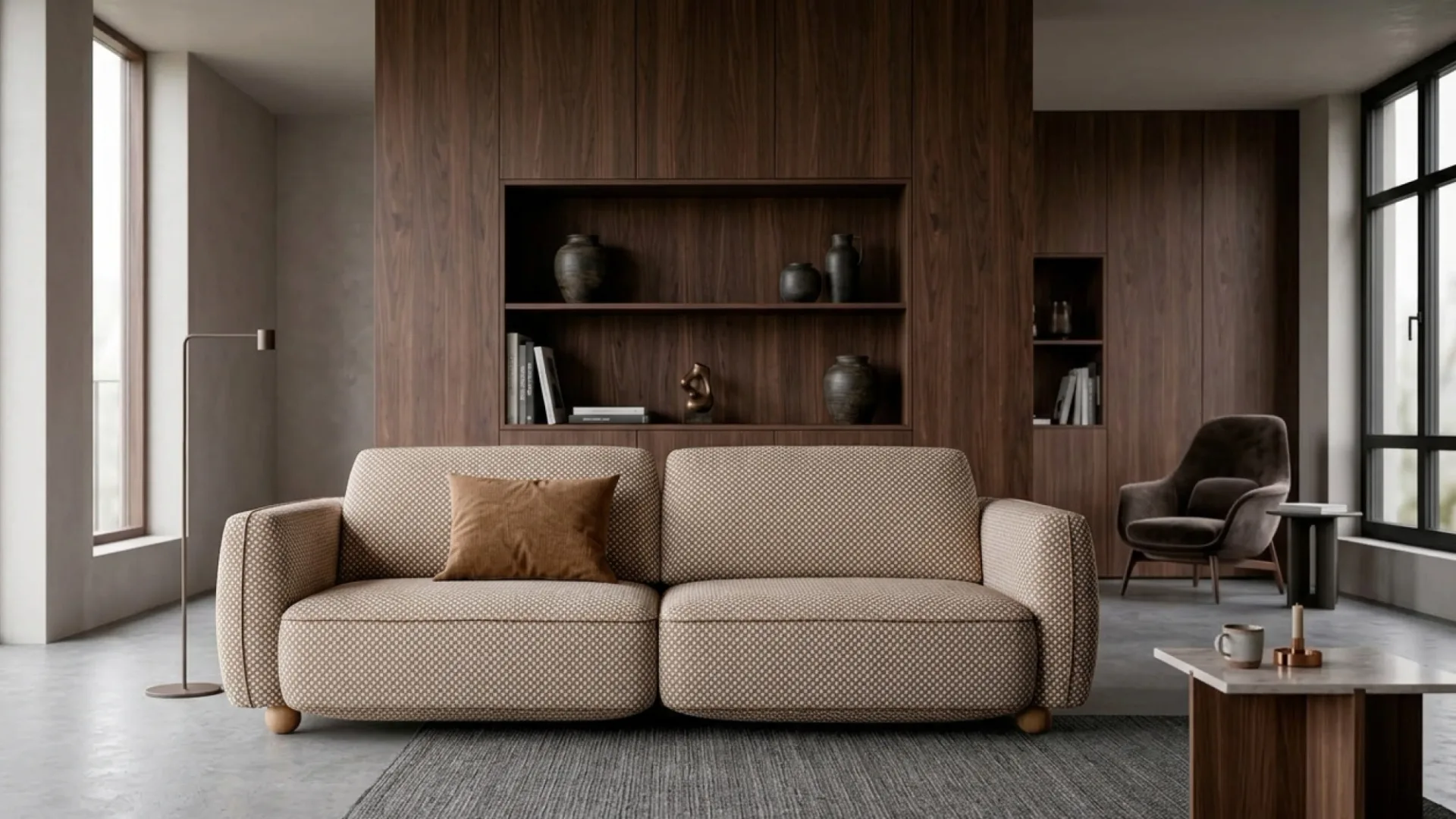
A smooth fabric works best when the furniture’s shape is intended to take centre stage: on precise, architectural forms where every edge and seam should remain clearly defined. It is also the safest foundation for models designed to stay in a collection for years and complement a wide variety of interiors.
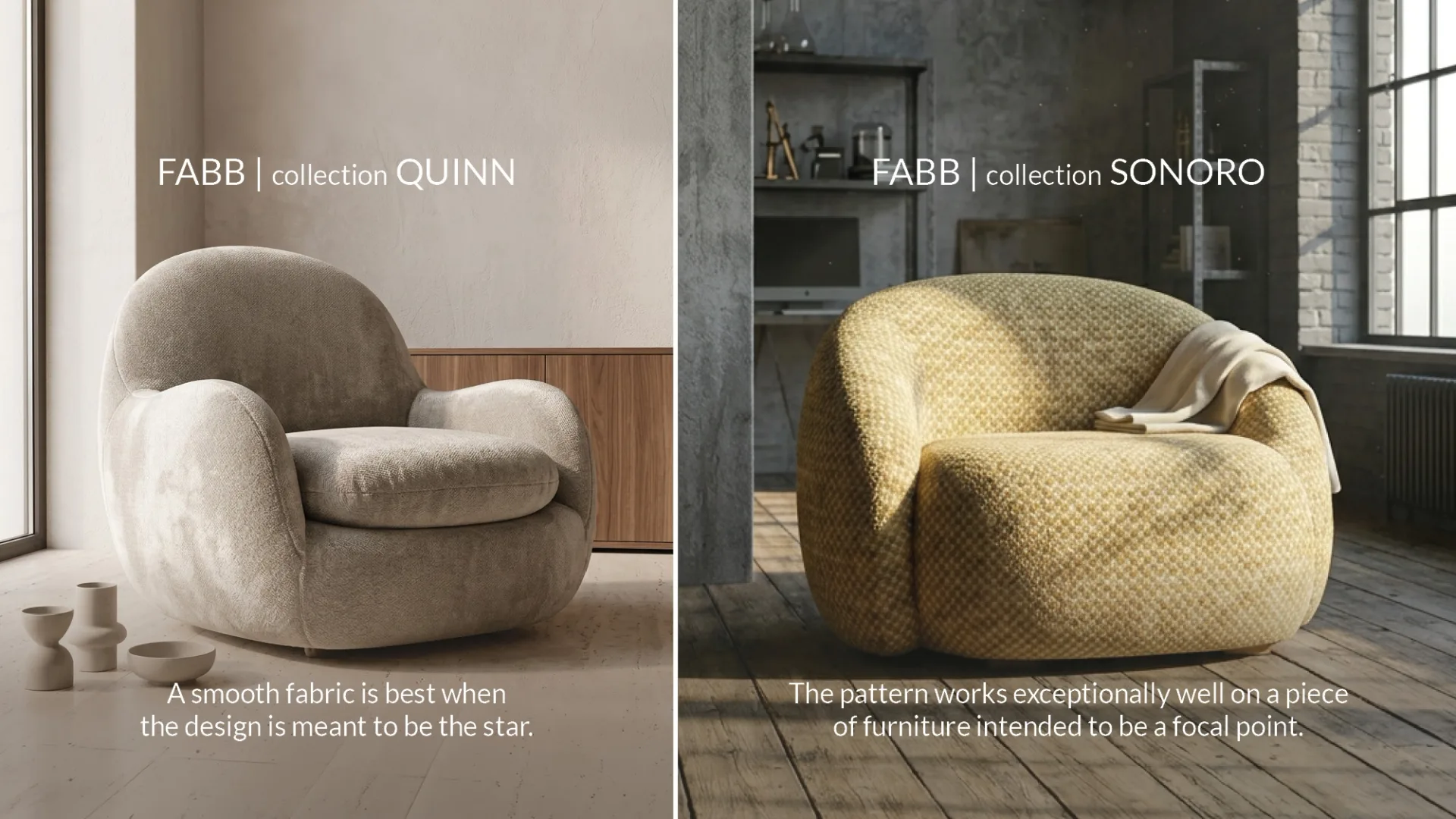
A pattern works in the opposite way, taking centre stage and defining the visual narrative. It is an excellent choice for a statement piece intended to become the focal point of a room, but it requires the rest of the interior to complement it. On a large sofa, it is also easy to cross the line where a pattern becomes visually overwhelming.
Texture sits somewhere in between. It does not impose a dominant pattern, yet furniture upholstered in a textured fabric feels far from ordinary. Designers sometimes refer to this as a quiet statement – a distinctive character that does not need to demand attention.
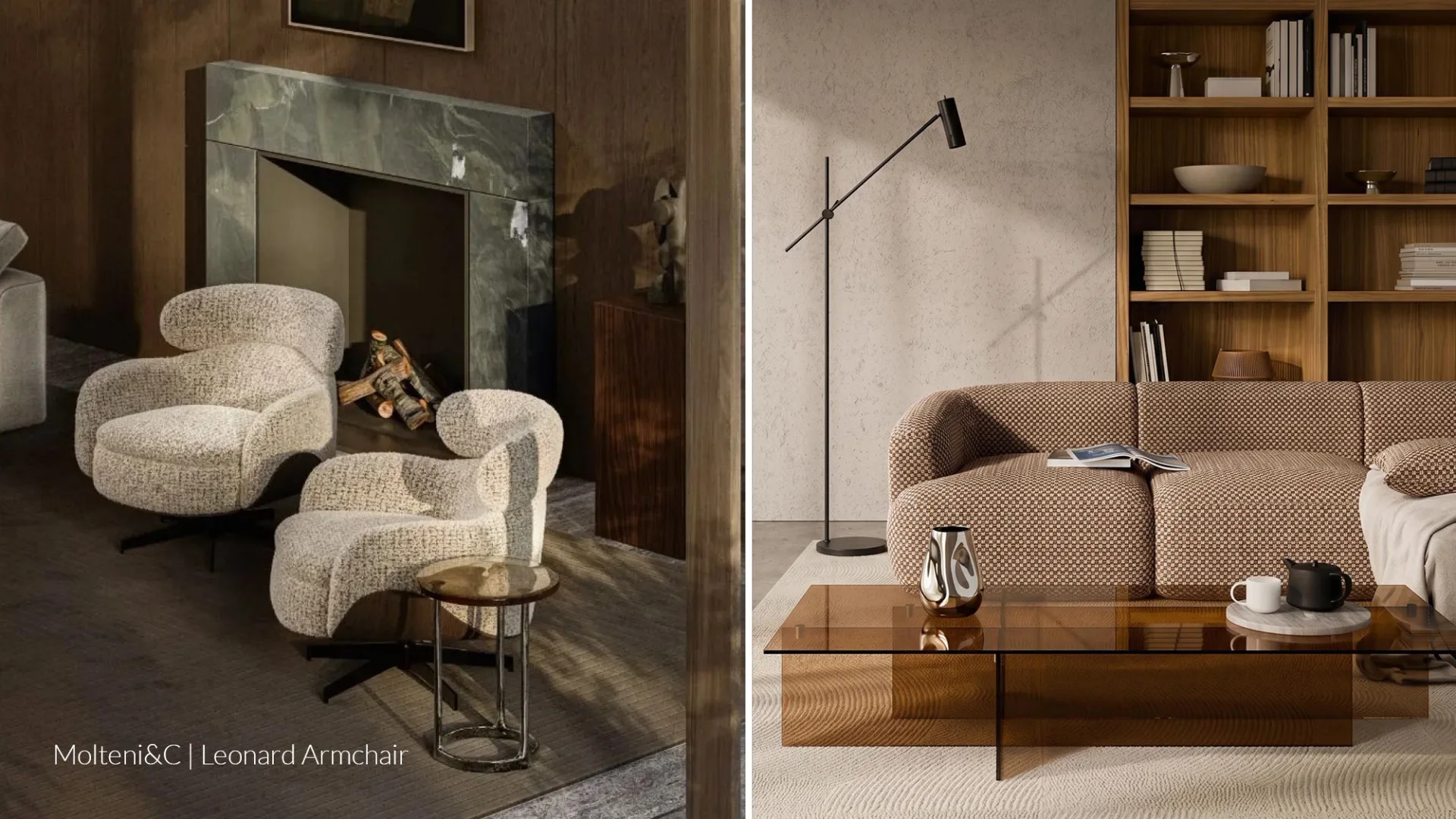
A simple test involving two viewing distances can be useful. Imagine looking at a piece of furniture from three metres away and then from just thirty centimetres. A smooth fabric looks much the same from both distances. From afar, a pattern becomes a visual motif; up close, its individual details emerge. A textured fabric creates a multi-tonal rhythm from a distance, while revealing the interplay of individual yarns up close. If a design needs to work on both levels, texture is usually the right choice.
On Which Types of Furniture Does Textured Upholstery Fabric Make the Greatest Impact?
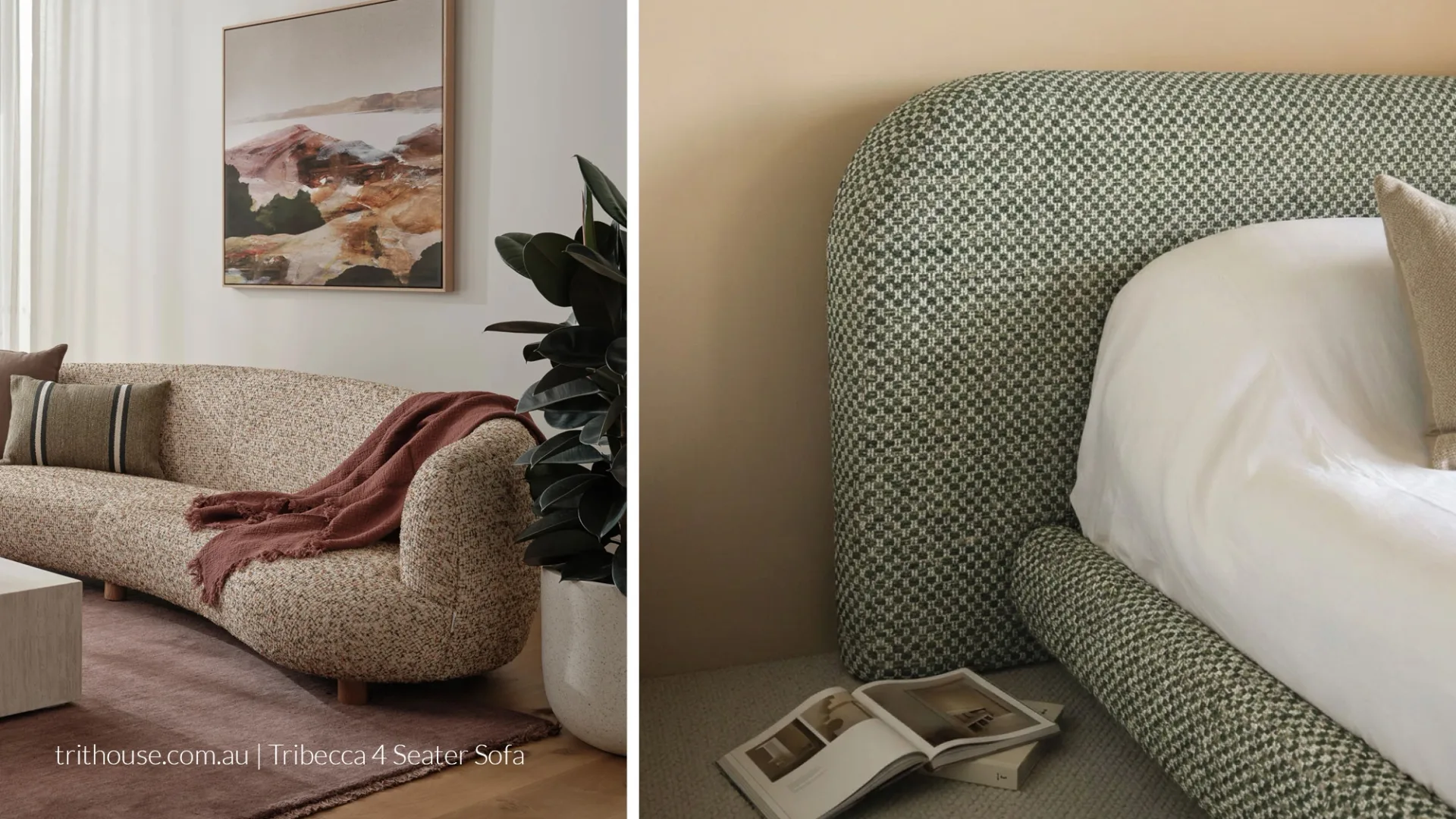
On large, uninterrupted upholstered surfaces and curved forms. Sofas, corner sofas, armchairs with soft silhouettes and wide upholstered headboards provide enough space for the texture to reveal the rhythm of its weave and the depth of its colour.
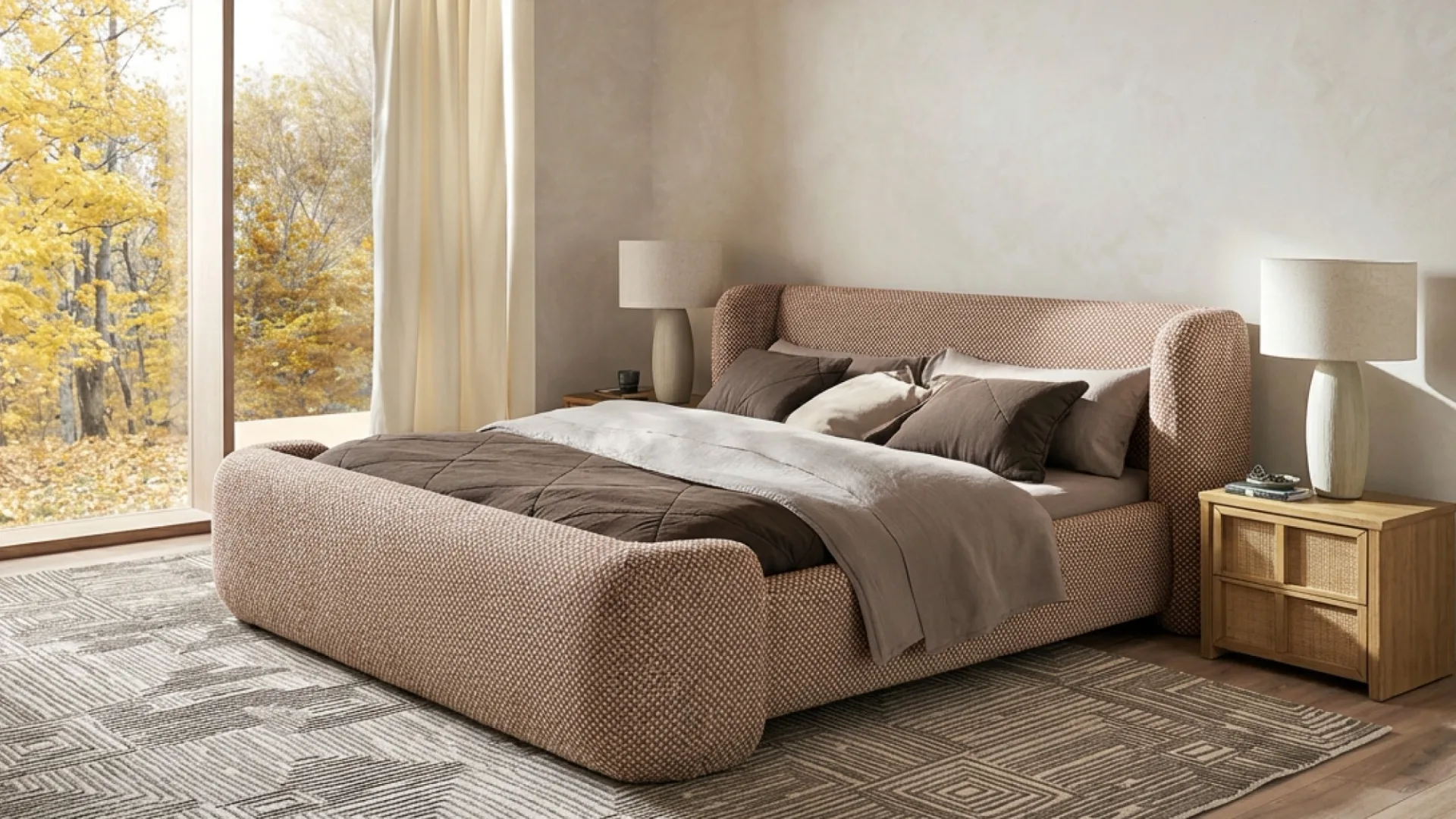
The principle is simple: the more understated the form, the more the material has to say. On a wide sofa backrest, the weave creates a regular rhythm. On the rounded side of an armchair, the texture interacts with light falling from the side. An upholstered headboard, meanwhile, provides a vertical surface that showcases the colour-woven fabric, almost like a textile stretched across a frame. Smaller, densely quilted forms are less suitable, as stitching every few centimetres breaks up the texture and obscures its most distinctive qualities.
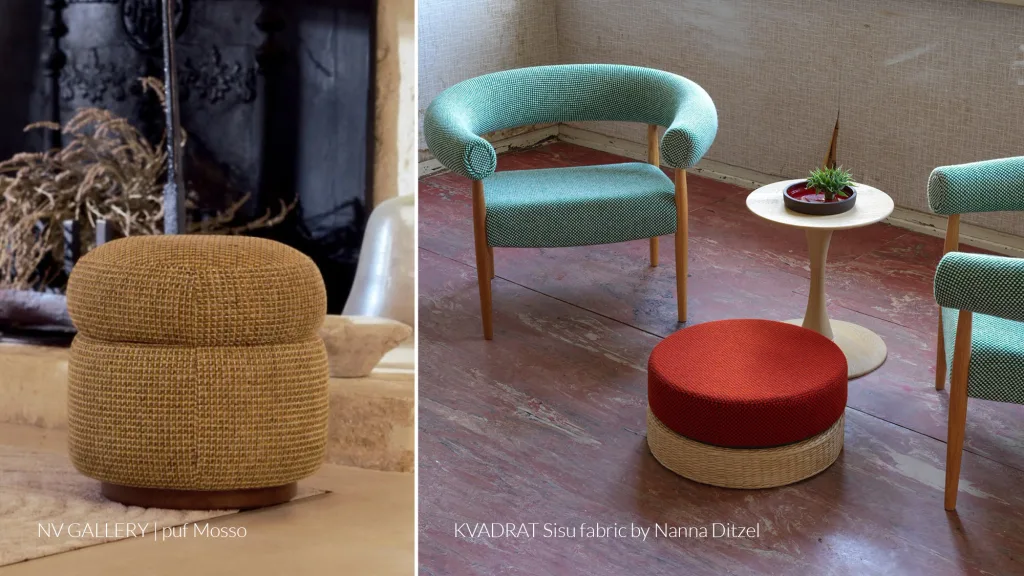
On a smaller scale, however, the role of the fabric changes completely. On a pouffe, a bench at the foot of a bed or an upholstered stool, the same fabric no longer defines the furniture’s form but becomes an accent. This is an effective way to introduce a bolder colour, such as burgundy, plum or caramel, into an interior without allowing it to dominate the entire space.
How Does This Work in Practice? The Example of SONORO
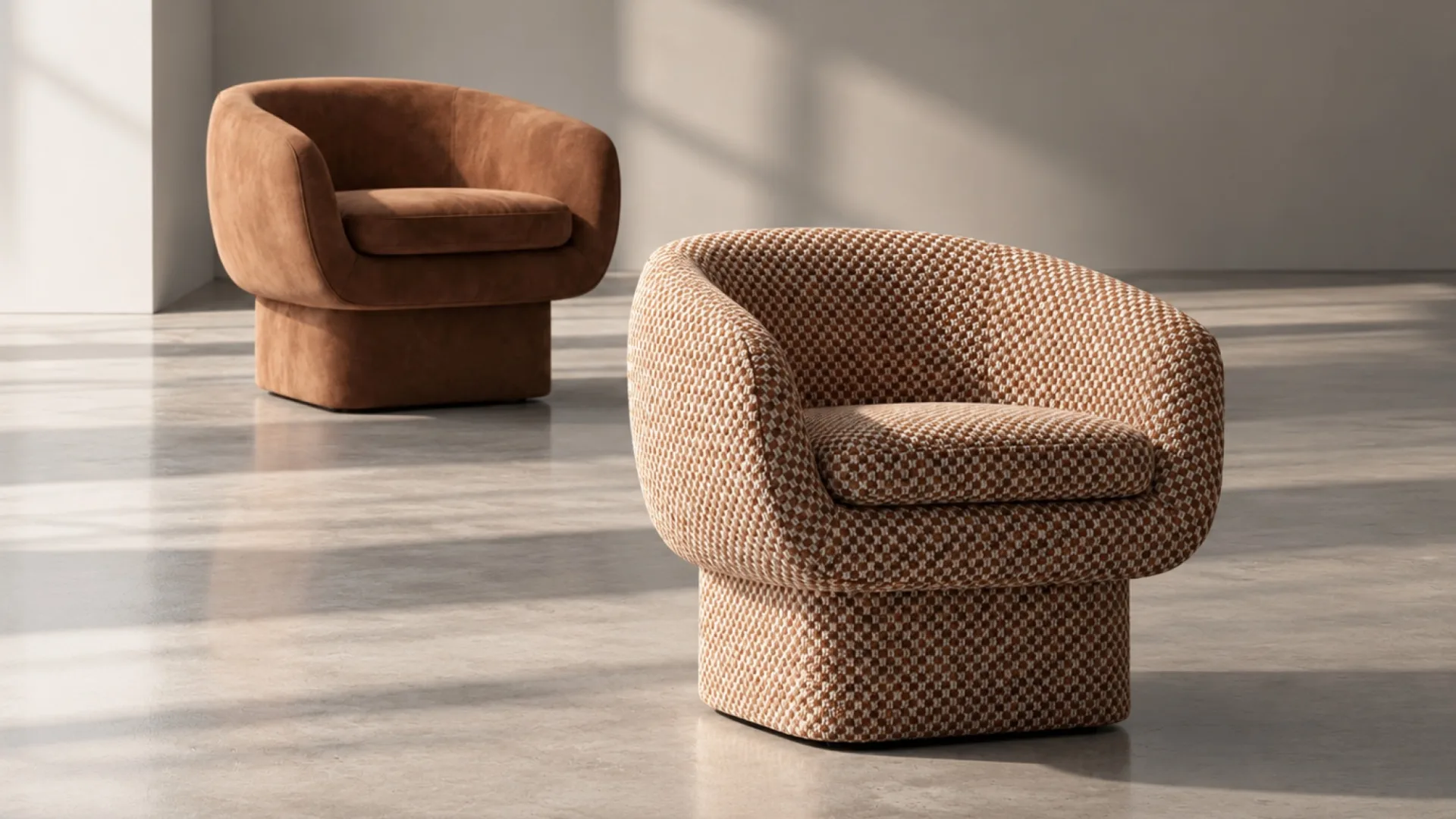
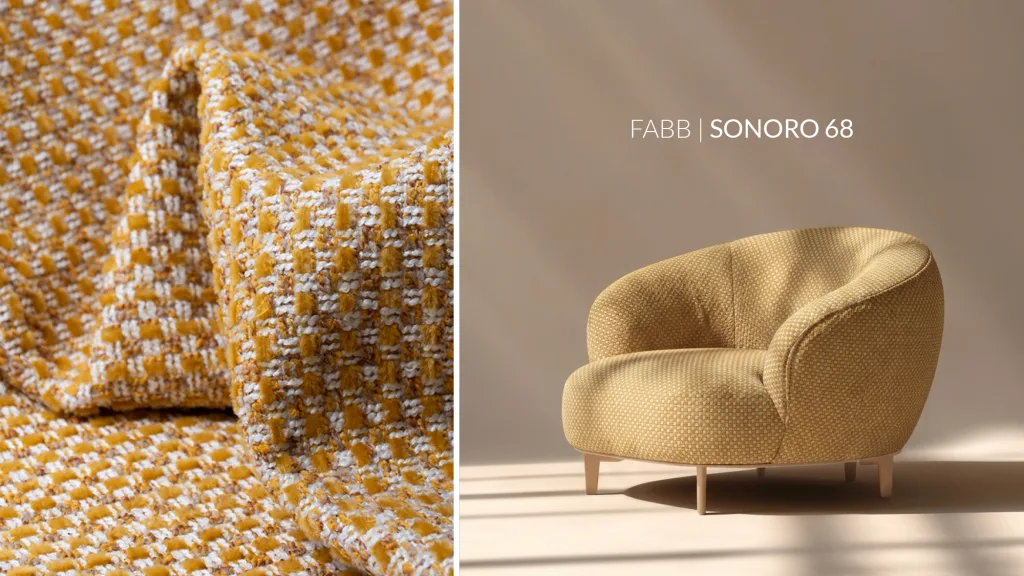
SONORO, a new collection from FABB, is a perfect example of a fabric that defines the character of furniture through its texture rather than a pattern.
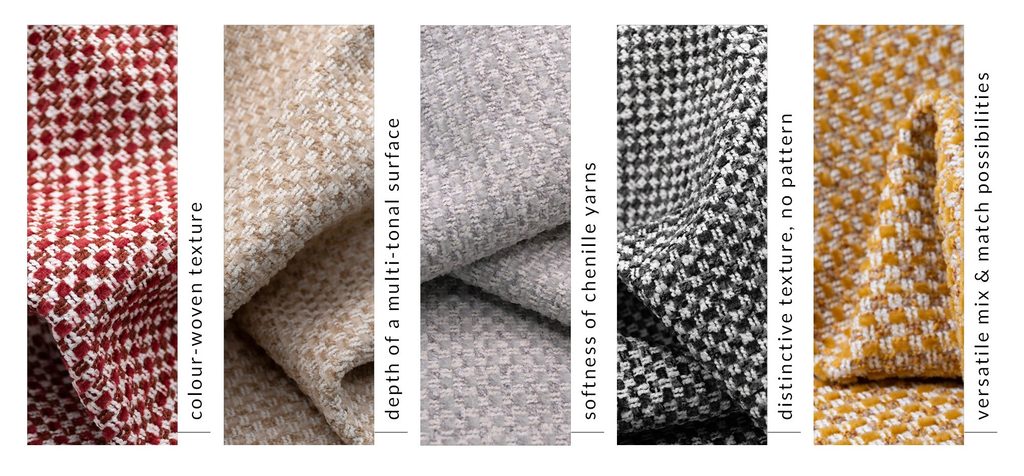
It is a woven upholstery fabric with a coarse, textured weave, featuring thick yarns in different colours, including chenille yarns. The colour is neither printed nor uniform. Instead, it is created through the fabric’s construction: variations in yarn thickness, the rhythm of the weave and the combination of several tones within a single surface. Up close, individual yarns are clearly visible. From a distance, the same surface forms a subtle, multi-tonal rhythm that interacts with light along the curves of an armchair.
However, appearance only matters if the fabric can withstand everyday use. SONORO has a weight of 420 g/m², an abrasion resistance of 50,000 cycles in the Martindale test, a pilling resistance rating of 4 after 2,000 cycles, and colour fastness to light and rubbing rated at 4–5. These figures are not the starting point of this story, but they provide a fitting conclusion.
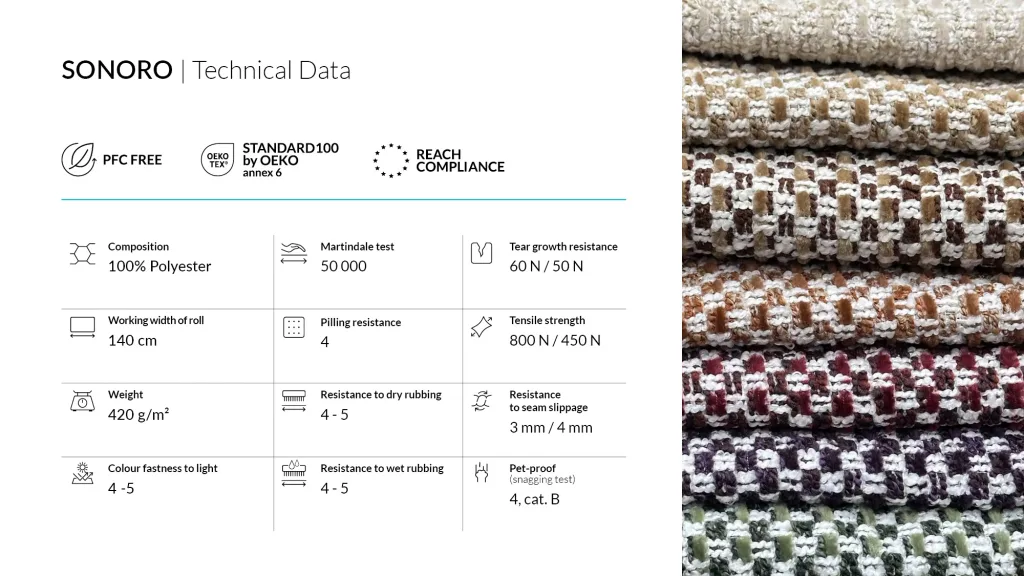
We showcase the collection in six colour directions, ranging from ecru and stone greys to burgundy and plum, on the SONORO page, while examples of how the fabric looks on different pieces of furniture can be found in our inspiration gallery.
What Does This Mean for Furniture Manufacturers and Interior Designers?
Above all, it means that introducing a new direction to a furniture collection does not always require a new frame.
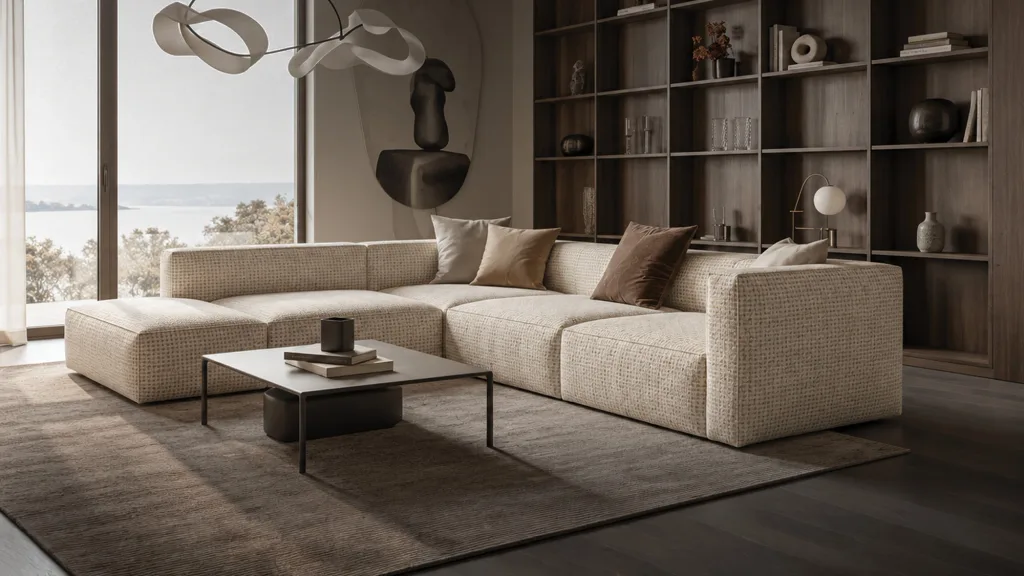
For furniture manufacturers, this is a highly practical consideration. Designing, testing and bringing a new furniture model into production takes months of work and involves significant costs. Reupholstering an existing model in a fabric that changes how its shape is perceived requires only a few metres of fabric and a few days in the upholstery workshop. Fabric cannot rescue a poorly designed piece of furniture. A well-designed piece, however, usually offers more than one possible interpretation, and the most cost-effective way to explore these possibilities is to change its upholstery.
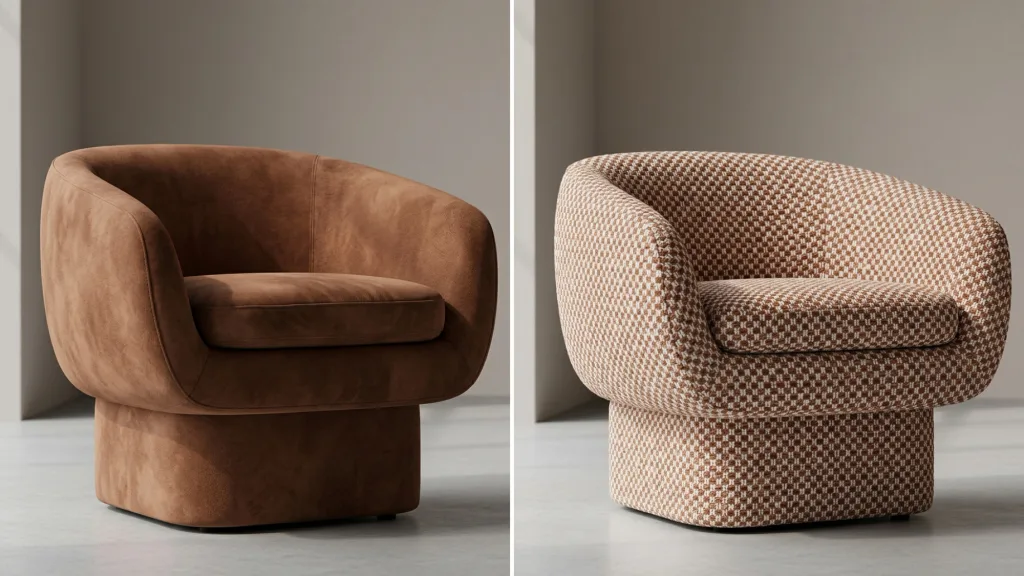
For interior designers, the conclusion is similar, but on a different scale. Texture creates visual interest within a subtle colour palette and allows furniture to connect with stone, wood or plaster through the materials themselves, rather than colour alone. In tone-on-tone interiors, the difference often lies in how individual surfaces reflect light.
Finally, let us return to the Bachi armchair. The most interesting aspect of this reissue was not simply the decision to revisit an archival design. It was the discovery that a form created sixty years ago still has something to say. All it needed was a different surface.