
Three levels of structure. How do ZIVA, MONELLI and HOLMS help to build furniture collections?
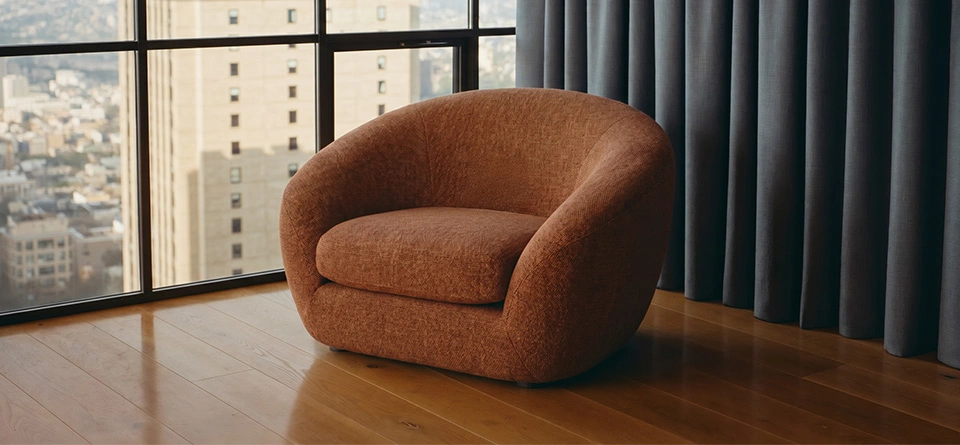
A good base fabric shouldn’t limit the designer to a single direction. It should allow for flexibility.
And that is where ZIVA–MONELLI–HOLMS’s greatest value lies.
They can be seen as three distinct responses to a similar need. ZIVA is ideal where the design needs to be understated, light and versatile. On a large sofa, a modular corner suite, an upholstered bed or wall panels, it creates the effect of a neat, uncluttered backdrop. MONELLI is more tactile, warmer and visually richer. It works well on a family sofa, a pouffe, an armchair or a soft chaise longue. HOLMS is the most graphic of the three, yet still a far cry from a decorative pattern. Its strength lies in the fact that even a neutral colour gains texture, whilst a darker shade does not feel heavy.
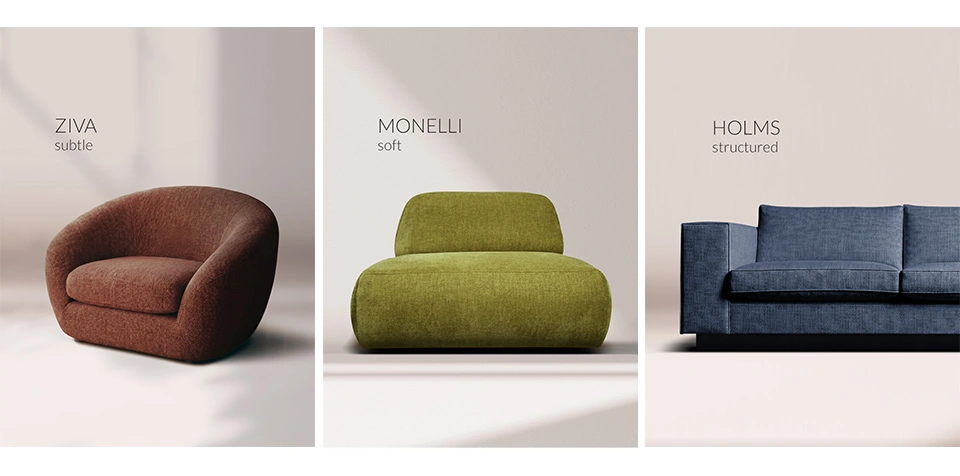
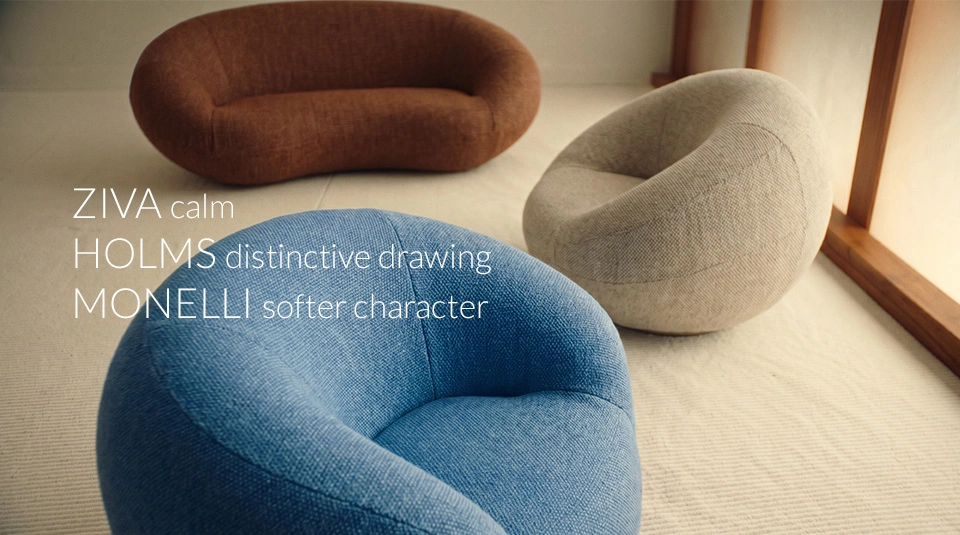
When designing a furniture collection, this range of textures gives the manufacturer a great deal of freedom. There is no need to change the entire material direction every time in order to distinguish the models from one another. It is enough to vary the degree to which the weave is visible. A sofa can retain a calm look in ZIVA, an armchair can take on a more distinctive pattern in HOLMS, and a pouffe can have a softer, fuller character in MONELLI. Thanks to this, the collection retains its coherence without looking monotonous.
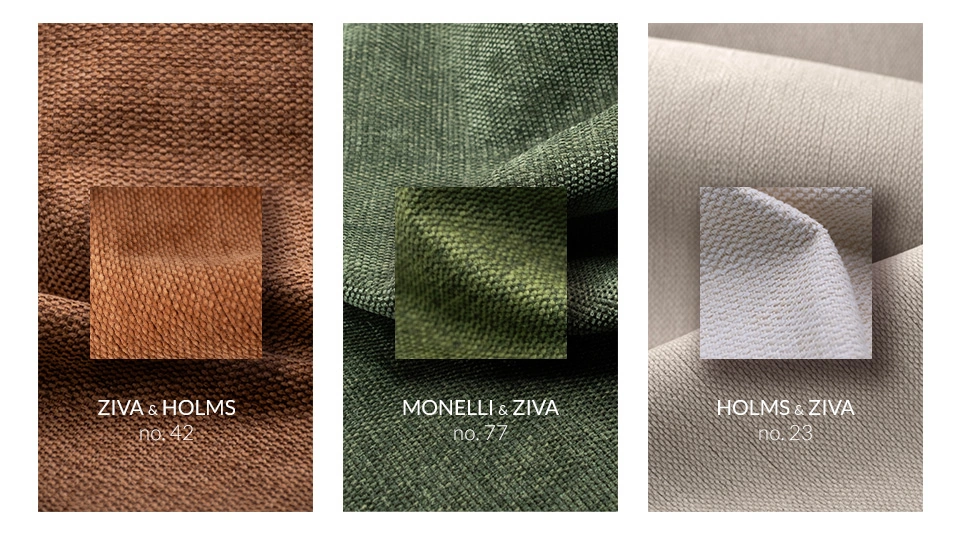
The same principle applies to the finer details. A second layer of texture can be introduced on cushions, trims, sides, headboards or small complementary pieces. The effect is subtle but very practical: the collection gains depth without the need for a bold pattern or an additional colour.
That is precisely why the term ‘textural everyman’ is so appropriate here. ZIVA, MONELLI and HOLMS are not trying to be a one-season trend. They are closer to what has been recurring in design for years under various names: well-designed everyday life, functional beauty, and objects whose value is discovered not at first glance, but through daily use.
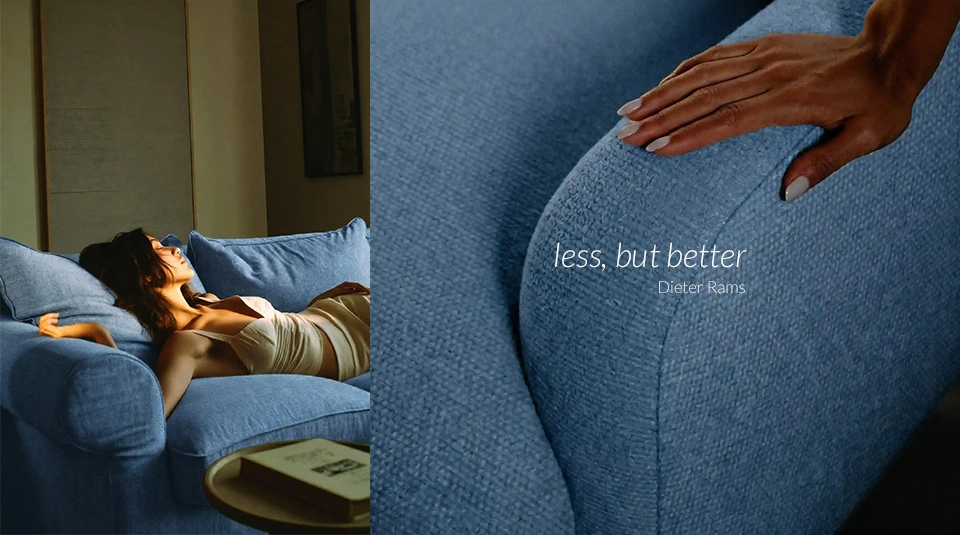
Dieter Rams spoke of design that is useful, honest and understated, and his motto ‘less, but better’ still aptly describes products that do not need excess to have value. Jasper Morrison and Naoto Fukasawa called this similar sensibility ‘Super Normal’ – design so naturally integrated into life that its quality is not immediately apparent, but is revealed through use.
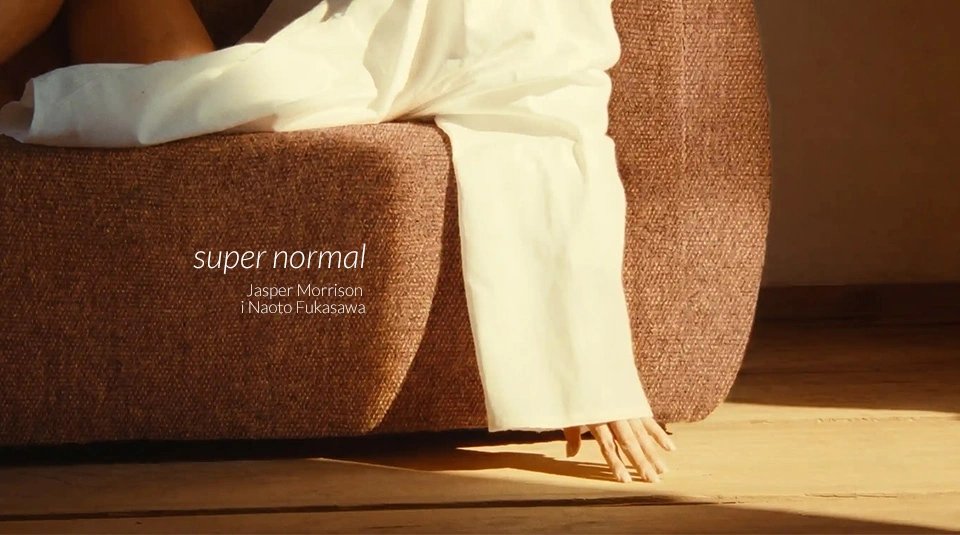
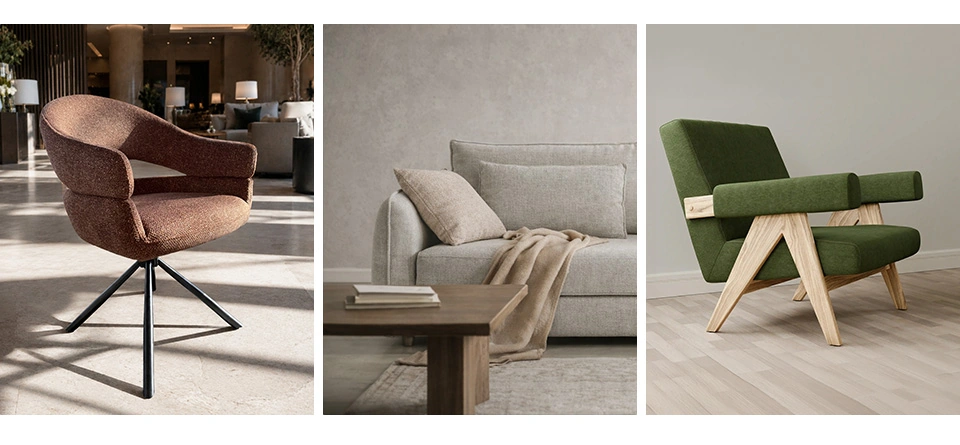
In this sense, ZIVA, MONELLI and HOLMS are designed for settings where furniture must look good not only in a catalogue, but also in a living room, bedroom, teenager’s room, rented flat, home office or hallway. This is particularly important in popular and affordable collections, as price, aesthetics and functionality must all come together in a single product.
Their main advantage is how easy they are to mix and match. Paired with fur and sherpa pieces such as VITO, LAPIT or SVEN, they provide a understated base for more cosy accents.
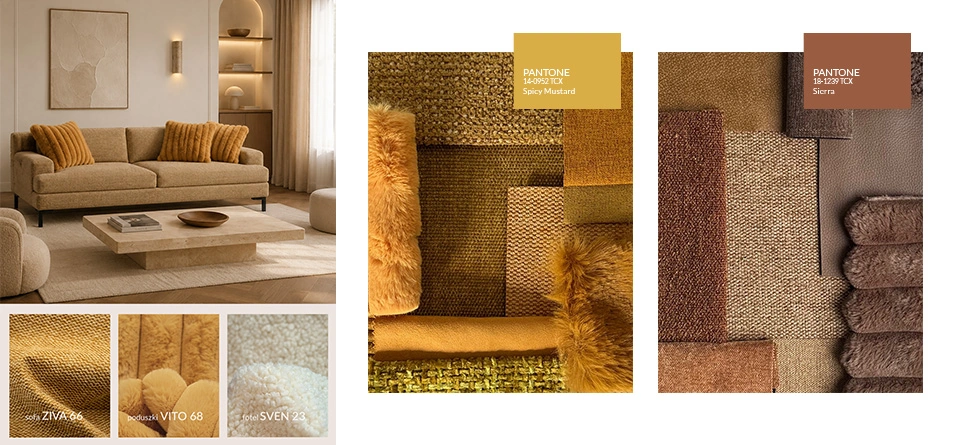
Leather, suede and textures such as TAURUS, MATADOR, CRAFT and HOGAN help to give furniture a more defined shape, bolder lines and a more refined finish.
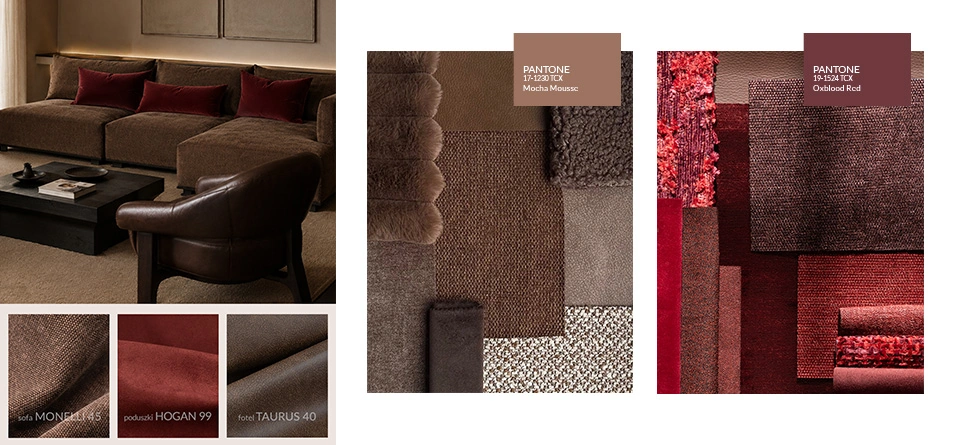
With patterns such as MORA, PICASSO and WILD, they act as a backdrop that brings the whole design together and allows the print to stand out without creating visual chaos. With the BLUVEL and MALOY velvets, they create a subtle contrast between the matt texture and the delicate sheen.
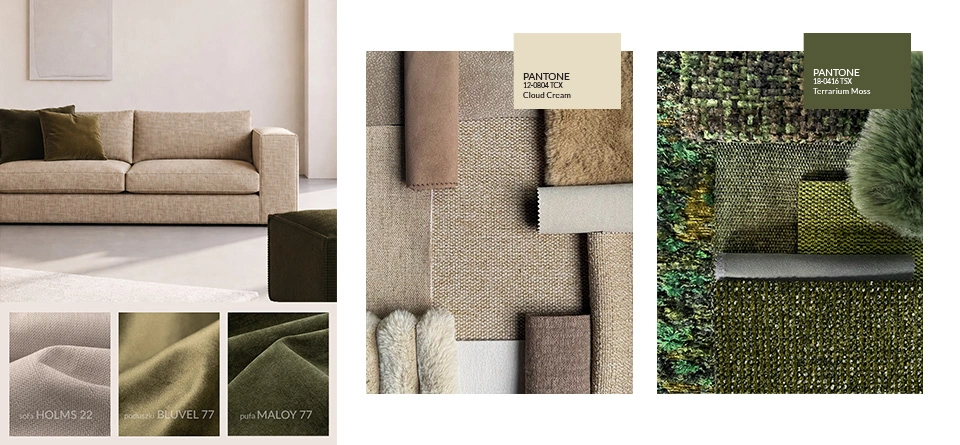
This is exactly the sort of flexibility that manufacturers need on a day-to-day basis. Not every customer is looking for a bold colour. Not everyone wants a striking pattern. But almost everyone will notice whether a sofa looks flat or has depth. Whether the fabric is pleasant to the touch. Whether the colour is not one-dimensional. Whether the piece of furniture gives the impression of being well-crafted, rather than merely adequate.
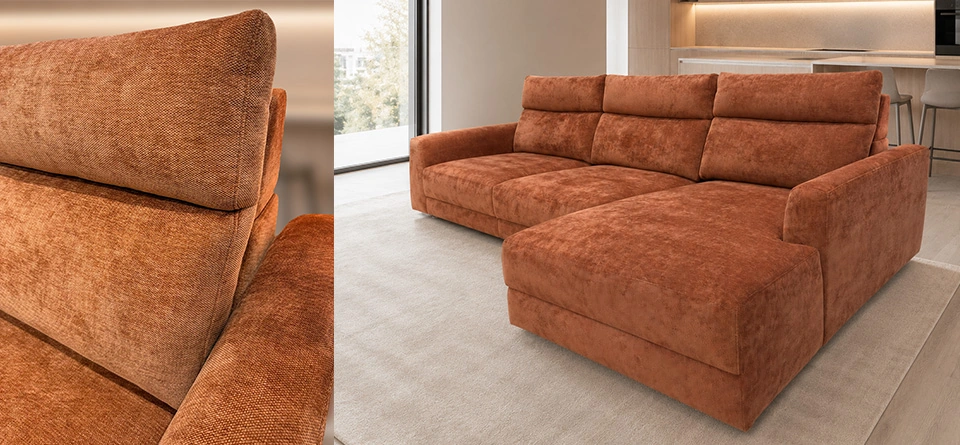
This is also evident in the broader language of contemporary interiors. The textile industry is increasingly discussing fabrics not only in terms of colour, but also in terms of texture, weave, durability and the emotional experience of using them. Heimtextil’s 2025/2026 trends highlight the importance of textiles as a vehicle for history, craftsmanship and a tangible experience, whilst contemporary interior design reports increasingly show that purchasing decisions are shifting away from colour alone towards texture, softness and how the material will perform in everyday life.
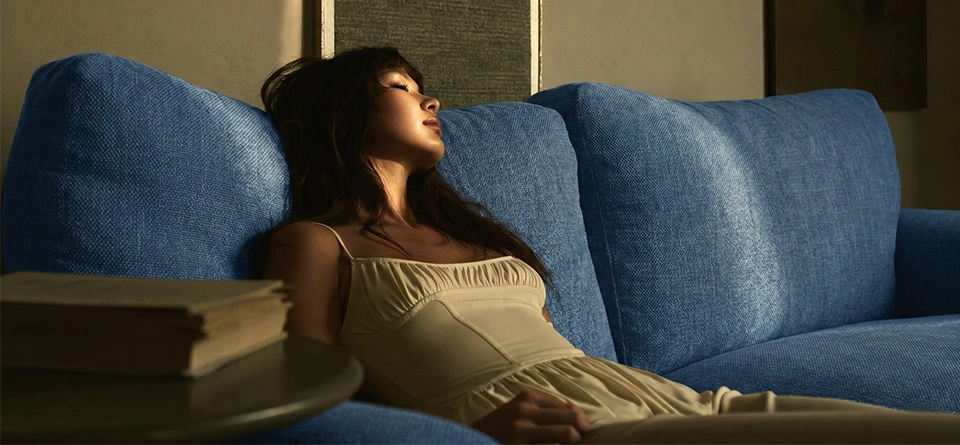
ZIVA, MONELLI and HOLMS do not, therefore, cater to the desire for the spectacular. They cater to the need for good, understated, aesthetically pleasing furniture that will feel at home in a real home. From a distance, they allow the interior to breathe. Up close, they show that even basic pieces can be designed with sensitivity.
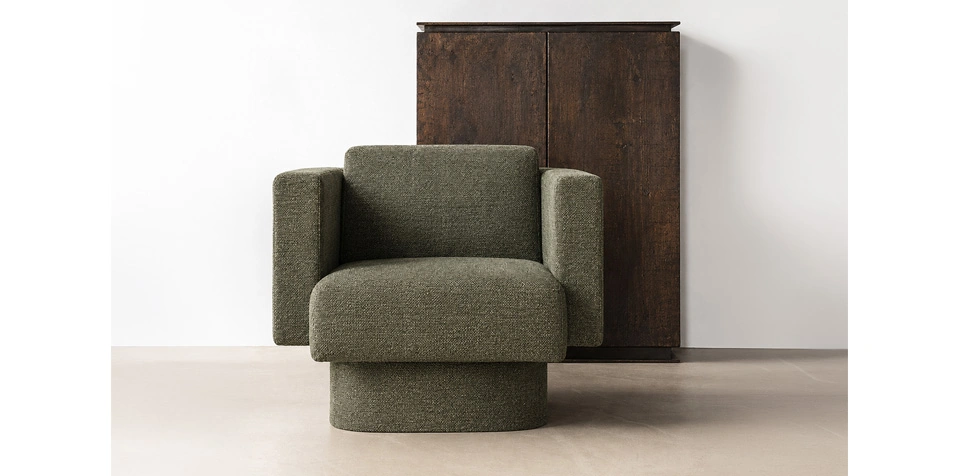
See how ZIVA, MONELLI and HOLMS can work within your collection: as a calm base for sofas, corner sofas, beds and armchairs, or as a cohesive system of three structures that allows you to vary the models without complicating your range.