
Zebra in design. A pattern that needs no nostalgia
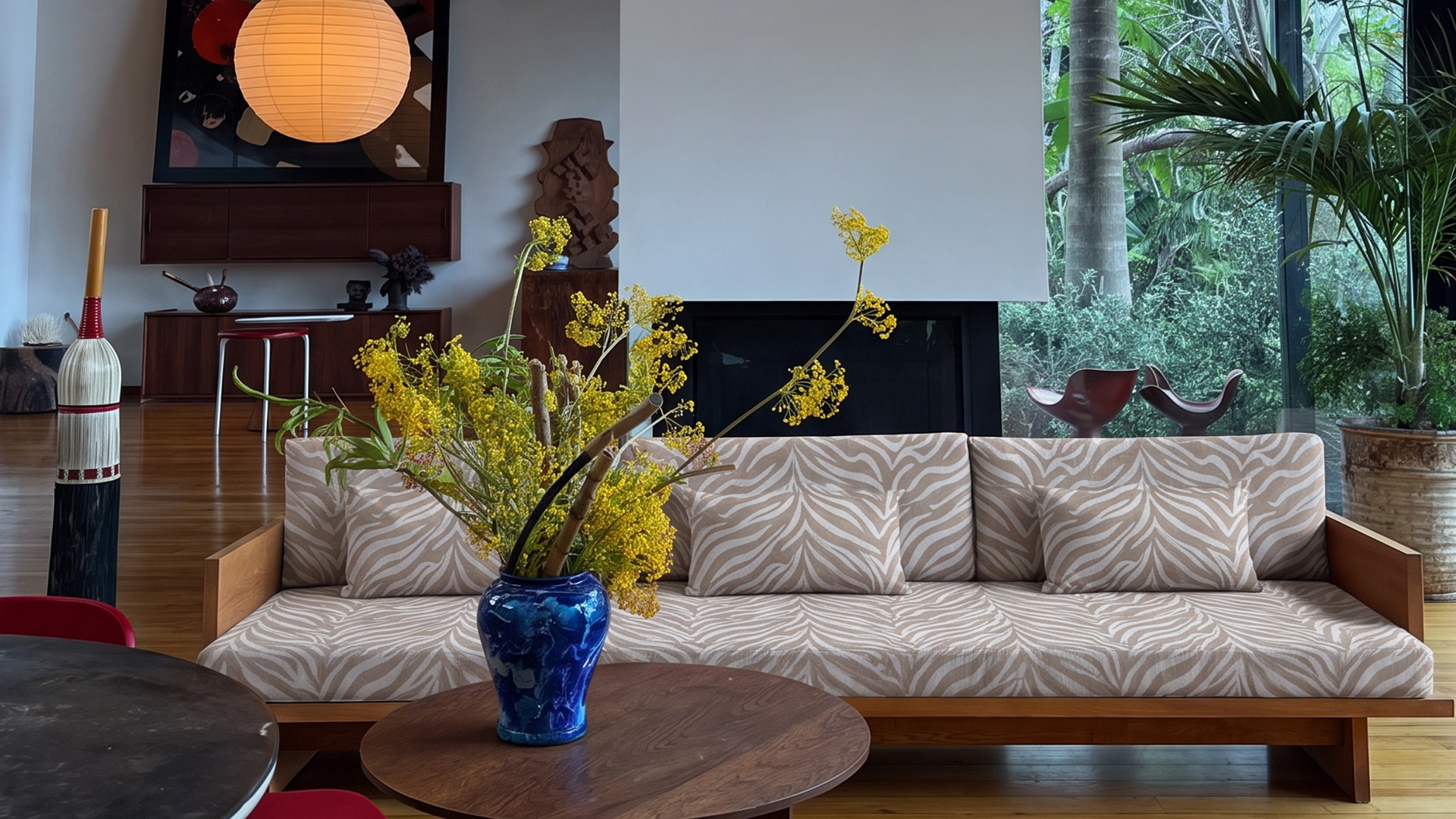
Some patterns return with each new season. Others never really disappear — only the way we interpret them changes. Zebra belongs to the latter group.
It has appeared on icons of modernism, in distinctive interiors, film and fashion. Today, it is making its way back onto contemporary armchairs and sofas — not as a reference to safari style, but as a bold graphic statement capable of giving a piece of furniture an identity of its own.
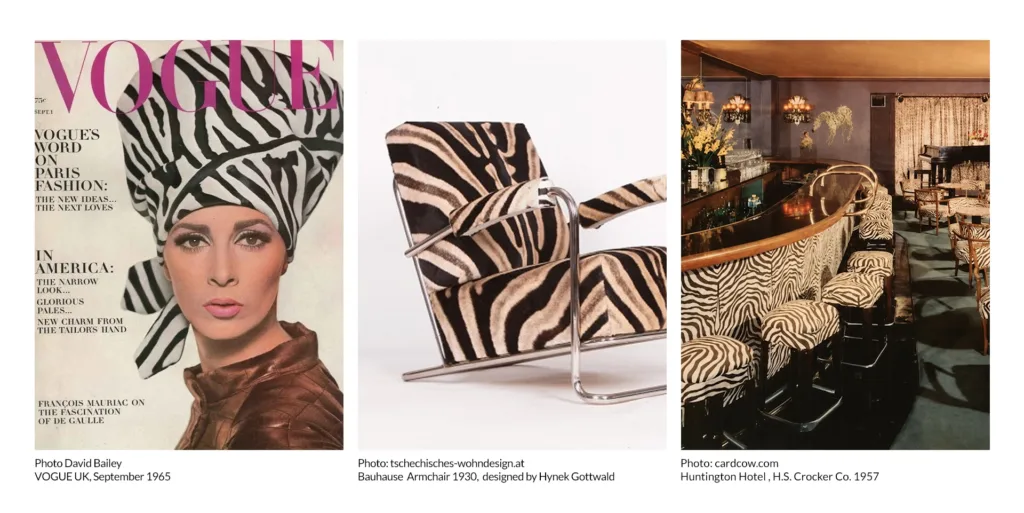
Before Zebra Became Part of Pop Culture
One of the most interesting stories begins in the 1930s.
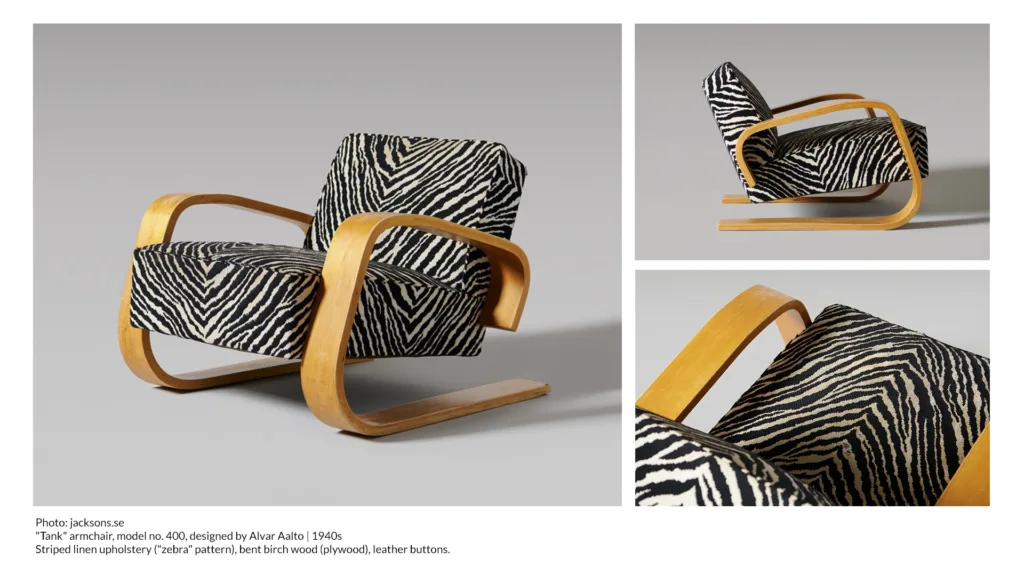
In 1935, Aino Aalto purchased the Zebra fabric from Wohnbedarf in Zurich. A year later, Alvar Aalto designed Armchair 400 — a substantial armchair with wide, bent-birch armrests that quickly earned the nickname “Tank.”
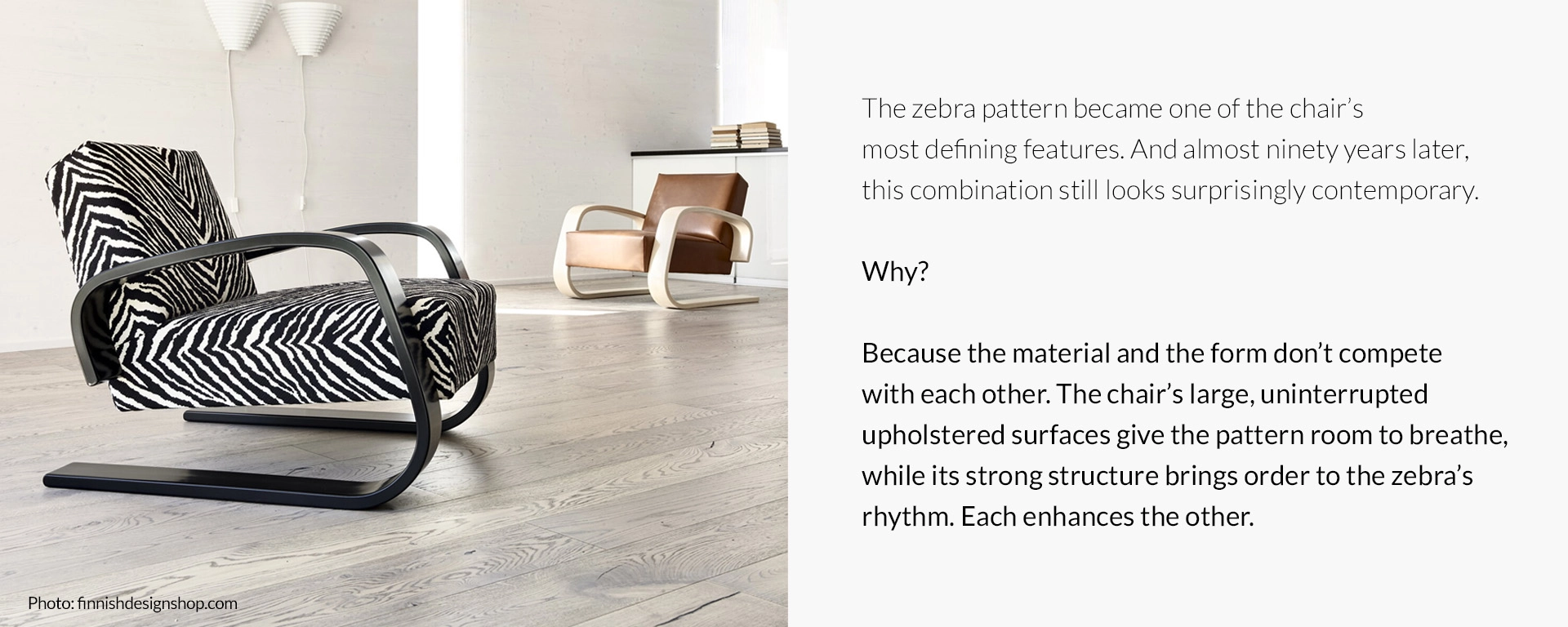
This is a principle that still holds true in furniture design: bold upholstery is at its strongest when it truly works with the form.
Why Does Zebra Feel Relevant Again?
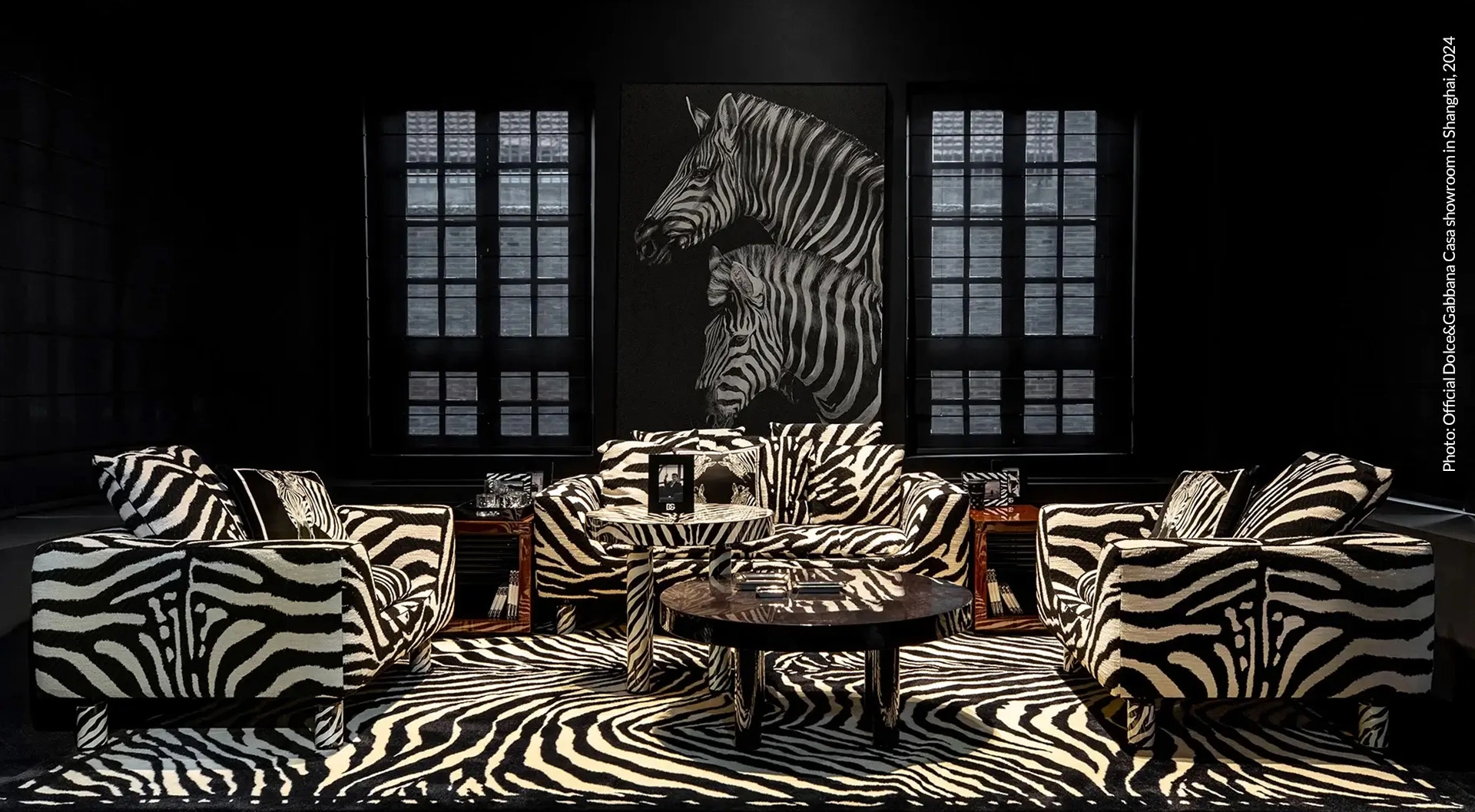
You don’t need to declare a major “zebra trend” to notice the shift.
In a 1stDibs survey of 643 interior designers, interest in animal prints increased from 4% in the 2024 forecast to 6% for 2025. It remains a niche — and that is precisely what makes it interesting for brands that don’t want to wait until a trend is everywhere.
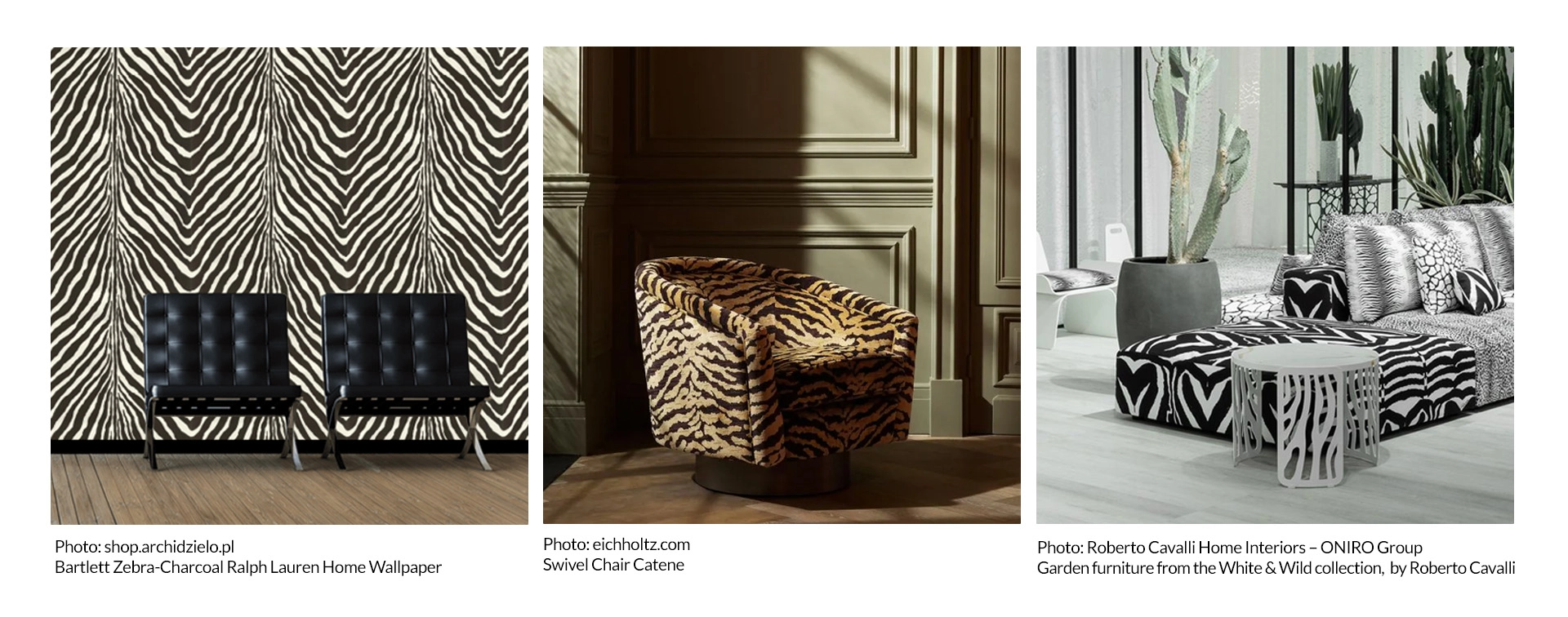
At the same time, 47% of respondents identified rounded and irregular forms as one of the key emerging directions in furniture and interior design. Bringing these two trends together feels like a natural fit.
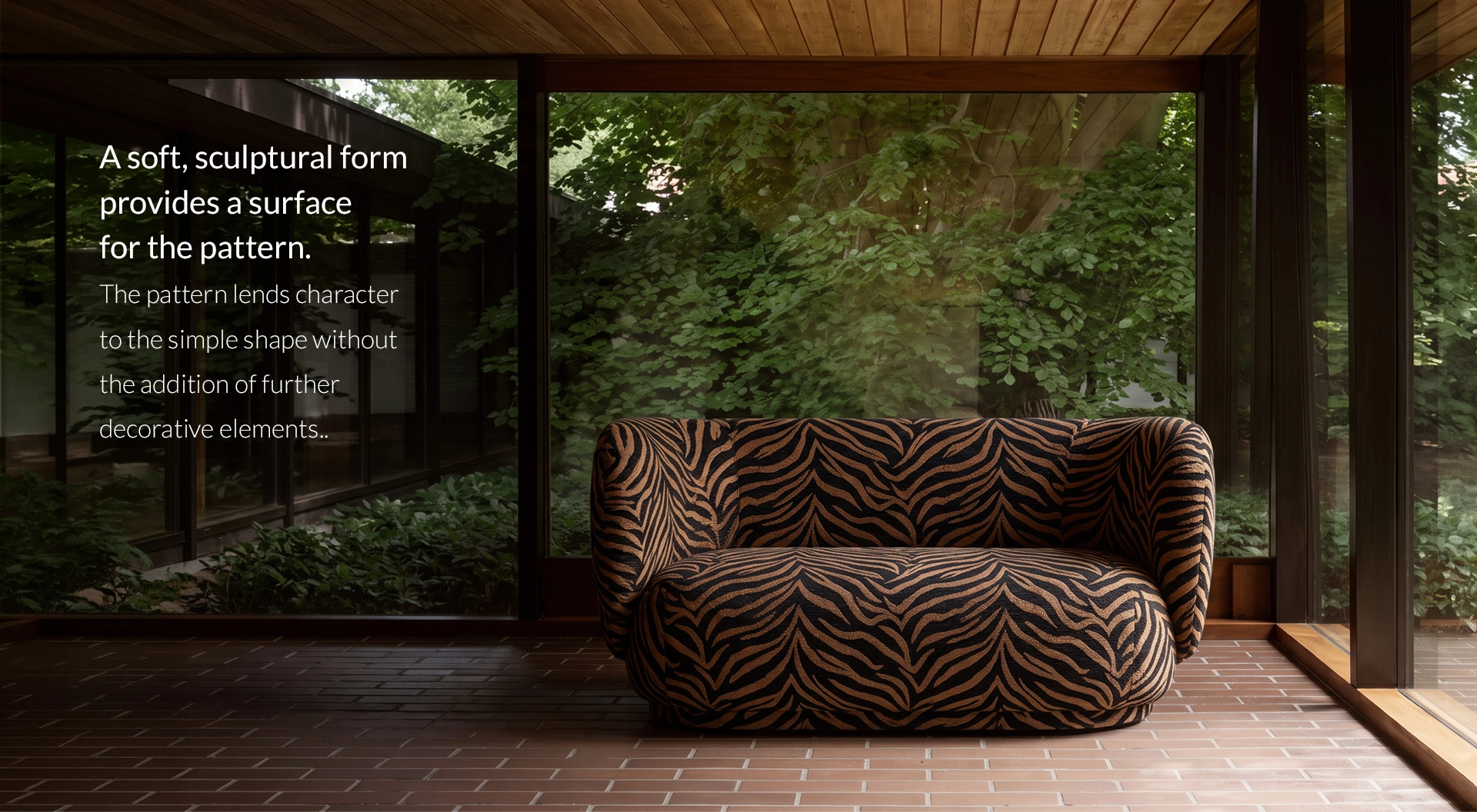
A piece of furniture doesn’t need to be more complex to become more distinctive. Contemporary zebra doesn’t need safari references.
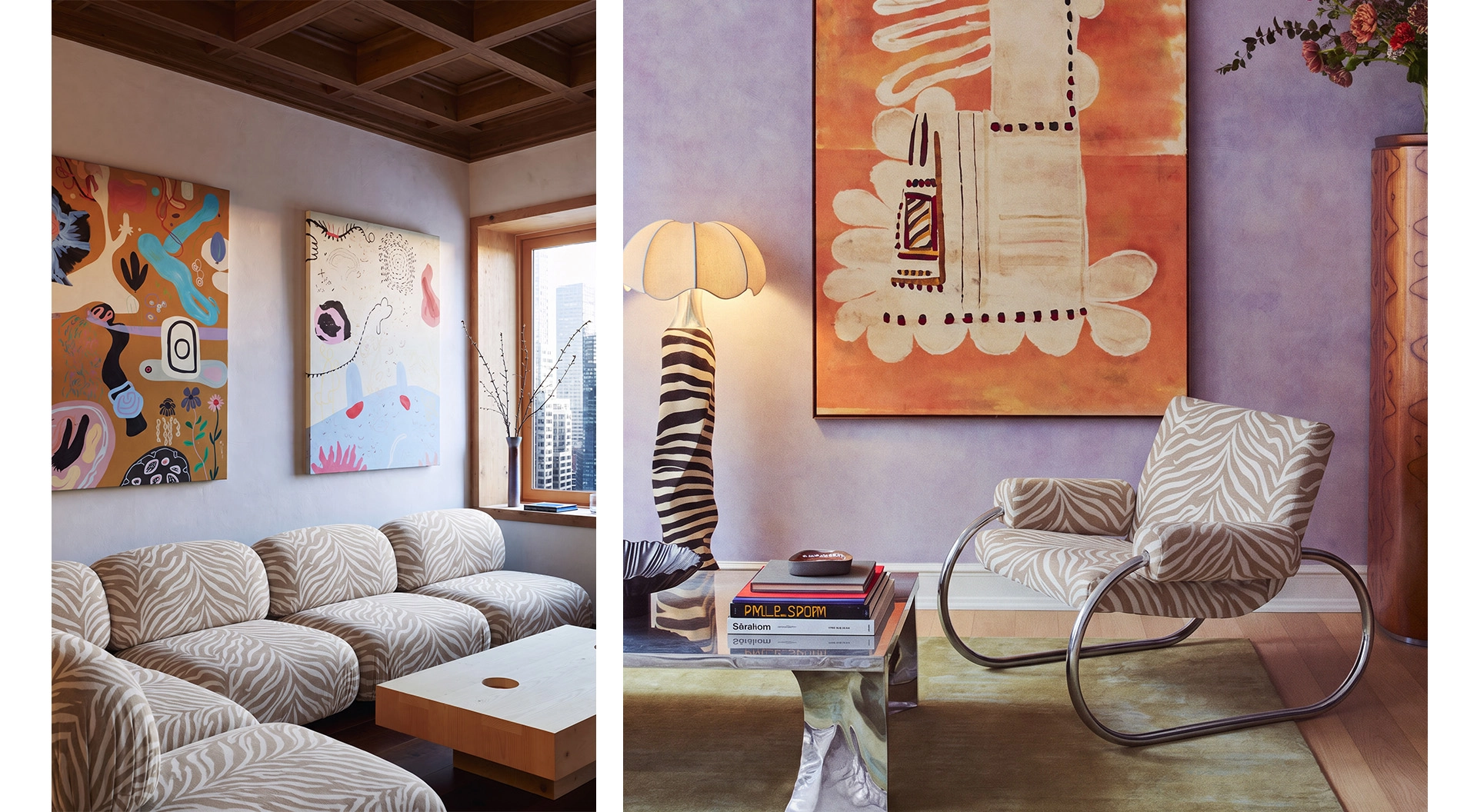
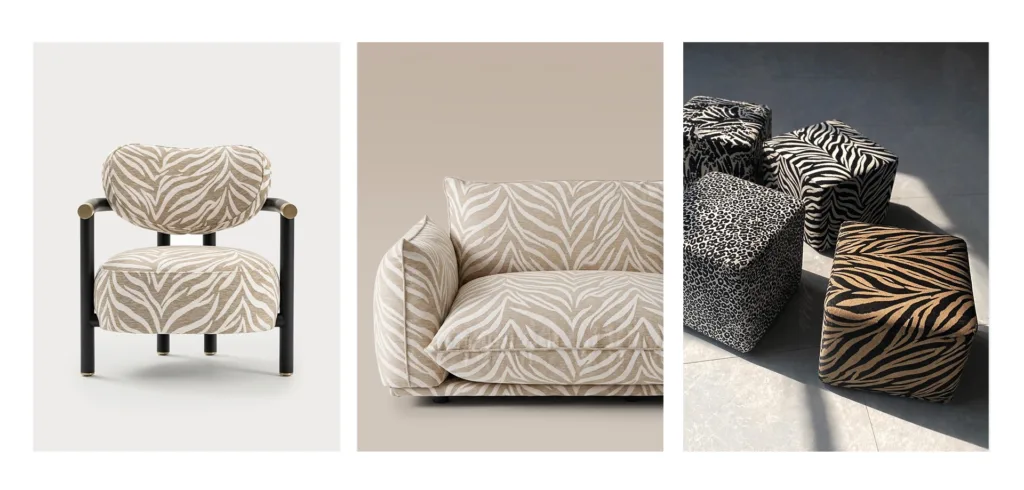
The most interesting contemporary interpretations move zebra away from its obvious associations. FRAMA pairs it with a simple steel structure, while Dusty Deco uses it across the large, soft forms of sofas and armchairs.
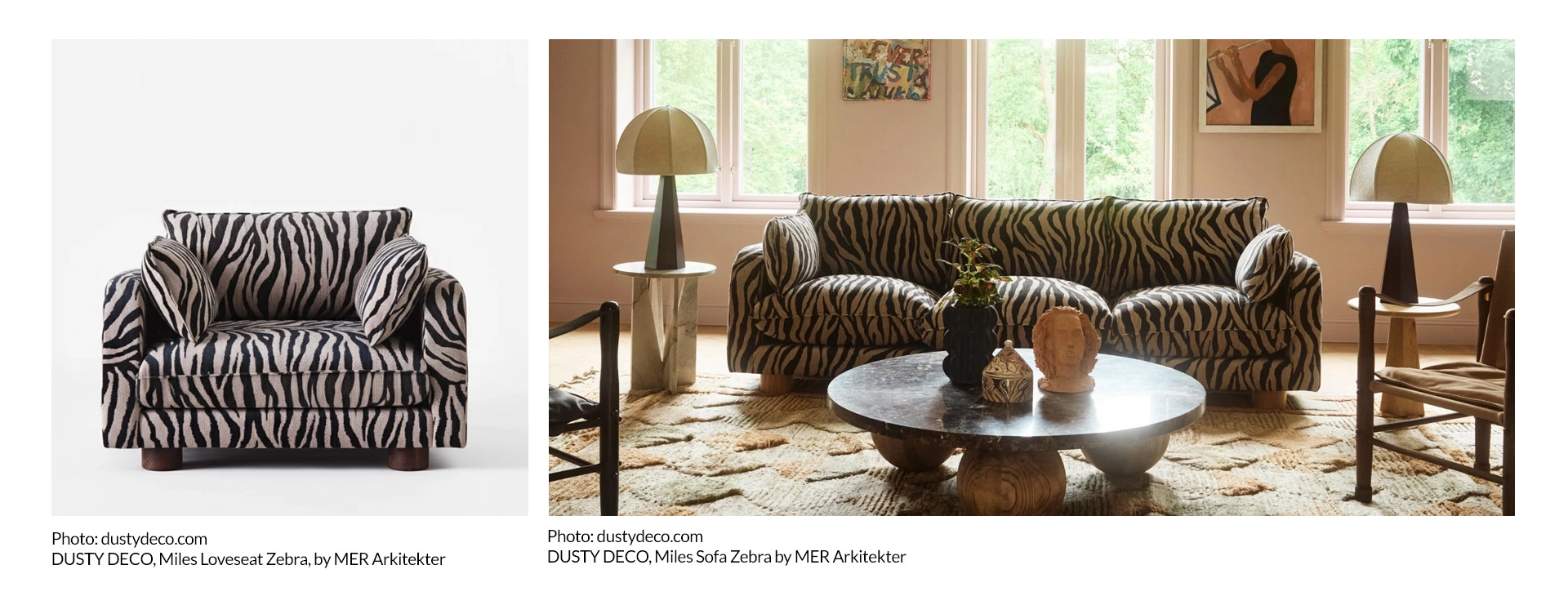
Different proportions. A different design language. The same principle: give the pattern room to breathe. Today, zebra can work alongside chrome, light or dark wood, stone, cream, graphite or black. It doesn’t need to define the entire interior. Often, it works far more effectively as one bold element within a calmer setting.
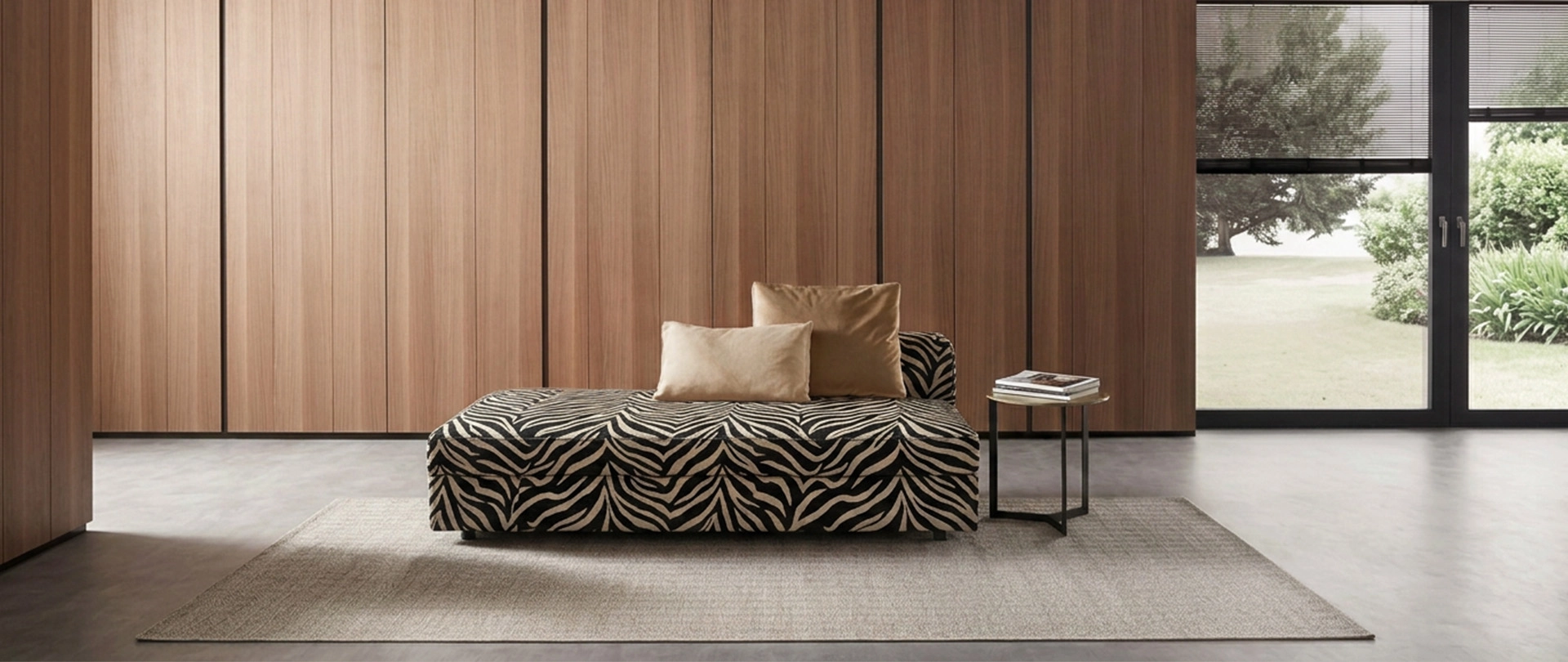
The same applies to a furniture collection. There’s no need to upholster everything in zebra. Sometimes, a single armchair or sofa is enough to give the entire collection a more distinctive direction.
ZEBRA by FABB. The Pattern Is Part of the Material
The ZEBRA collection is rooted in this very way of thinking. It is a chenille jacquard made using yarn-dyed technology. The stripes are not printed onto the finished surface — they are created during weaving from pre-dyed yarns.
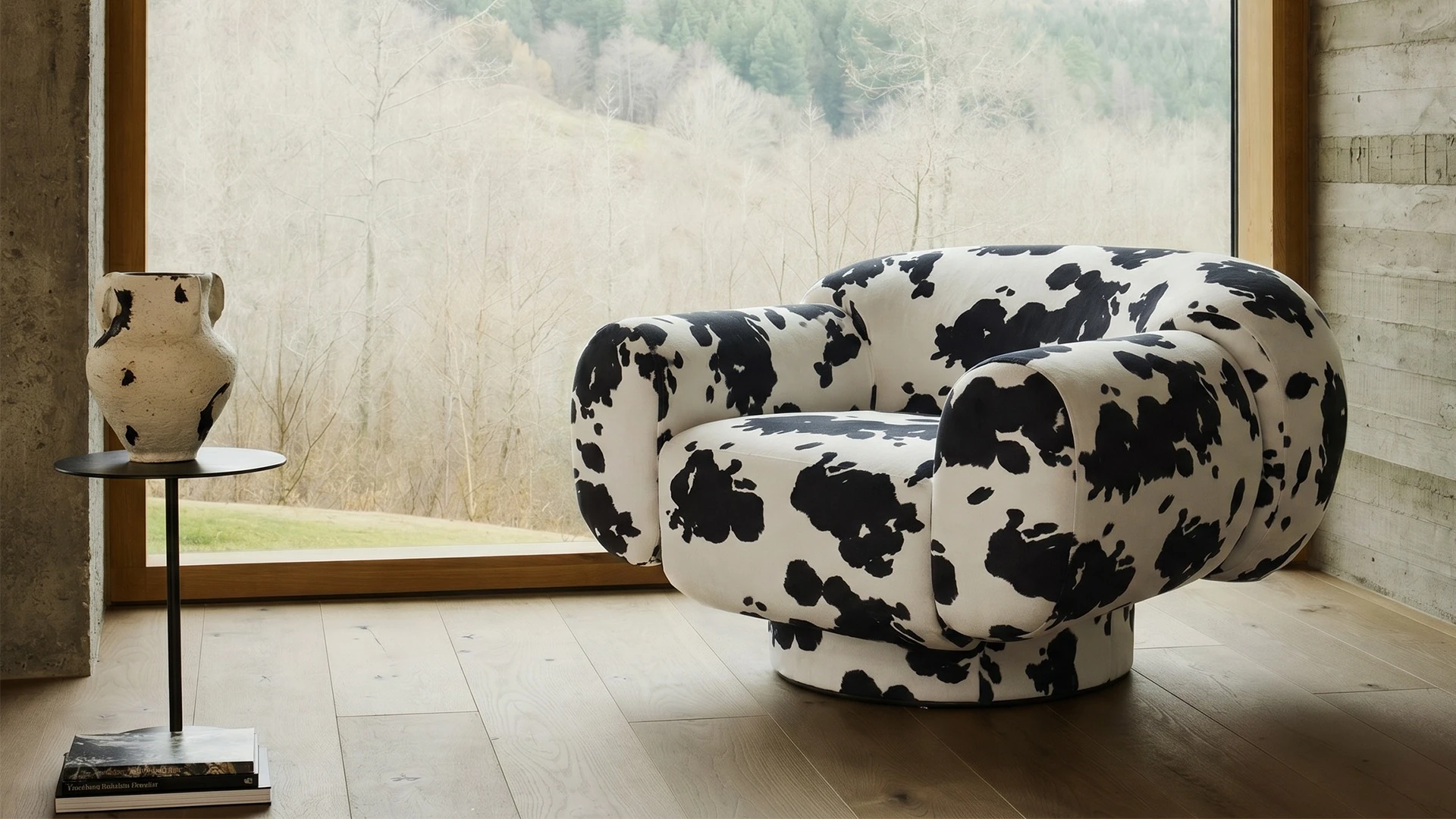
That’s why ZEBRA works on several scales. From a distance, you see the rhythm. Up close, you notice the weave of the yarns, the soft chenille texture and the way light plays across the surface. At 500 g/m², the material has a full, substantial hand.
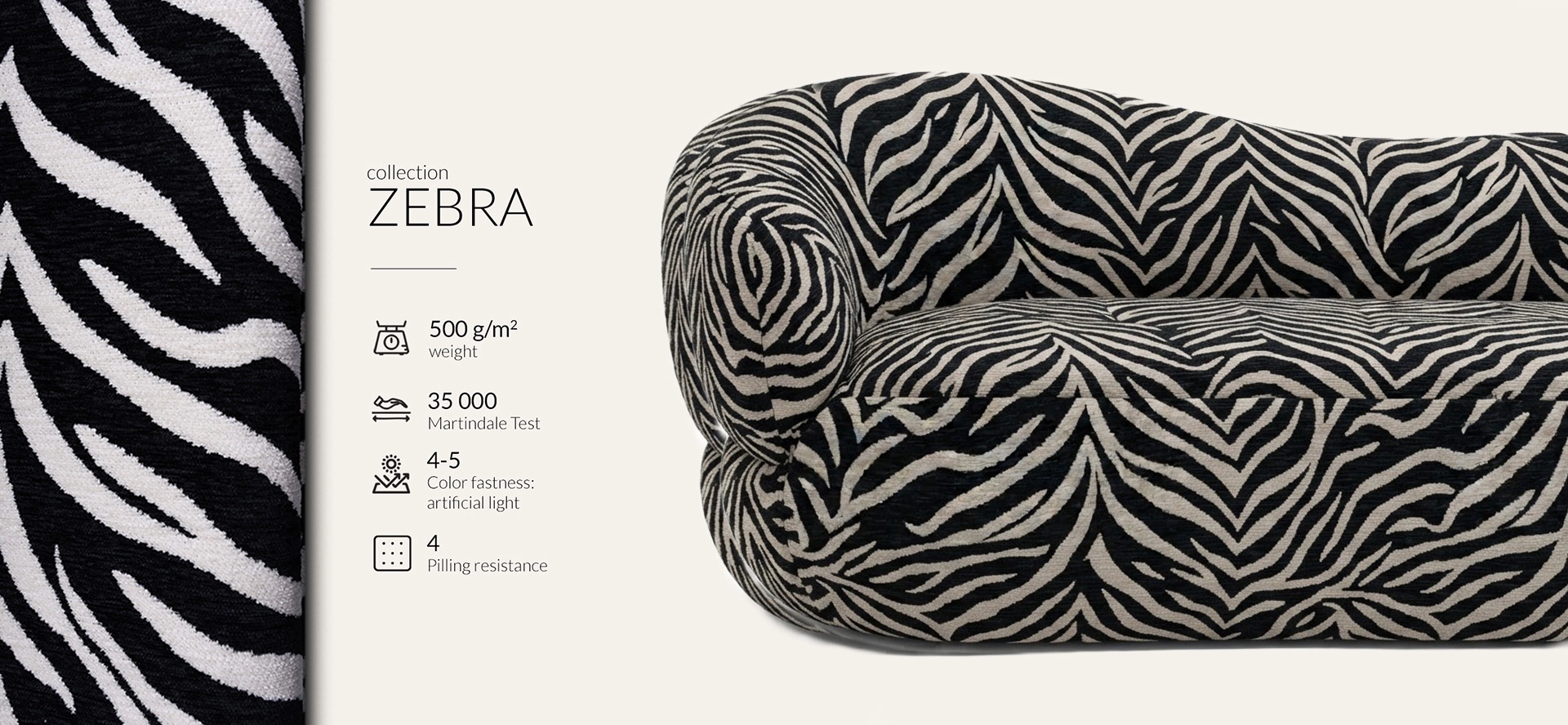
This is one of those fabrics that shouldn’t be judged solely on a screen. A small swatch will show you the colour and texture.
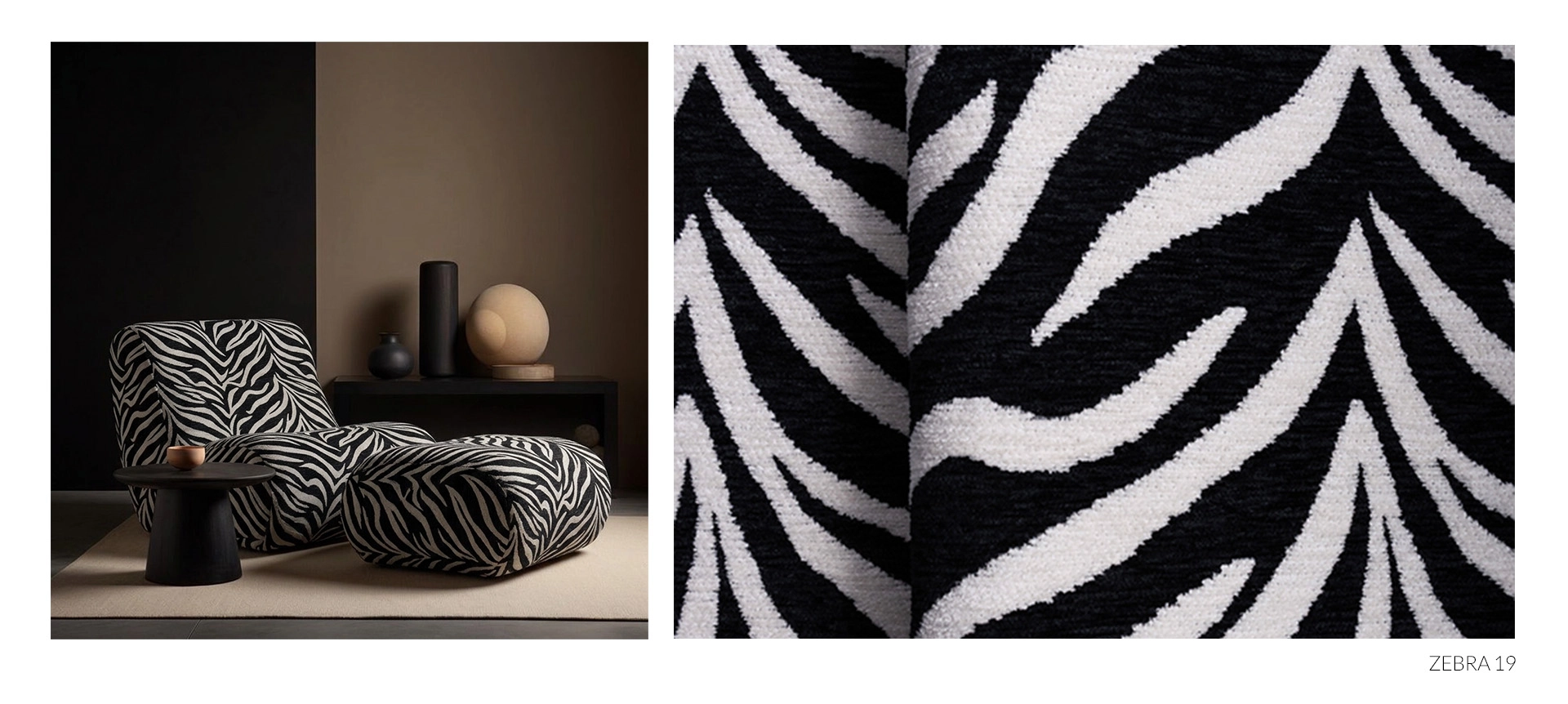
A larger surface will reveal the pattern. But only on a piece of furniture can you truly see what the pattern does to the form.
Which Model Deserves a Second Debut?
We find this question more interesting than: “How many models can we use ZEBRA on?”
You don’t always need to design a new piece of furniture from scratch. Sometimes, a familiar armchair, a compact sofa, a bench or a wide headboard simply needs one element that changes the way we see it.
New upholstery can turn an existing model into the strongest image in a campaign. A piece that makes customers stop in the showroom. A piece of furniture that sets the tone for the rest of the collection.
The history of zebra in design shows us something very simple:
Good upholstery doesn’t just cover a piece of furniture. It can become part of its identity.