
The end of plain basics. Why does neutral fabric have to do more these days?
Not every fabric needs to take centre stage. Sometimes, the greatest value for a furniture manufacturer lies in a material that does not dominate the piece, but instead lends it a subtle depth, softness and a sense of refinement. This is precisely where ZIVA, MONELLI and HOLMS come together — three textural collections from FABB, designed for furniture that looks good, is practical to use and won’t go out of fashion after just one season.
For years, a ‘safe’ fabric meant a muted colour, no pattern, and the ability to blend in with most interiors. For furniture manufacturers, this was a sensible choice. For customers, it was a safe option, though increasingly too predictable. Contemporary interiors are less and less likely to settle for being merely ‘correct’. Even if they remain neutral, they need layers, light, softness and materials that offer more than just colour.
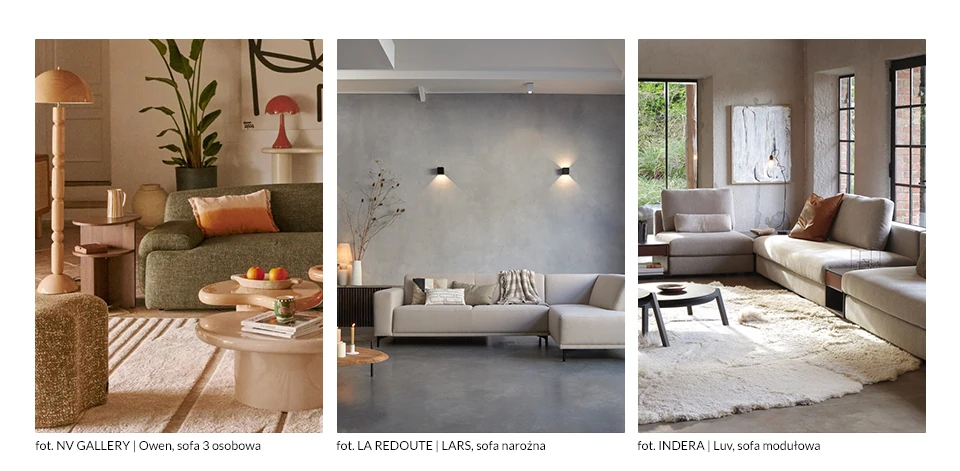
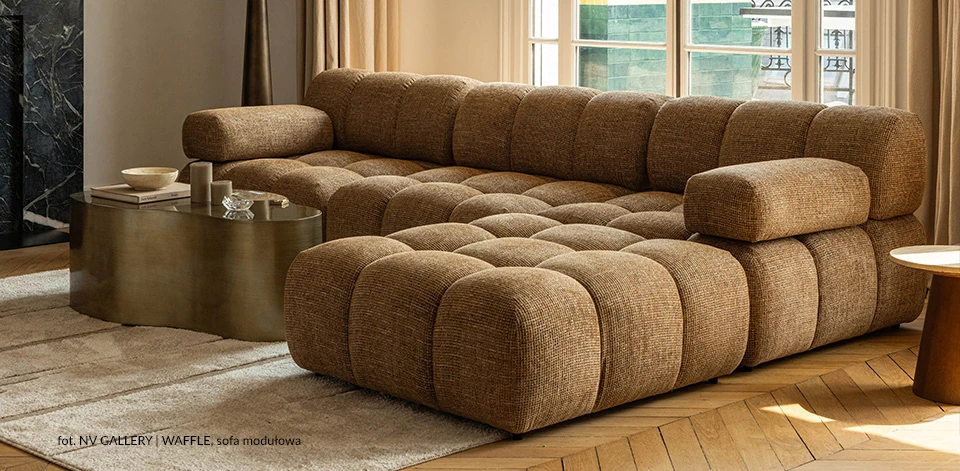
It’s not that neutral fabrics are losing their significance. Quite the opposite. They still make up the majority of sofas, corner sofas, beds and armchairs that find their way into real interiors. However, expectations regarding neutrality are changing. Customers no longer want a flat surface that blends into the background. They want a fabric with a melange effect, a delicate three-dimensional quality, a soft texture or a subtle sheen in the weave.
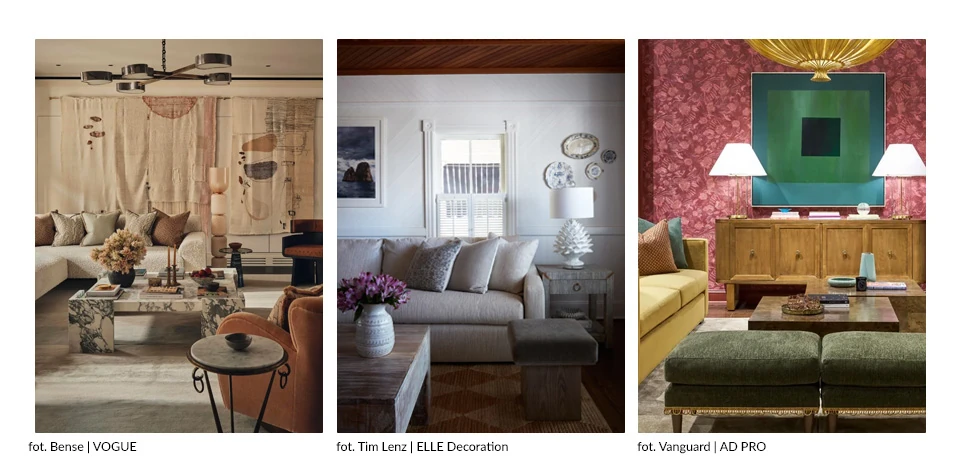
This shift is clearly evident in current trends. Vogue writes about interiors that are more lived-in, organic and less stylised, whilst AD PRO highlights the return of layering, craftsmanship, colour and detail as elements that lend a space its personality. ELLE Decor, for its part, emphasises ‘quiet luxury’, natural materials, warmth and texture in a more conscious, long-lasting form.
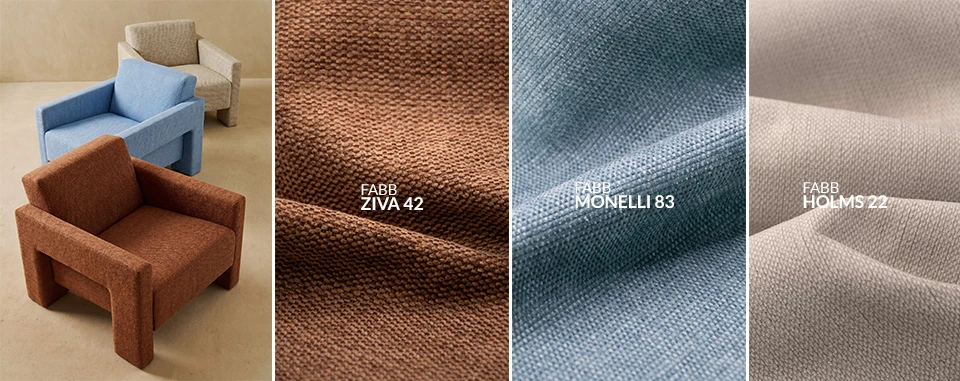
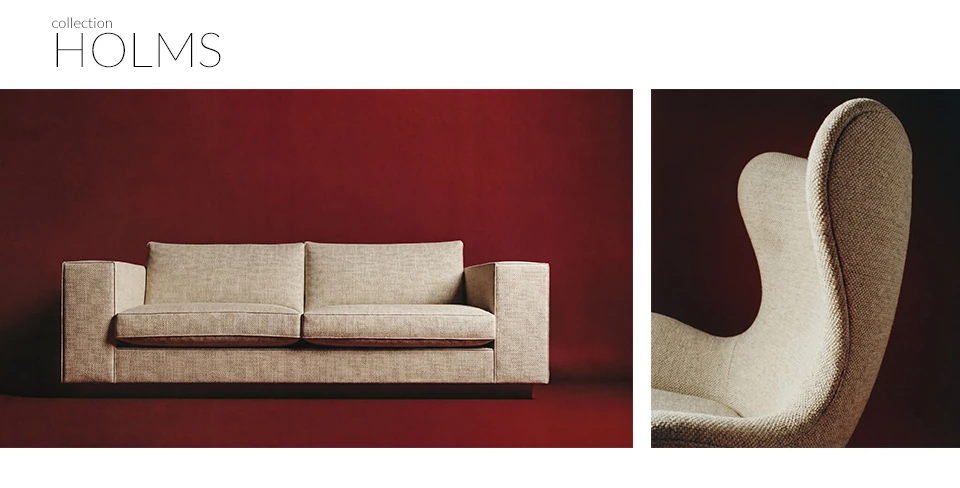
It is precisely in this context that ZIVA, MONELLI and HOLMS cease to be merely three understated collections and begin to function as a spectrum of textures. And it is in this context that ZIVA, MONELLI and HOLMS are at their most valuable. ZIVA is the most understated visually. MONELLI offers a more substantial, chenille-like effect and a stronger sense of softness. HOLMS introduces a more distinct weave pattern, yet still retains an air of understated elegance.
For a furniture manufacturer, this is a very practical approach. One sofa might need a understated base. Another, a softer feel. A third, a design that isn’t flashy from a distance but reveals its quality up close. ZIVA, MONELLI and HOLMS allow you to maintain a consistent aesthetic across the collection, simply by varying the visibility of the weave.
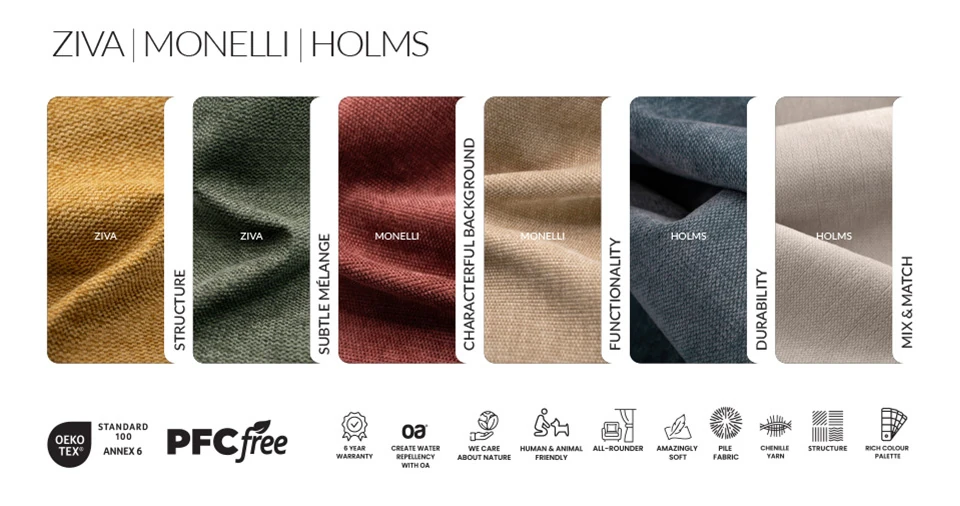
This is more important today than it might seem. At a time when many brands offer similar designs, it is often the fabric that determines whether a piece of furniture looks like the most basic catalogue model or a finely crafted product.
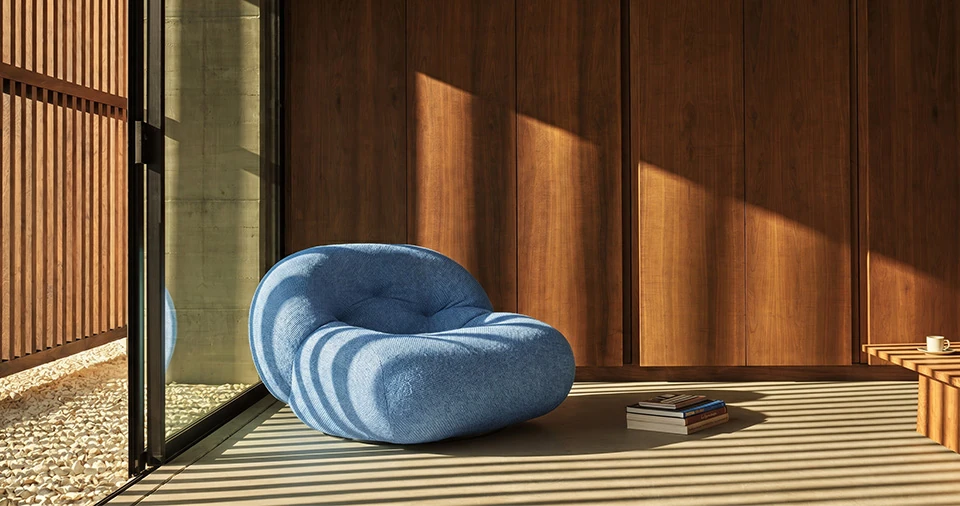
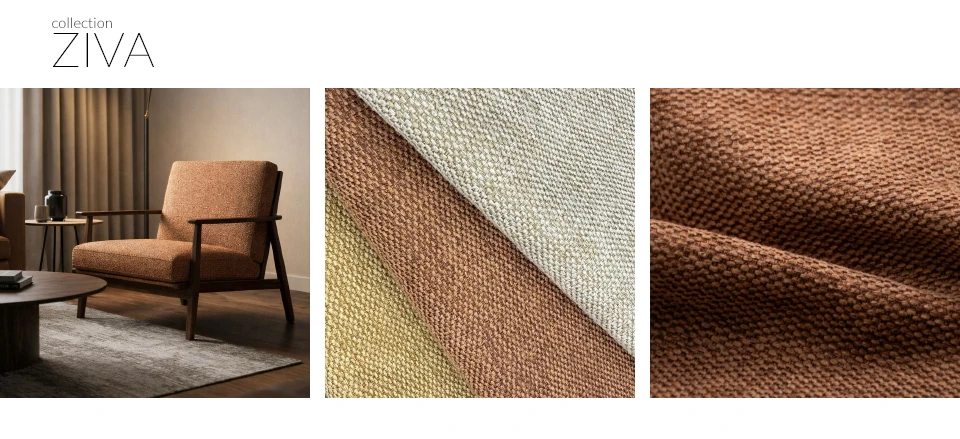
ZIVA achieves this subtly. Its fine texture and delicate nap ensure that the piece doesn’t look flat, even when the colour is neutral.
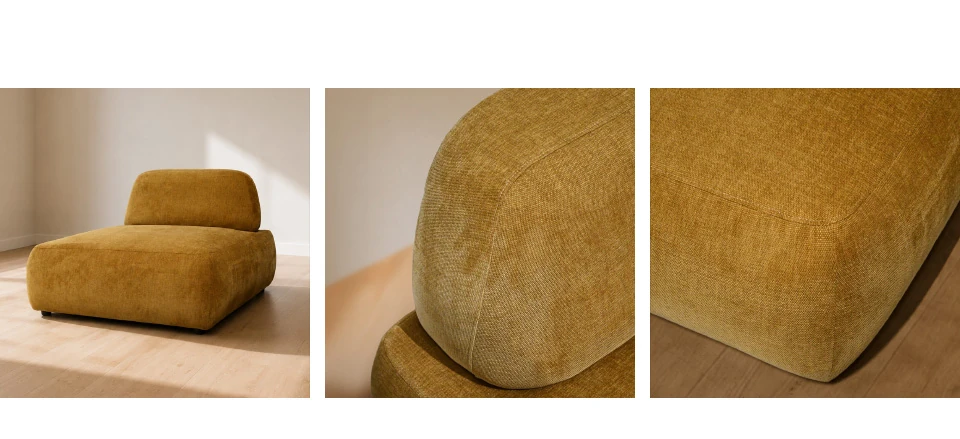
MONELLI adds extra softness and a fuller feel, particularly on the large surfaces of sofas and corner sofas.
HOLMS, on the other hand, with its more prominent weave resembling a fine grid, adds a touch of texture where the form needs greater definition.
These are fabrics designed to provide the perfect backdrop for life with children or pets. Fabrics that help shape a space without restricting it.
