
DARE TO BE TIMELESS

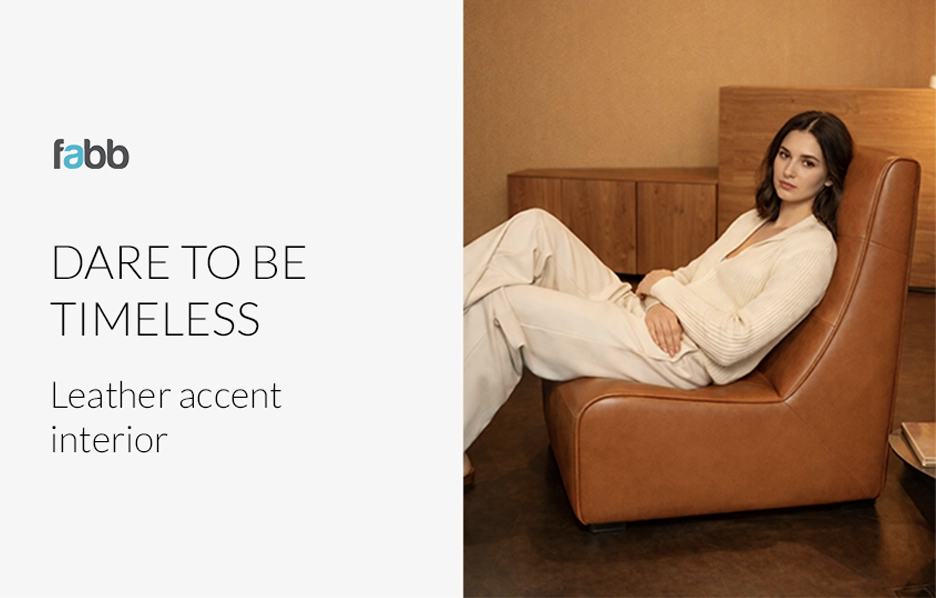
Earthy Boldness: a palette that doesn’t age
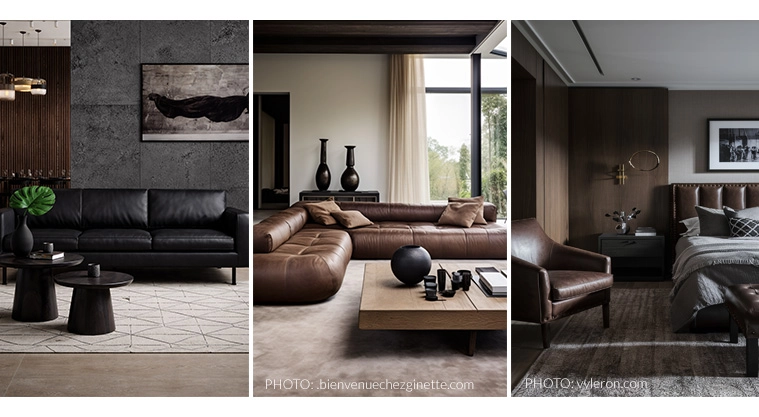
Browns, taupes, charcoals, rust tones, and muted beiges are making a comeback because they resist seasonal shifts. They work effortlessly with wood and stone, giving interiors a longer aesthetic lifespan. These are colours that don’t shout in 2026 — they build atmosphere.
And it’s within this palette that the leather accent appears most naturally. A single element that brings structure to a space and creates a premium feel. But today, “premium” means something more: it has to be reliable in everyday use.
Dare to be timeless. Faux leather without compromise
Until recently, faux leather was mainly seen as an alternative to natural leather — chosen for budget or technical reasons, rarely for its aesthetic ambition. Today, the upholstery market tells a different story: modern leather-look materials have undergone a qualitative shift — both visually and functionally.
In the era of Timeless Design, designers think in terms of form durability, colour consistency, and resistance to real-life use. The leather effect should look good not only on day one, but also after months of intensive use.
Why natural leather can be a risk
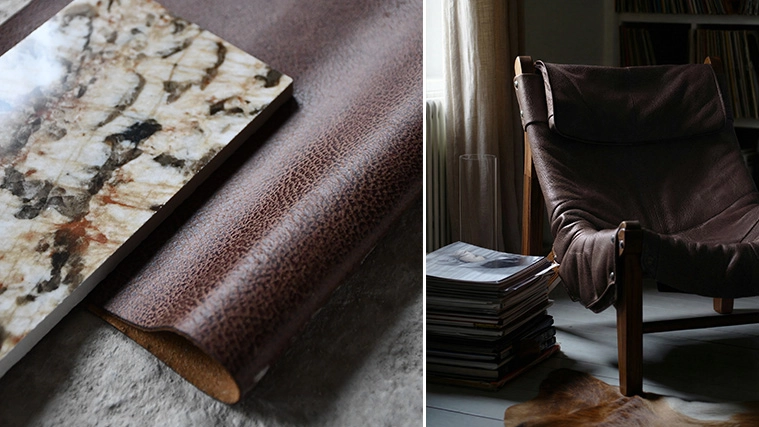
Natural leather remains luxurious — but demanding. It is sensitive to moisture, light, and friction. It requires regular care and ages in ways that are not always predictable. In family homes, offices, hotels, lobbies, or coworking spaces, maintaining its original look often requires effort — with no guaranteed outcome.
The same applies to natural suede: visually striking, but difficult in everyday use. That’s why the question is increasingly not “whether leather,” but: how to achieve the leather effect without material risk.
The “cheap imitation” myth — no longer relevant
For years, the term “faux leather” carried negative associations: plastic feel, repetitive patterns, stiffness, fast wear. But today’s leather-look materials are advanced textile constructions. They differ in composition, finishing (embossing, matte effects, prints), tactile experience, ageing behaviour — and performance parameters that can even surpass natural leather.
One key factor makes the difference: conscious selection.
Leather accents at FABB: four effects, one approach — predictability
At FABB, we treat the “leather look” as a design tool. The same Earthy Boldness palette — but four distinct experiences and applications.
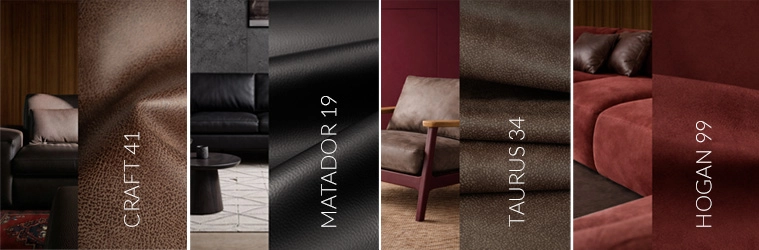
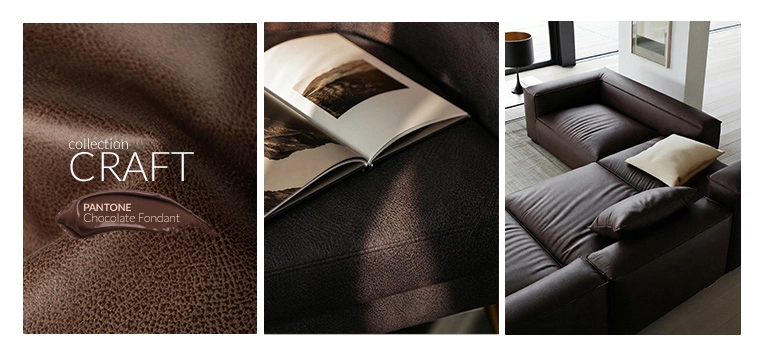
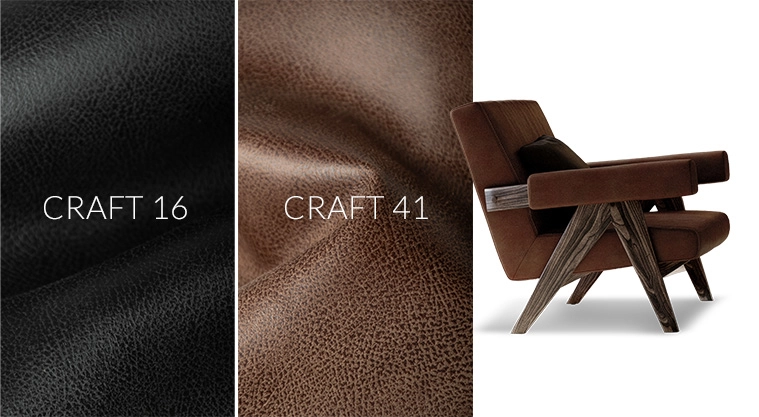
CRAFT — a hybrid that performs like leather
The only material in the range with a natural component in the backing layer, including 20% leather fibres for structural support. As a result, Craft doesn’t just imitate leather — it behaves like a material with a leather core: it holds shape on forms, doesn’t ripple on flat surfaces, and performs better under seam stress.
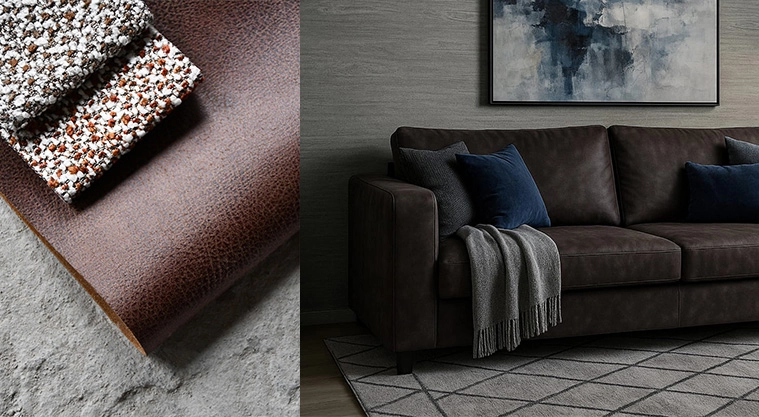
New colours have also been introduced: Anthracite and Brownie.
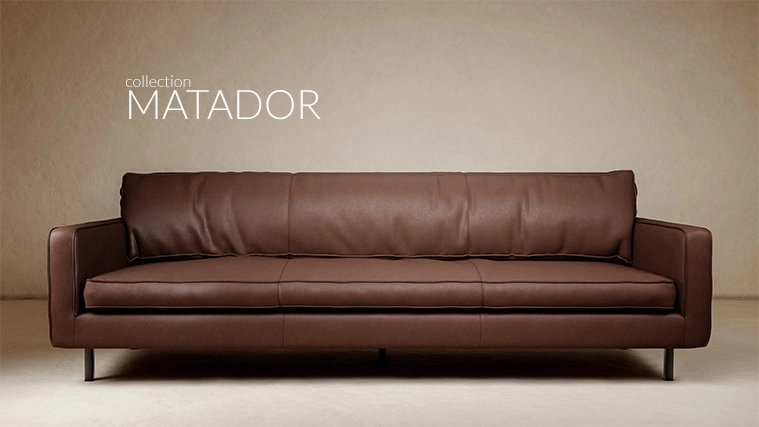
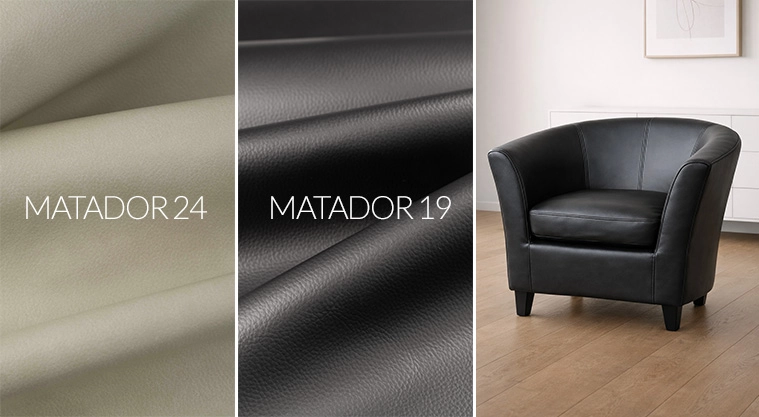
MATADOR — leather, but predictable
High-quality PU with a full-grain leather effect, satin finish, and natural embossing. Its very high durability makes Matador ideal for high-traffic interiors: homes, offices, hotels, and public spaces.
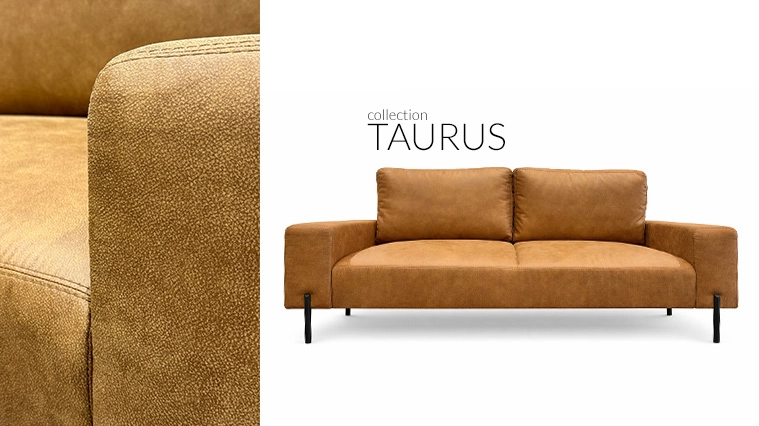
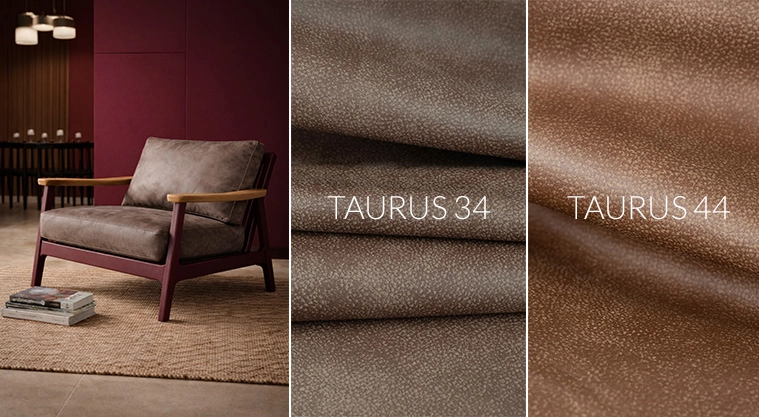
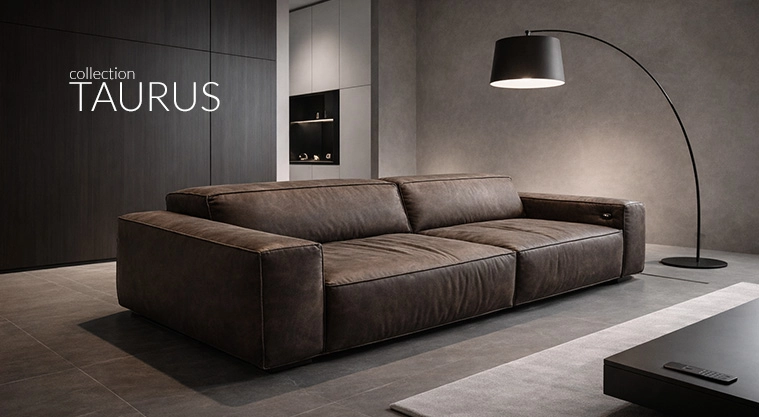
TAURUS — leather look, textile comfort
Taurus delivers the visual leather effect, but with a soft, warm, fabric-like touch. Perfect for residential projects where comfort matters as much as appearance.
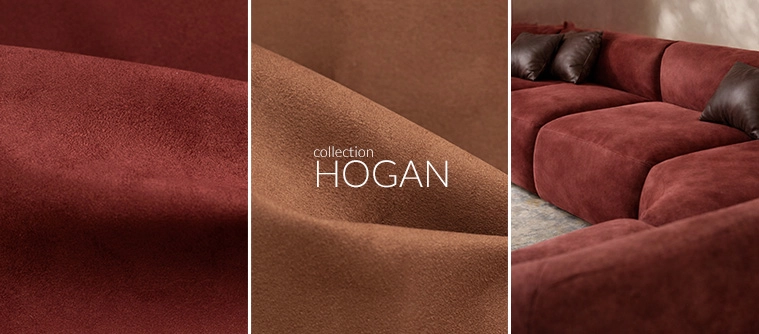
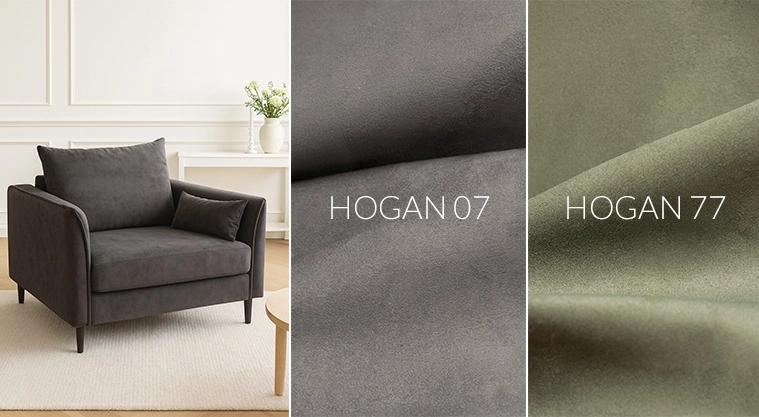
HOGAN — suede, designed for real life
A suede-inspired look without the typical drawbacks of natural suede. Easier maintenance, colour stability, and long-term visual consistency — even in demanding environments.
Timeless is being redefined
Modern leather-look materials offer something different: control, durability, and aesthetic consistency — exactly what today’s market expects.
That’s why they are coming back into projects — and staying there longer.
Want to match the right leather effect to a specific furniture design and see how each material behaves in touch and light?
Follow us on social media — we show how these materials actually perform on furniture forms and in different lighting conditions.