
TDS in a nutshell: a practical guide

Fabric in a living room, restaurant, or hotel is not just about color and texture, but above all about the parameters hidden in charts and standards—those that actually decide whether a sofa will last a decade or lose its shape after a few months.
The Technical Data Sheet (TDS) is like the “passport” of a material—a document that reveals its strengths and limitations. Below is a short cheat sheet: what each parameter means and how it translates into everyday use.
1. Fabric weight (g/m²)
The weight tells us how much 1 m² of material weighs. Durability, breathability, and intended use largely depend on it:
· Light (up to 200 g/m²) – for less-loaded elements.
· Medium (200–400 g/m²) – universal, suitable for most furniture (seats and backrests).
· Heavy (above 400 g/m²) – maximum durability, ideal for heavily used parts of furniture.
The higher the weight, the better the quality, stability, and resistance of the fabric.

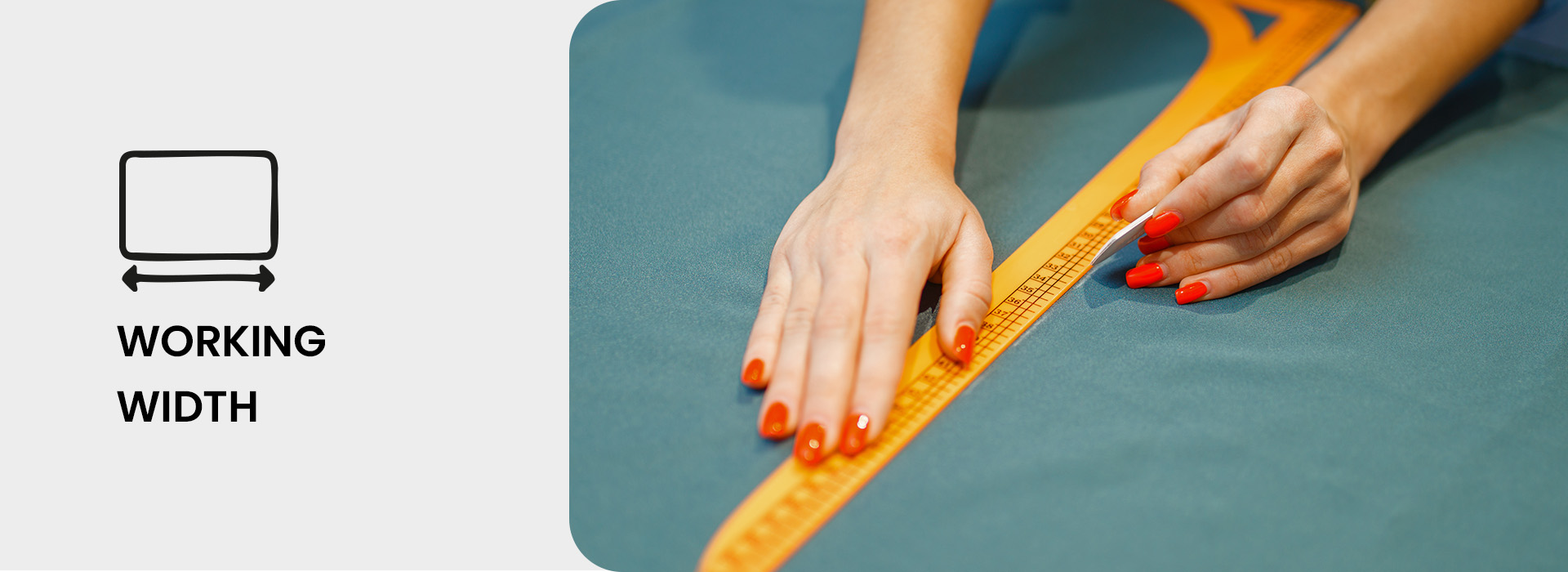
2. Working width of roll
Simple: the wider the roll, the less waste. The industry standard is at least 140 cm – enough to cut large elements without material shortages.
3. Composition and type of yarns
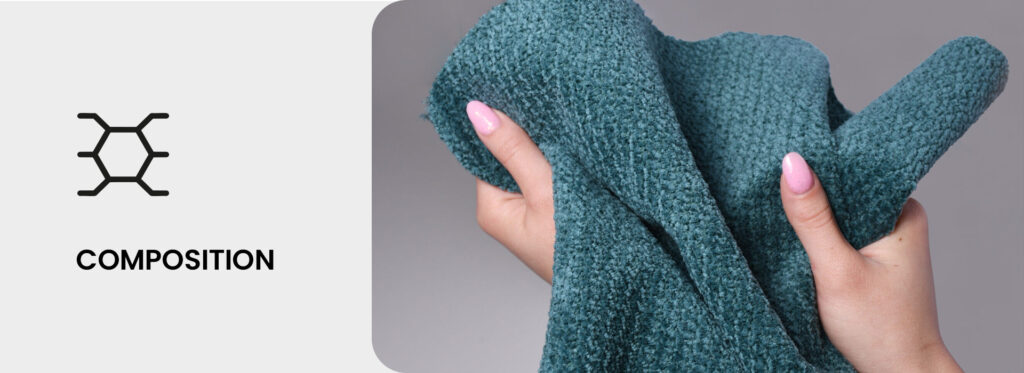
100% polyester? A cotton blend? Or maybe eco-leather with a PU backing?
· Polyester, nylon, acrylic – more resistant to abrasion and stretching, stain and fade resistant.
· Chenille, bouclé – soft, cozy, but more prone to pilling.
· Eco-leather – highly practical, liquid-resistant, but less breathable.
Composition is the first clue to how a fabric will behave over time.
4. Martindale – abrasion resistance
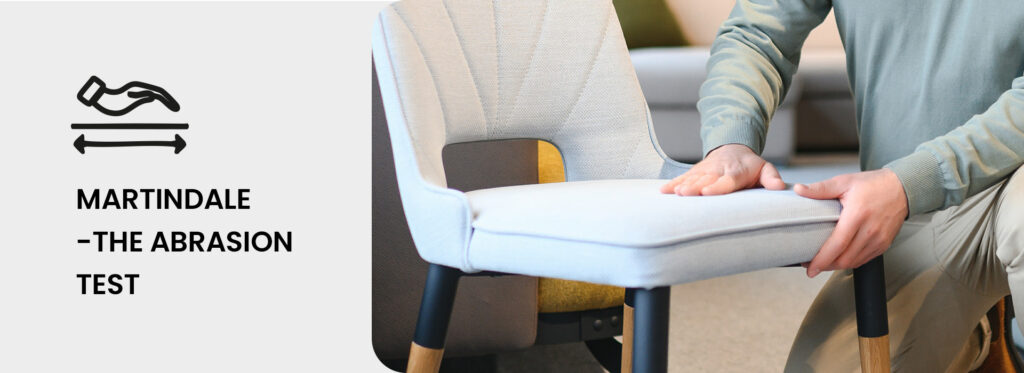
Imagine a special machine rubbing a fabric sample in figure-eight movements until the first visible damage occurs. The result is the number of cycles completed—this is the Martindale score.
· Home furniture: 15–20,000 cycles is enough.
· Hotels, offices, restaurants: 30,000–50,000 cycles and more is the baseline.
Did you know? Some eco-leathers or technical fabrics reach even 100,000 cycles—practically indestructible.
5. Pilling
Fuzzing is easy to notice on sweaters, where small, soft fiber balls appear with use and are easy to remove.
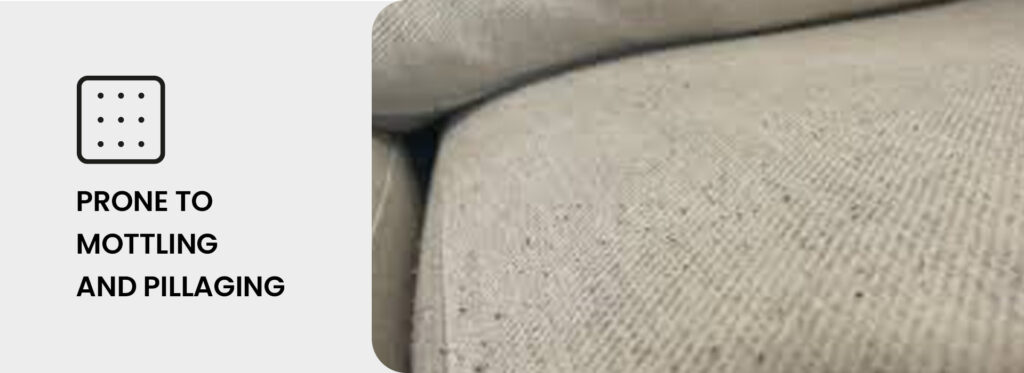
Pilling, on the other hand, means the formation of small, hard fiber pills that are much harder to eliminate. The pilling test measures a fabric’s tendency to form these pills.
· Score 5: almost no pills – typical for eco-leather and smooth velvets.
· Score 4: minimal pilling, hardly noticeable.
· Score 3: pills appear more quickly – usually on fluffy chenille or bouclé.
6. Colour fastness to light
A sofa by a large window? Here lightfastness matters. Tests are performed under artificial light, and results are rated on a scale of 1–8.
· 4–5: good domestic standard.
· 6–7: outdoor fabrics that withstand strong sun.
7. Colour fastness to dry and wet rubbing
Nobody wants a dark sofa staining light clothes. This test measures dye transfer.
A score of 4–5 means you can sit in light jeans without surprises.
8. Tear growth resistance and tensile strength
These are lab tests using specialized strength machines.
· Delicate jacquards, chenille: lower tear resistance (30–40 N).
· Velvets or eco-leathers: even 70+ N and hundreds of Newtons in repeated tests.
These values are critical in public spaces where stress loads are higher than at home.
9. Resistance to seam slippage
Do seams hold? If threads slide apart under stress, that’s a problem. Standards are clear: up to 4 mm (Class A) is safe. Our fabrics are designed to stay intact even with heavy use.
10. Snagging test (Pet-proof)
One of the most interesting tests – special discs simulate cat or dog claws.
· Velvets and compact structural fabrics usually pass with flying colors.
· Jacquards, bouclé, long-pile fabrics – while trendy, they are more prone to snags.

11. Safety standards – our guarantees
Not visible to the eye, but key for trust:
· OEKO-TEX Standard 100 – no harmful substances in skin contact.
· REACH – compliance with strict EU chemical regulations.
· PFAS-free – we eliminate per- and polyfluorinated compounds, increasingly questioned environmentally.

With these certifications, you can be sure our fabrics are safe—for users and for the environment.
The Technical Data Sheet is not a dry chart. It is a guide that allows conscious fabric selection for different spaces: from family living rooms, through office open spaces, to hotel lobbies. Knowing how to read it is an advantage—because only then do color and texture become an informed choice, not just an aesthetic impulse.