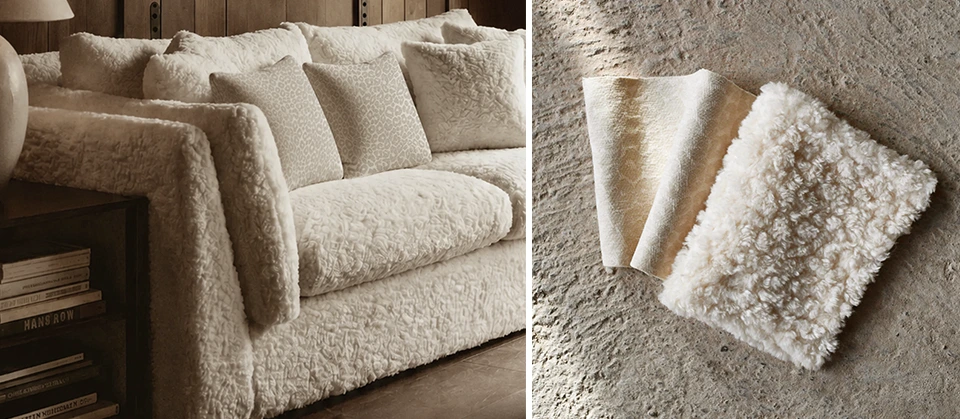
The animal trend has come of age. It’s no longer about the print, but about instinct.
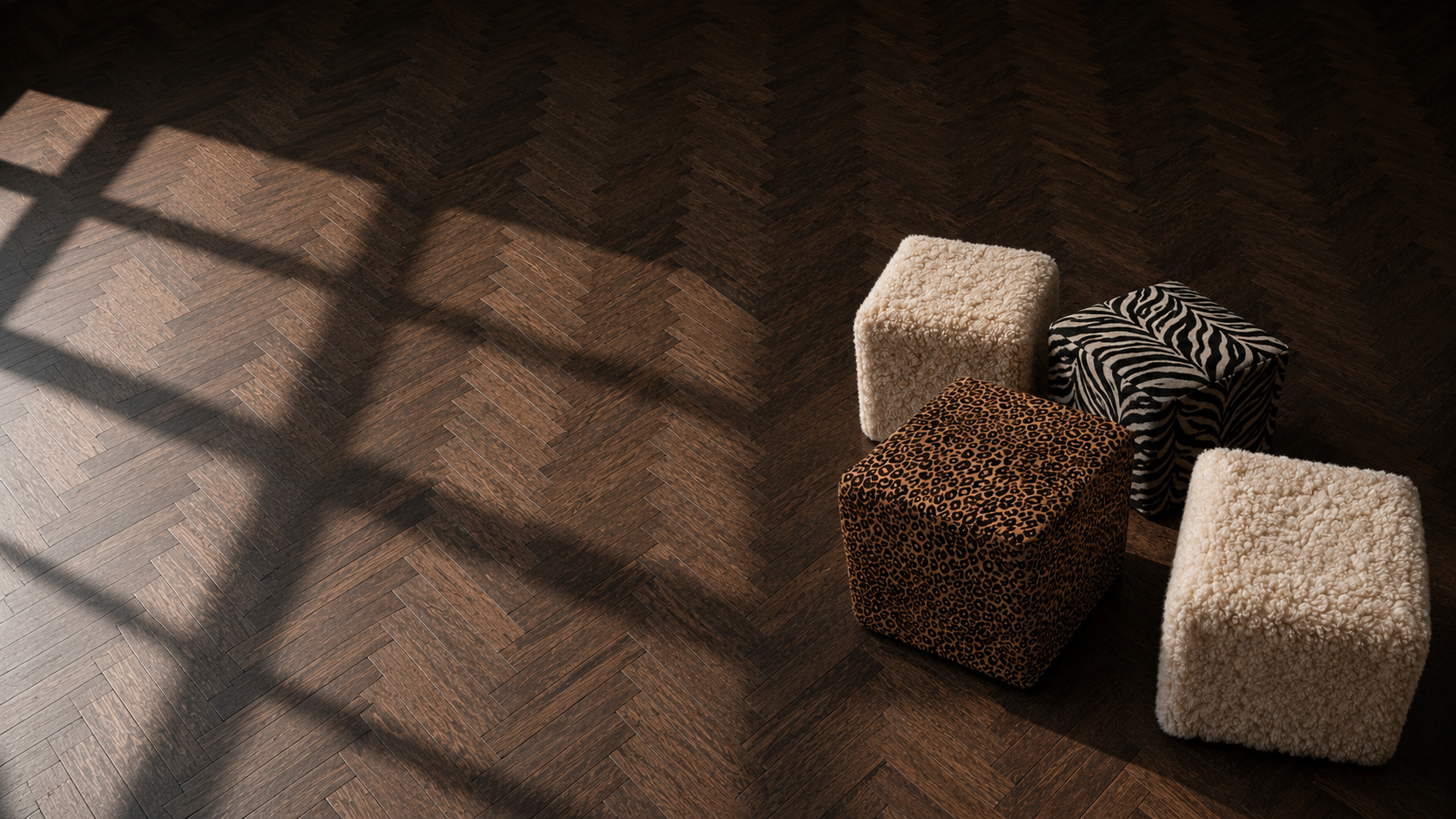
The most intriguing animal-inspired upholstery designs today no longer have to start with leopard print, zebra stripes or cowhide. Sometimes their ‘wildness’ is much more subtle. Hidden within a soft covering. In an irregular pile. In a surface that catches the light differently from classic wickerwork. In the shape of an armchair, which suddenly ceases to be merely a structure of foam and wood, and begins to look like something more organic, almost alive.
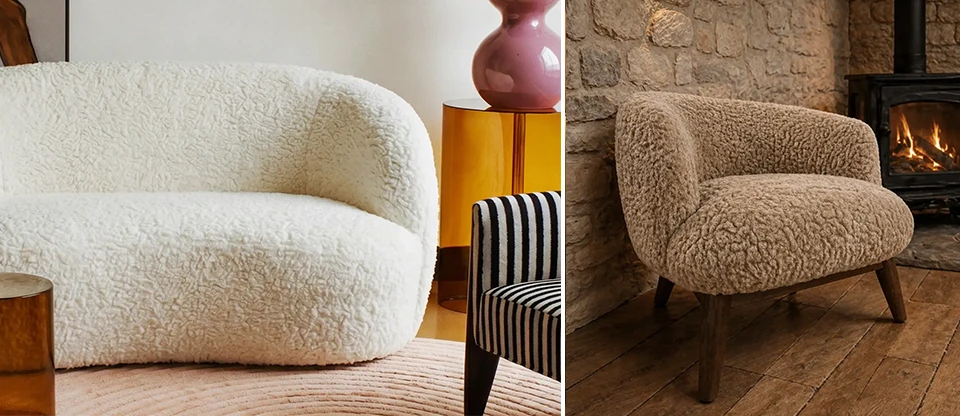
After years of light-coloured sofas, clean lines and safe bouclé, interiors are seeking something more organic. Something more tactile. Something a little primal.
That is precisely why fur upholstery is making a comeback today – not as a winter accessory or a chalet-style decoration, but as a fully-fledged material language. It is no longer just about making a piece of furniture look soft. It is about it having its own covering, character and physical presence.
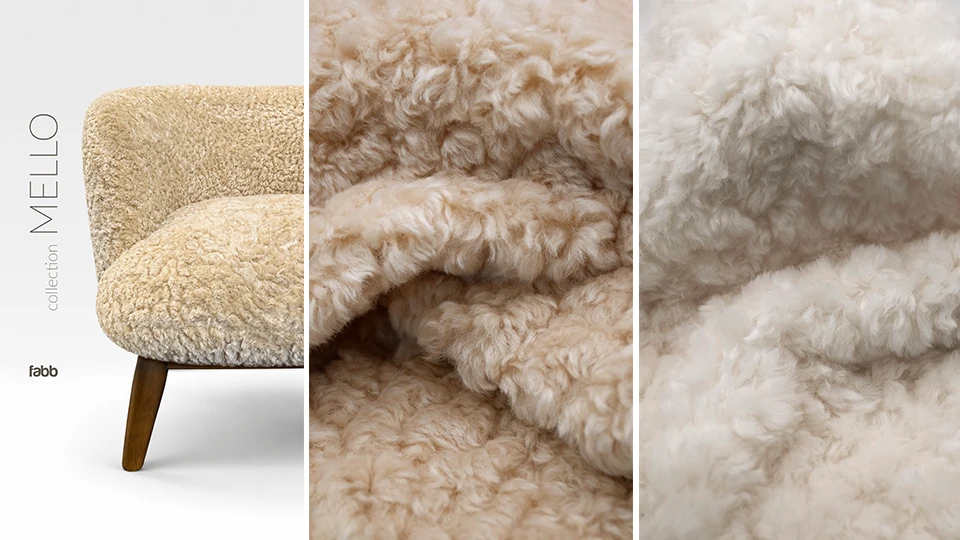
This is where MELLO by FABB comes in — a fabric that interprets the animal trend not through pattern, but through texture. It doesn’t show an animal motif. It lets you feel it.
Fur in design is not just a passing fad
Interiors have a short memory, but design has a much longer one.
Fur upholstery didn’t start with Instagram, teddy chairs or trendy chalet chic apartments. Its history goes back much further, to Scandinavian modernism and furniture that, as early as the 1930s, sought to combine simplicity of form with something more instinctive: warmth, volume and a soft covering.
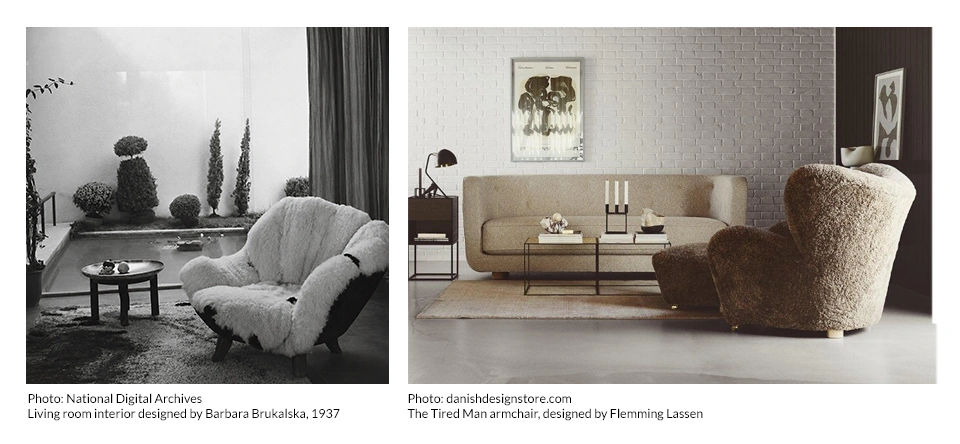
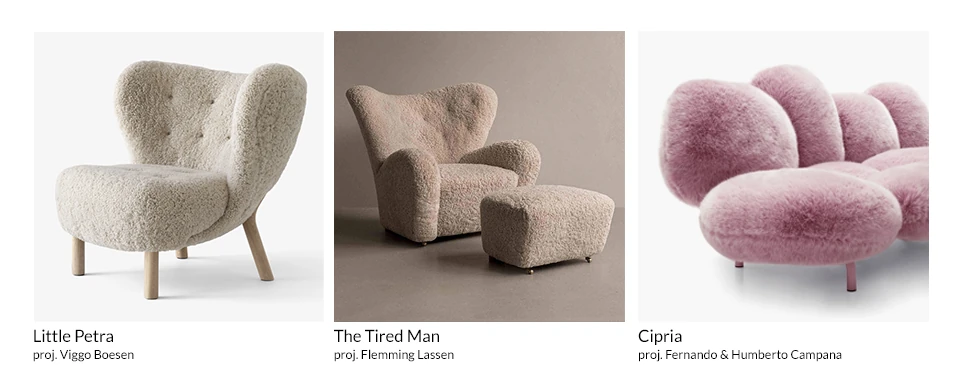
Viggo Boesen’s Little Petra, now part of the &Tradition collection, is described by the brand as a low, open and embracing form — exactly the sort of piece of furniture that invites rather than impresses. Flemming Lassen’s The Tired Man, presented at the Copenhagen Cabinetmakers’ Guild Exhibition in 1936, is described by Audo Copenhagen through associations with warmth and security, even a hug “like a polar bear”.
That’s an important lead. Because these designs didn’t treat fur as mere decoration. Fur was an integral part of the piece’s character. It altered its silhouette, its warmth, and the way it was perceived. It meant that the armchair wasn’t just something to sit on, but a little retreat.
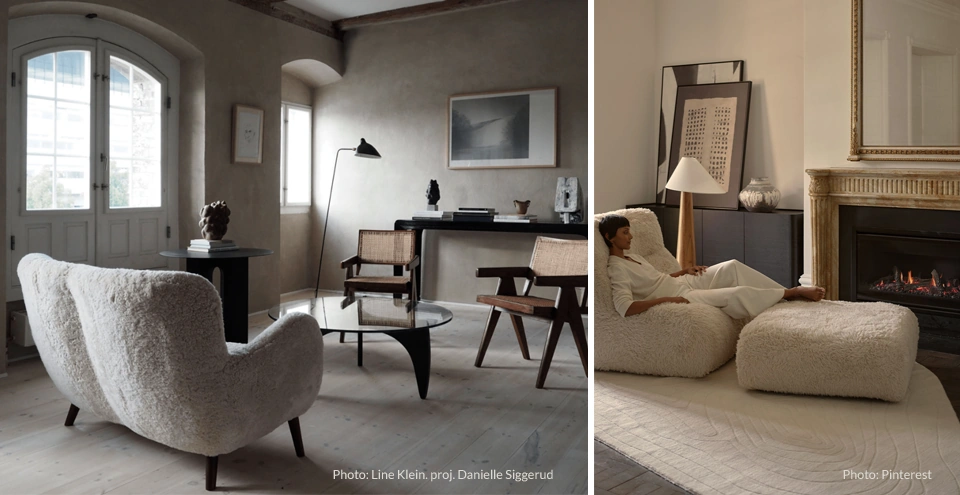
The current resurgence of shearling, sherpa and fur-lined knits is therefore not merely a passing whim of nostalgia. Rather, it marks a return to a question that constantly resurfaces in furniture design: how can we ensure that a design is not only attractive, but also comfortable to the touch?
After the bouclé trend, interiors are looking for something more organic
Bouclé had its moment, as it perfectly met the demand for softness. It was neutral, elegant and safe. It looked good on curved sofas, in bright interiors and within a calm, minimalist aesthetic.
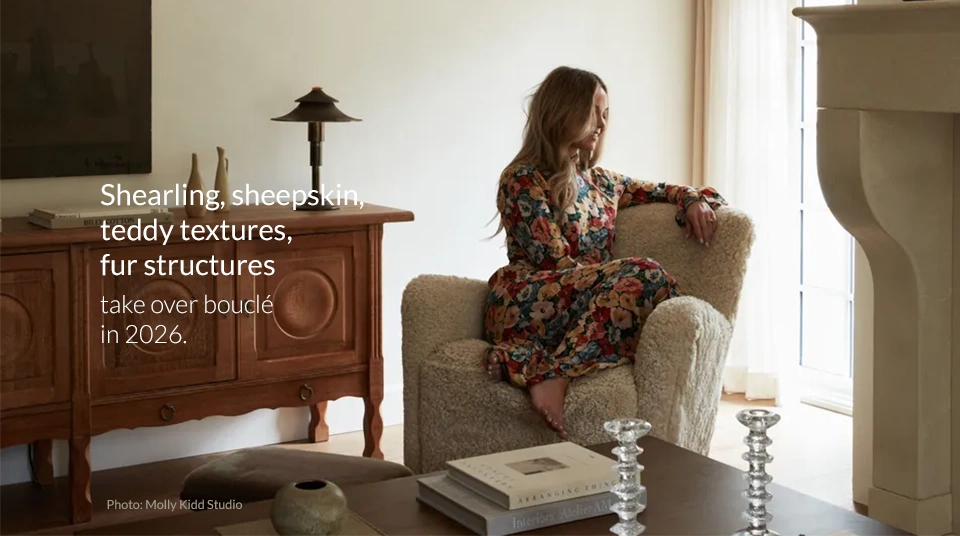
But any trend that becomes too widespread eventually loses its charm.
That is why designers are increasingly turning their attention to less predictable textures: shearling, sheepskin, teddy textures and fur-like textures. Apartment Therapy highlighted shearling and sheepskin as a major trend for 2025, emphasising their more rustic, earthy character compared to bouclé. Homes & Gardens, meanwhile, wrote about “bouclé fatigue” and described shearling as a warmer, less polished, more irregular alternative to this ubiquitous looped texture. This does not mean that bouclé is disappearing. Rather, it is ceasing to be the only answer to the need for softness.
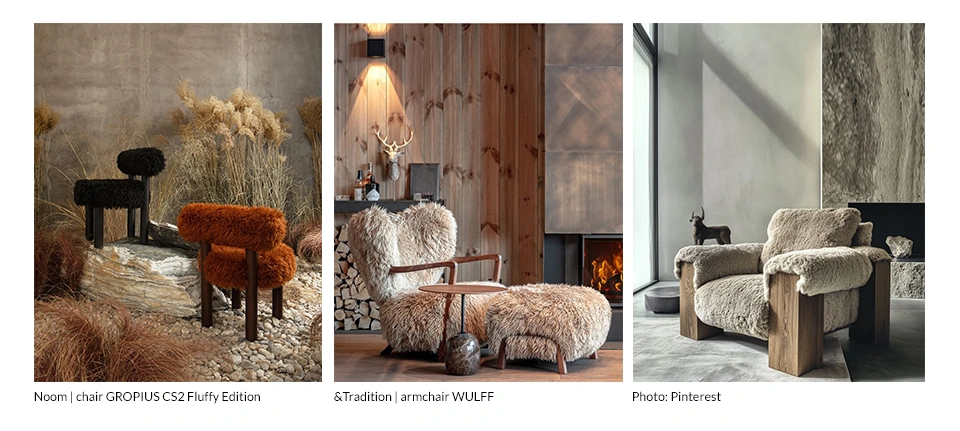
Interior design is evolving. It craves textures with movement, shadow and irregularity. It craves materials that aren’t perfectly smooth. Because a home that looks too perfect increasingly feels cold. Fur upholstery is therefore beginning to make sense not only aesthetically, but also culturally. It speaks to the need for interiors that are more human, less showroom-like, and more tactile.
FABB’s menagerie of forms
In FABB’s collections, the animal trend is not just a single motif. Rather, it encompasses a whole range of forms, textures and associations.
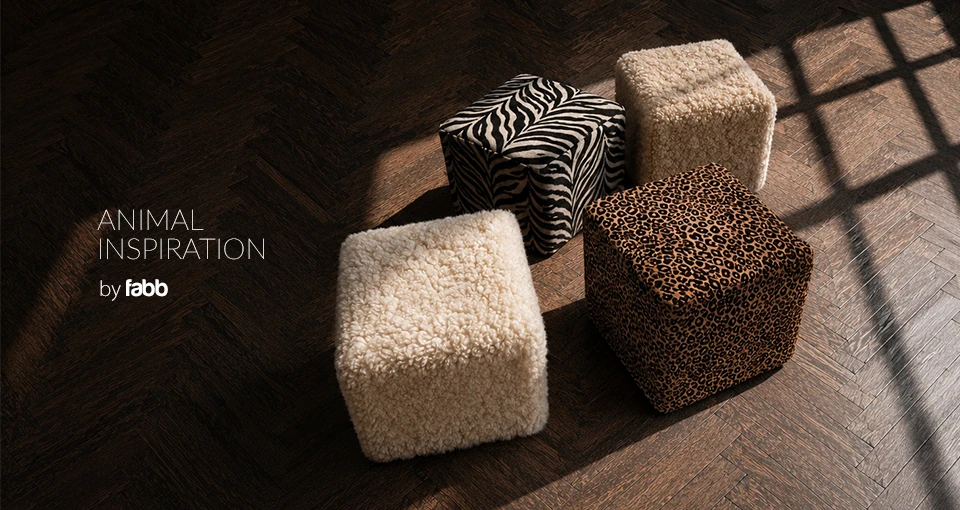
Wild is moving towards prints — ones that are more bold, instinctive and graphic.
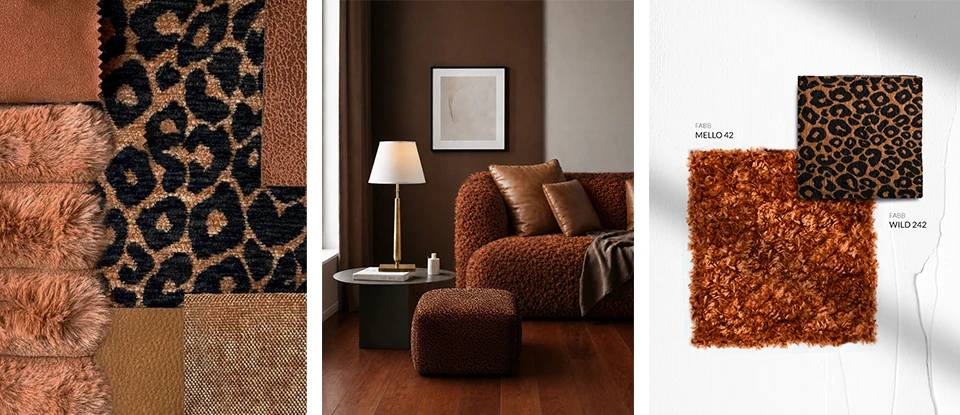
MOO introduces an animal print with a touch of rustic irony, drawing on the aesthetics of earth and alpine interiors.
SVEN speaks the language of the Sherpa: the softness of lambswool, cosy living and mountain comfort.
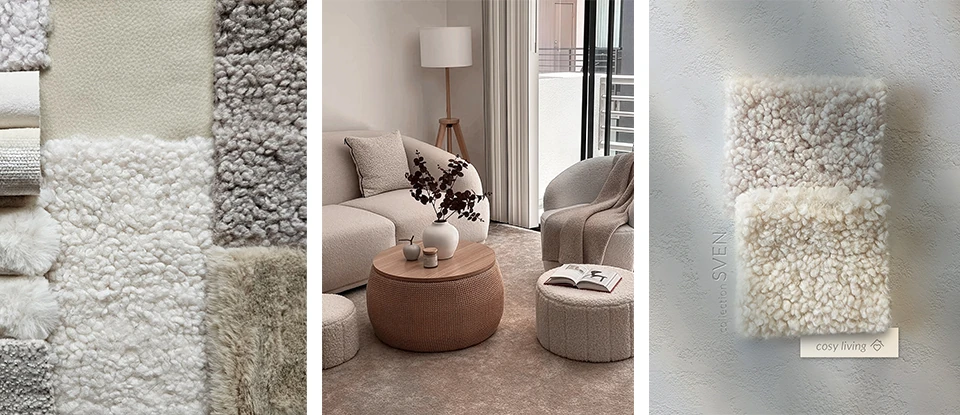
Lapit adds a fur-like lightness — more rabbit-like, soft, lustrous and tactile.
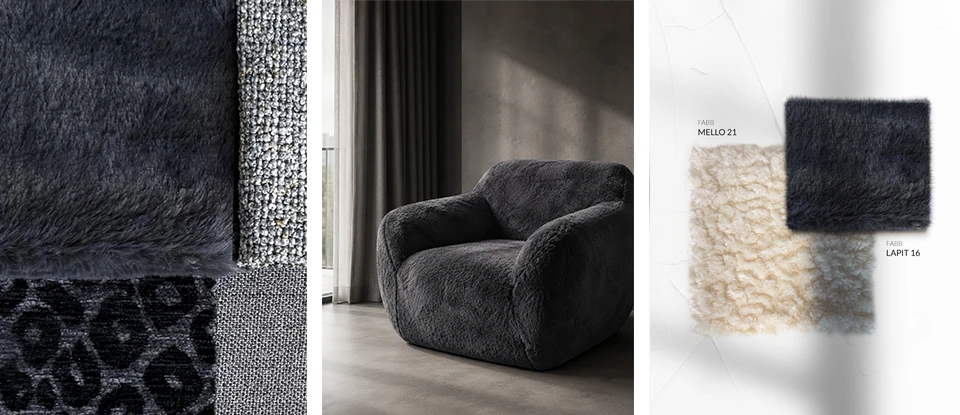
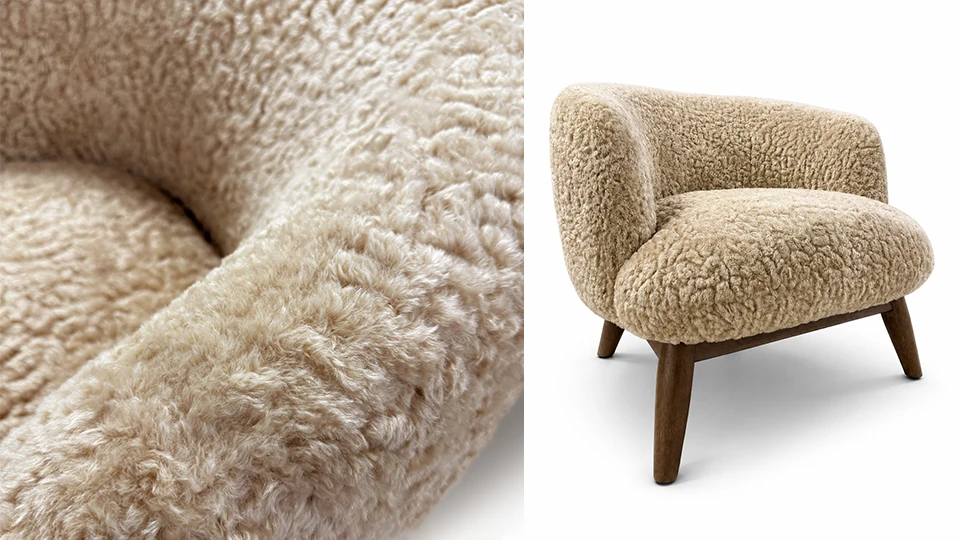
And MELLO? MELLO is somewhere in between. Between sherpa and fur. Between cosy comfort and something a little wilder. It doesn’t need a pattern to evoke animal associations. It does so through its pile, its weight, its softness, and the way light plays on the fabric’s surface.
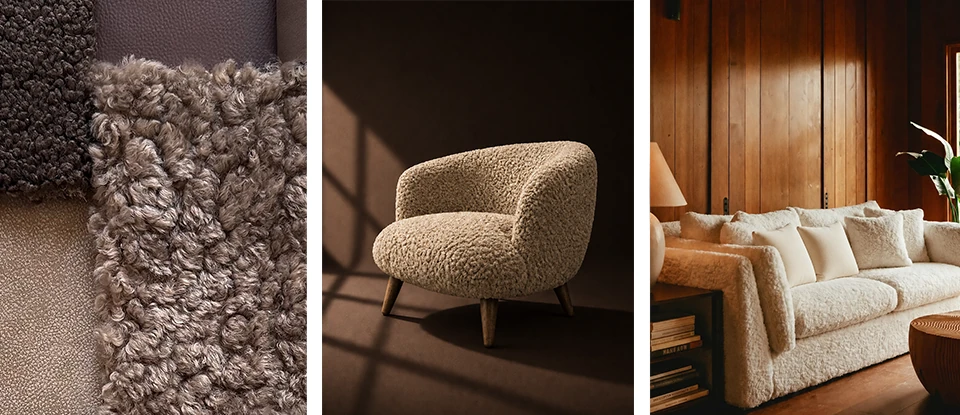
This is important because animal prints in furniture design can be tricky. The print can quickly overwhelm the piece. It can be too obvious. MELLO offers a different approach: one that is more subtle, more focused on the material, and more design-oriented.
MELLO: a fabric that covers furniture
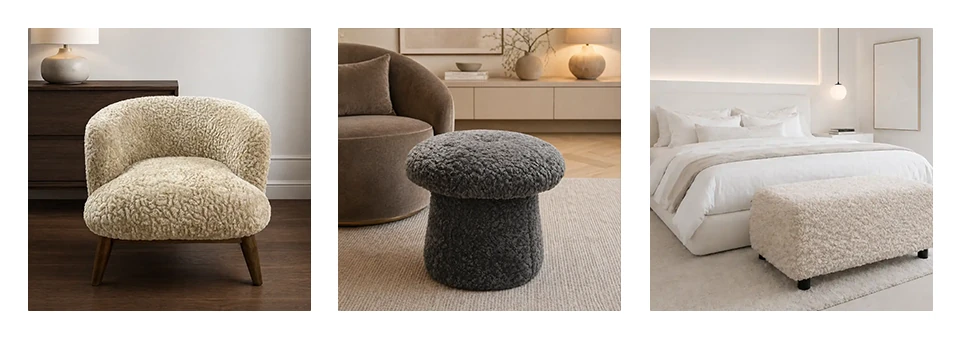
MELLO is a high-gauge (570 g/m²) fur-like upholstery fabric. It has a soft, longer pile that falls in irregular, slightly tousled waves. It isn’t flat. It isn’t perfectly combed. And that is precisely where its strength lies.
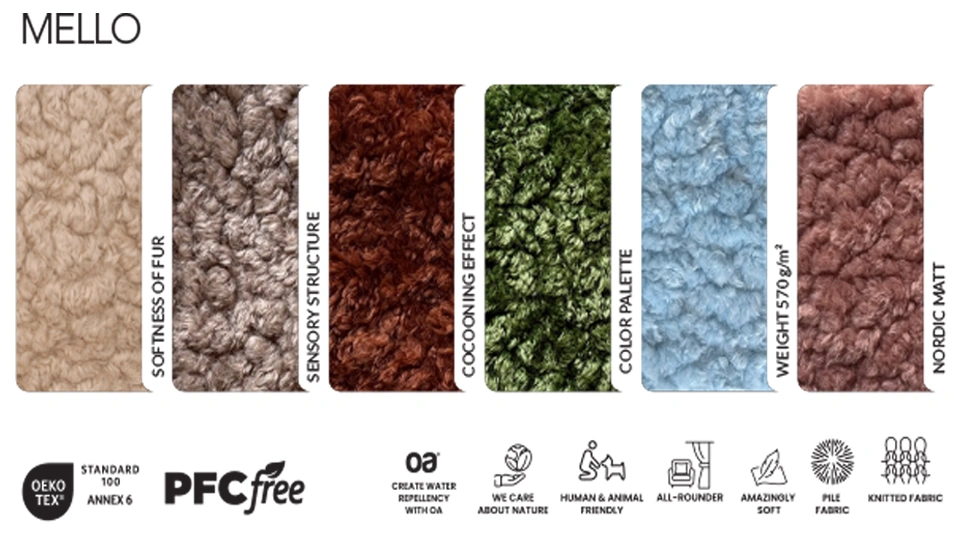
On rounded armchairs, pouffes, chaise longues, benches or footstools, MELLO doesn’t look like a thin cover. It gives the impression of a natural covering for the furniture. It softens the contours, adds volume and makes the shape appear more substantial.
It is a fabric that understands contemporary furniture well: low, rounded, comfortable, more for ‘sinking into’ than just sitting on.
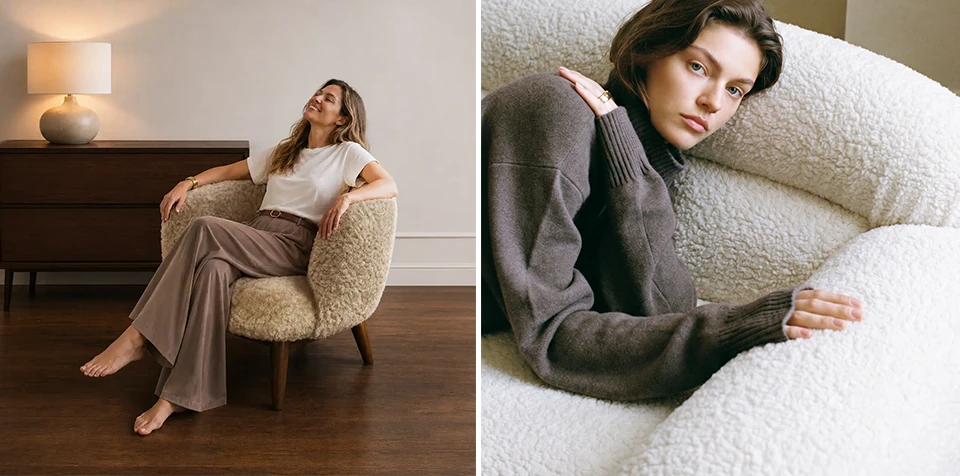
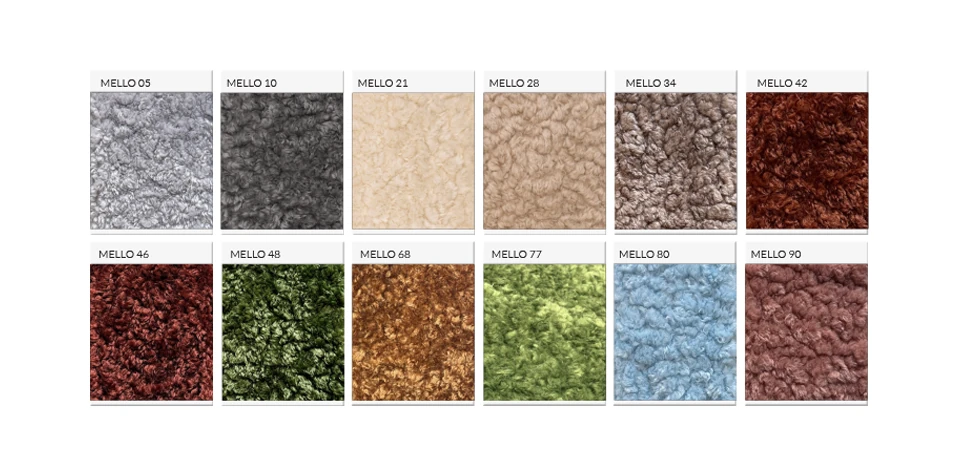
The MELLO palette also works to achieve this effect. Natural beiges, shades of ivory and warm greys steer it towards quiet luxury, soft minimalism and an earthy aesthetic. Meanwhile, moss green, caramel, rusty brown, powder pink and cooler blues allow it to be used as a striking accent — in a children’s room, a hotel lounge or an urban interior in the new eclectic style.
From premium icons to everyday furniture
The best examples of fur upholstery show that this material lends itself to bold designs. It can be luxurious, playful, childlike, rustic, Scandinavian or very urban. It all depends on the piece of furniture.
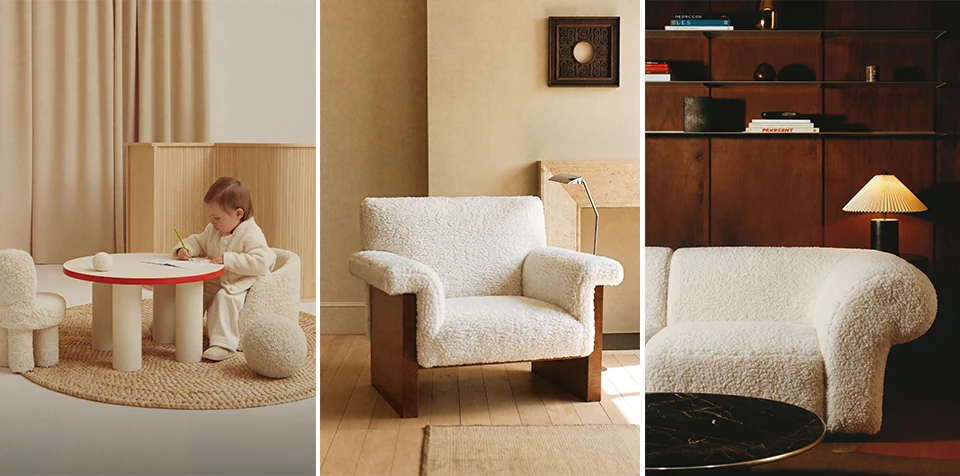
MELLO can be incorporated into this world in several ways. In the premium segment — as upholstery for a low armchair on wooden legs, a chaise longue by the window, or a substantial pouffe next to a sofa, all made from a smooth fabric. In the lifestyle segment — as a teddy chair, a bench in the bedroom, a pouffe in the living room, or a small accent armchair. In children’s designs — as a sensory material for rockers, pouffes and soft seats.
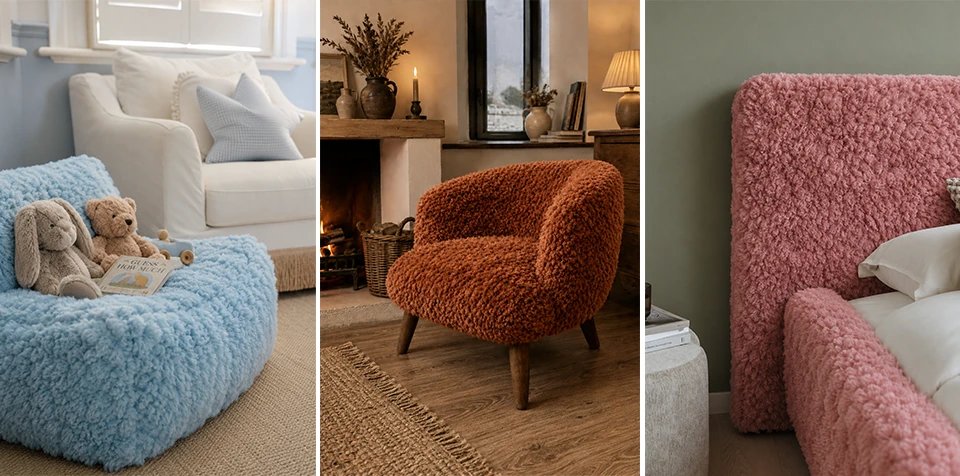
There is also another current trend: pets. Furniture for pets is increasingly less likely to be something that needs to be hidden away in a corner of the room. More and more often, it is designed to look like part of the interior. For MELLO, this is a very natural area: beds, soft platforms, pouffes for pets, or pieces of furniture shared by humans and animals. Here, the furry texture isn’t just a stylistic choice. It’s intuitive.
Softness that is not merely an effect
The biggest risk with fur-like fabrics is that they will be treated merely as a decorative prop for a photo shoot – something soft and eye-catching, but not necessarily taken seriously from a furniture manufacturing perspective.
MELLO counters this with its performance specifications.
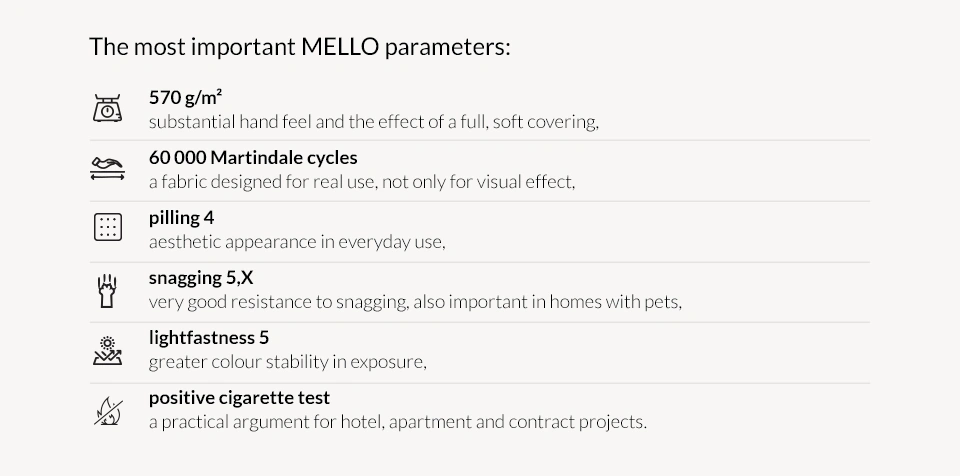
60,000 Martindale cycles, pilling 4, snagging 5,X, lightfastness 5 and a positive cigarette test mean that this fabric can be described not only as a trendy effect, but as a material for real upholstery applications.
Dare to be Wild with Mello — but keep it low-key
The most interesting thing about MELLO is that its wildness isn’t immediately obvious.
It doesn’t need leopard print to be animal-inspired. It doesn’t have to dominate the room. It doesn’t have to be winter-themed to be cosy.
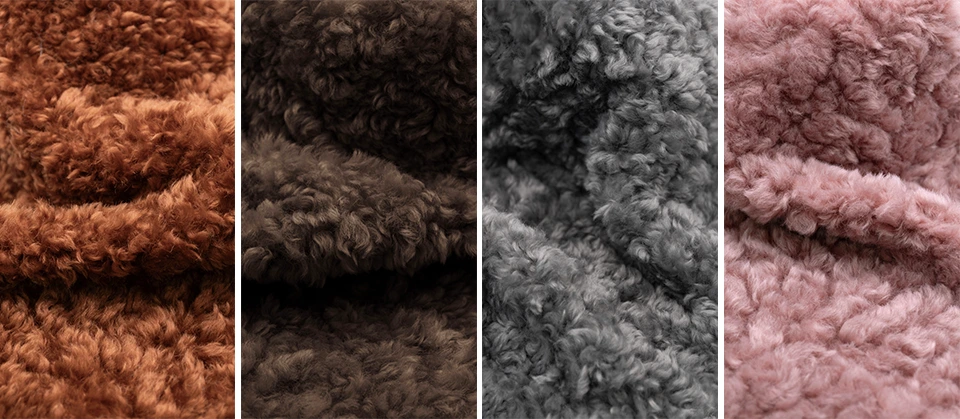
It’s a more mature take on animal-inspired design — one that works through texture rather than literal representation. Through the hair, volume, light and touch.
That is precisely why MELLO rounds off this category of FABB fabrics so well. It is a soft link between the Wild print, the graphic energy of MOO, the lambskin aesthetic of SVEN and the more delicate fur-like quality of Lapit.