How to Design with ZEBRA: From Fabric Sample to a Piece That Builds a Collection
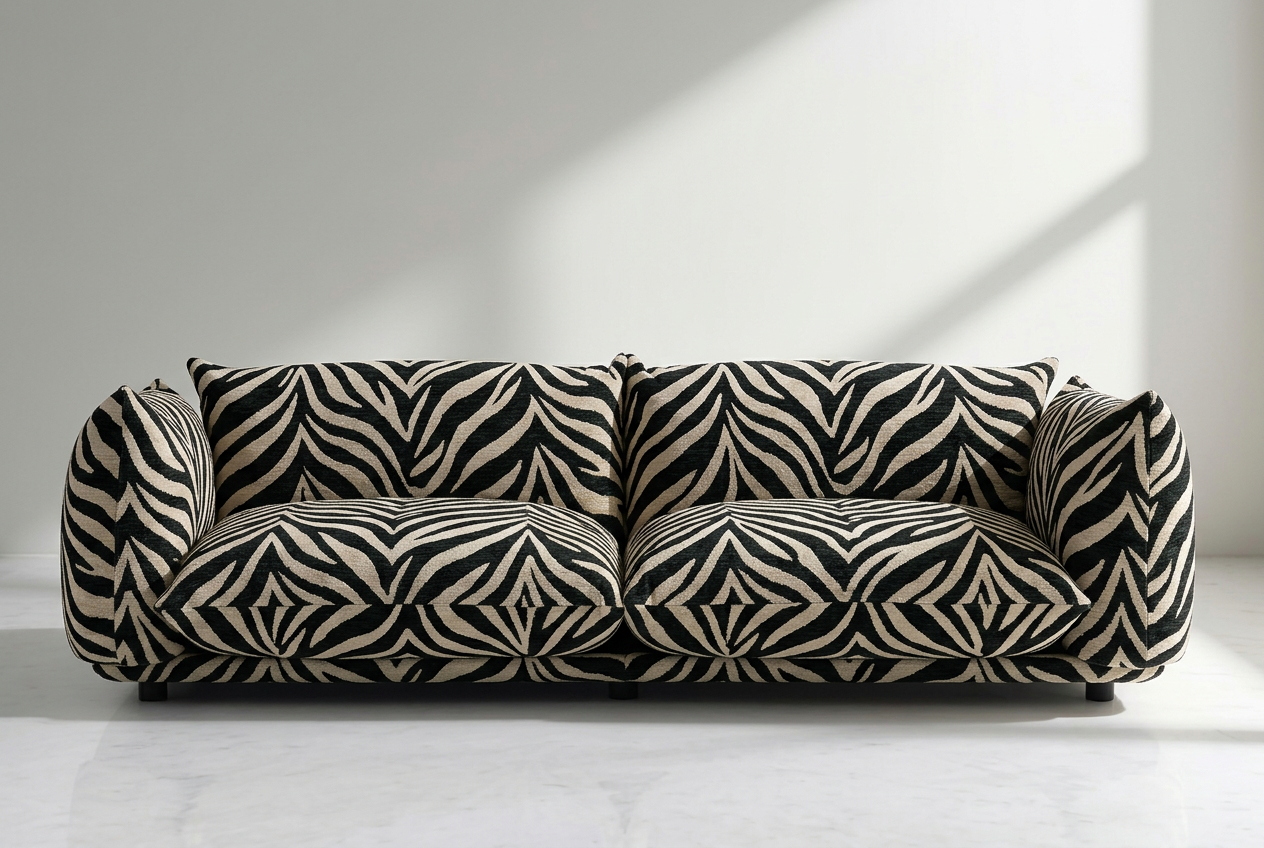
A bold fabric can transform a familiar piece of furniture beyond recognition. It can accentuate a curve, highlight proportions, give a simple form new energy, and turn an existing model into the strongest piece in the collection.
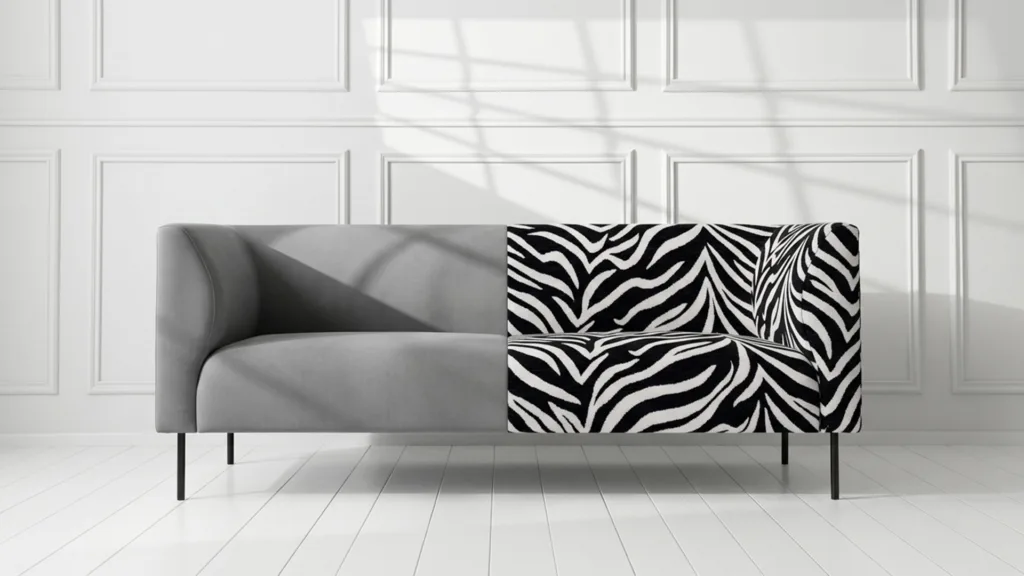
But with a bold pattern, random decisions become noticeable much faster.
That is why, when working with ZEBRA, it is worth starting not with the question:
“What can we use it on?”
A better question is:
“Which piece of furniture will truly allow it to work?”
Start with the form
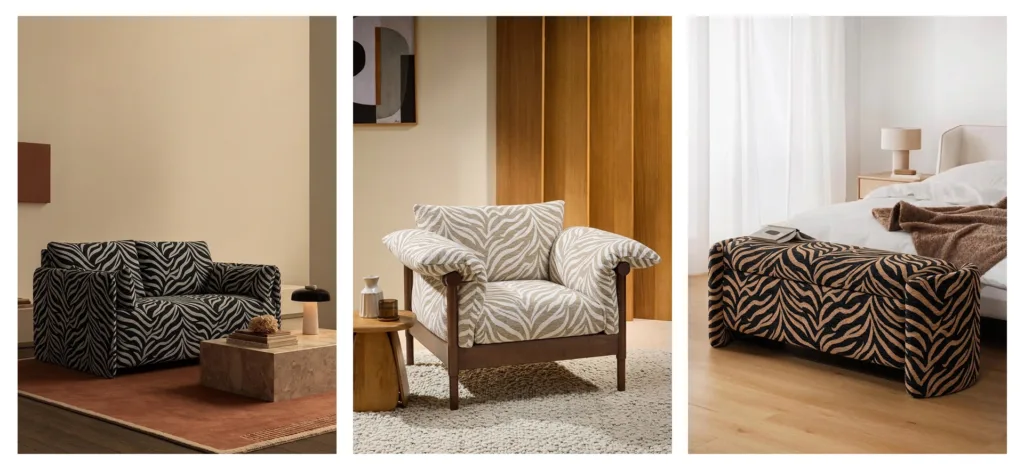
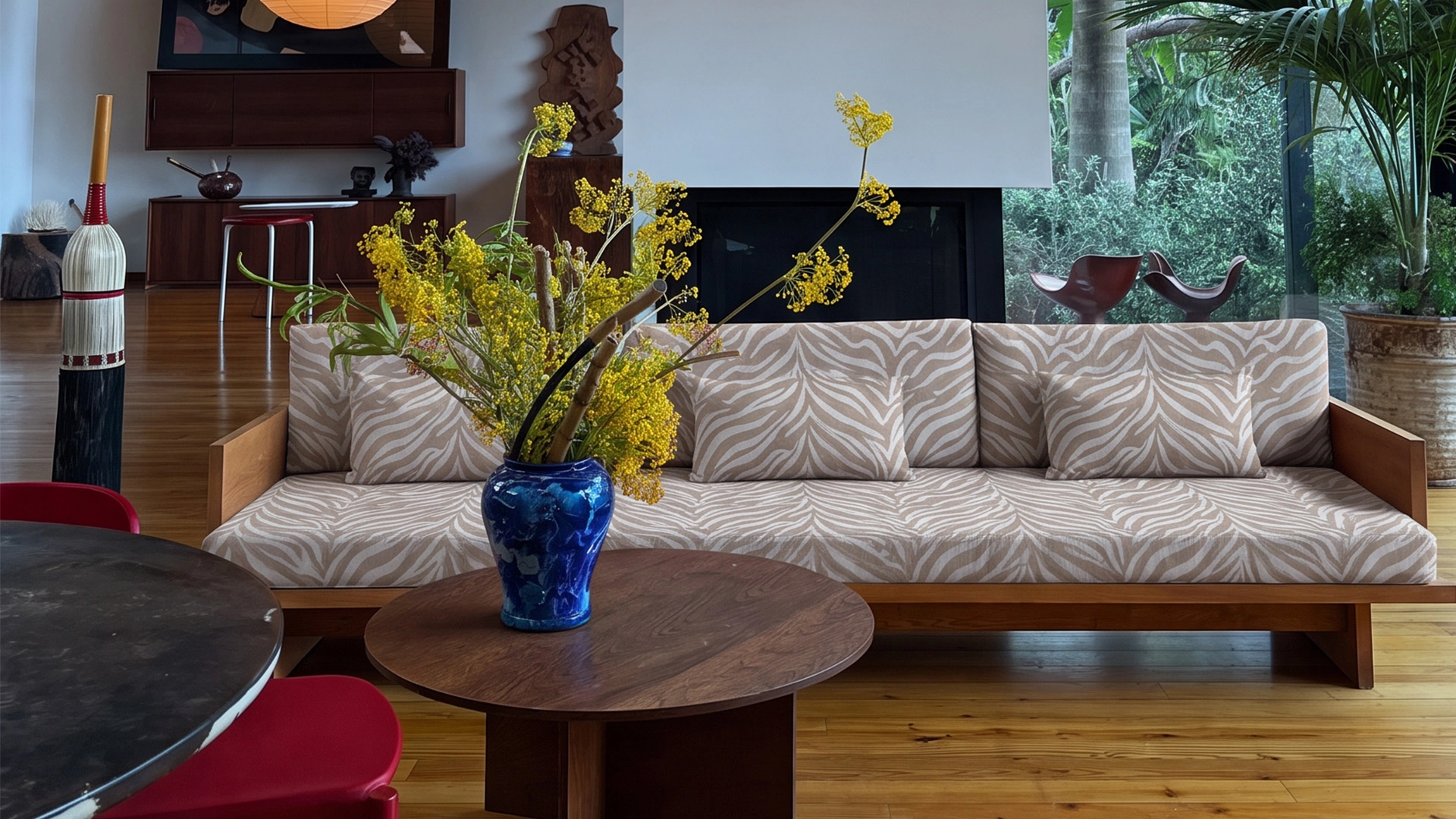
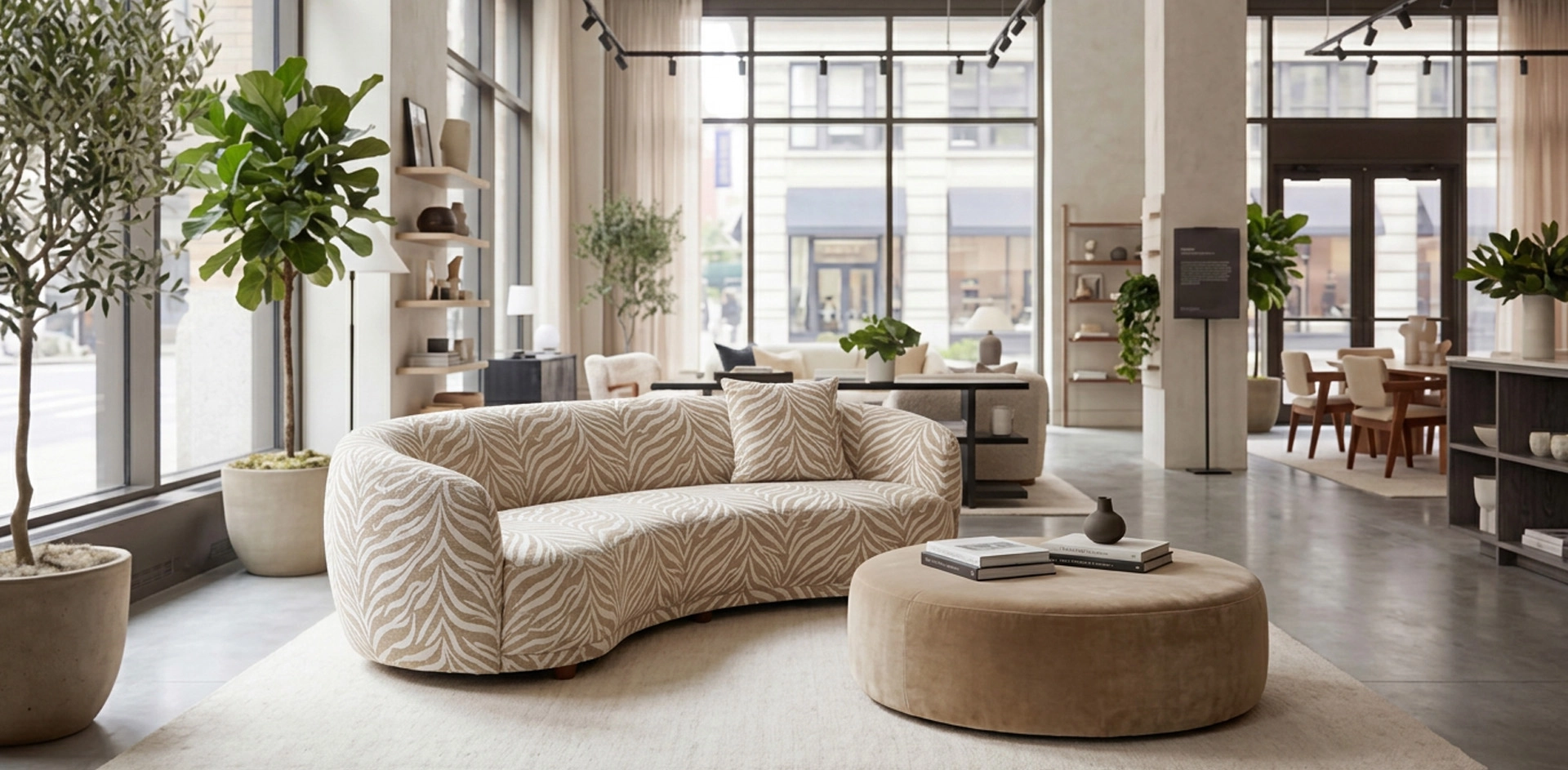
ZEBRA works best where the pattern has room to breathe. An armchair. A compact sofa. A chaise longue. A bench. A pouf. A wide headboard. The form does not have to be minimalist. Above all, it should be clearly defined.
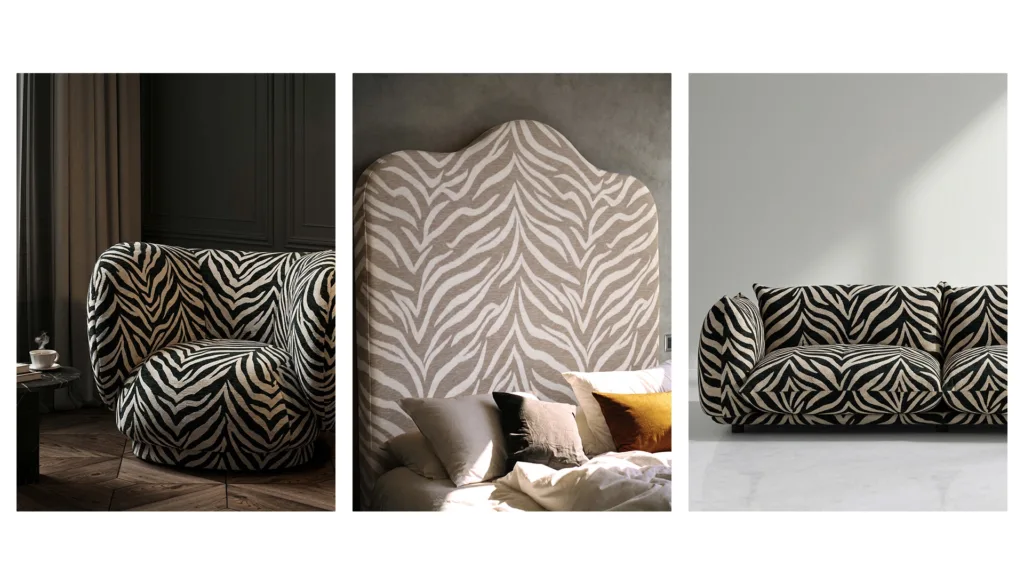
A large surface allows the rhythm of the pattern to come through. A soft curve can transform it in an interesting way. Too many small panels, quilting details or divisions, however, can break the pattern up into random fragments.
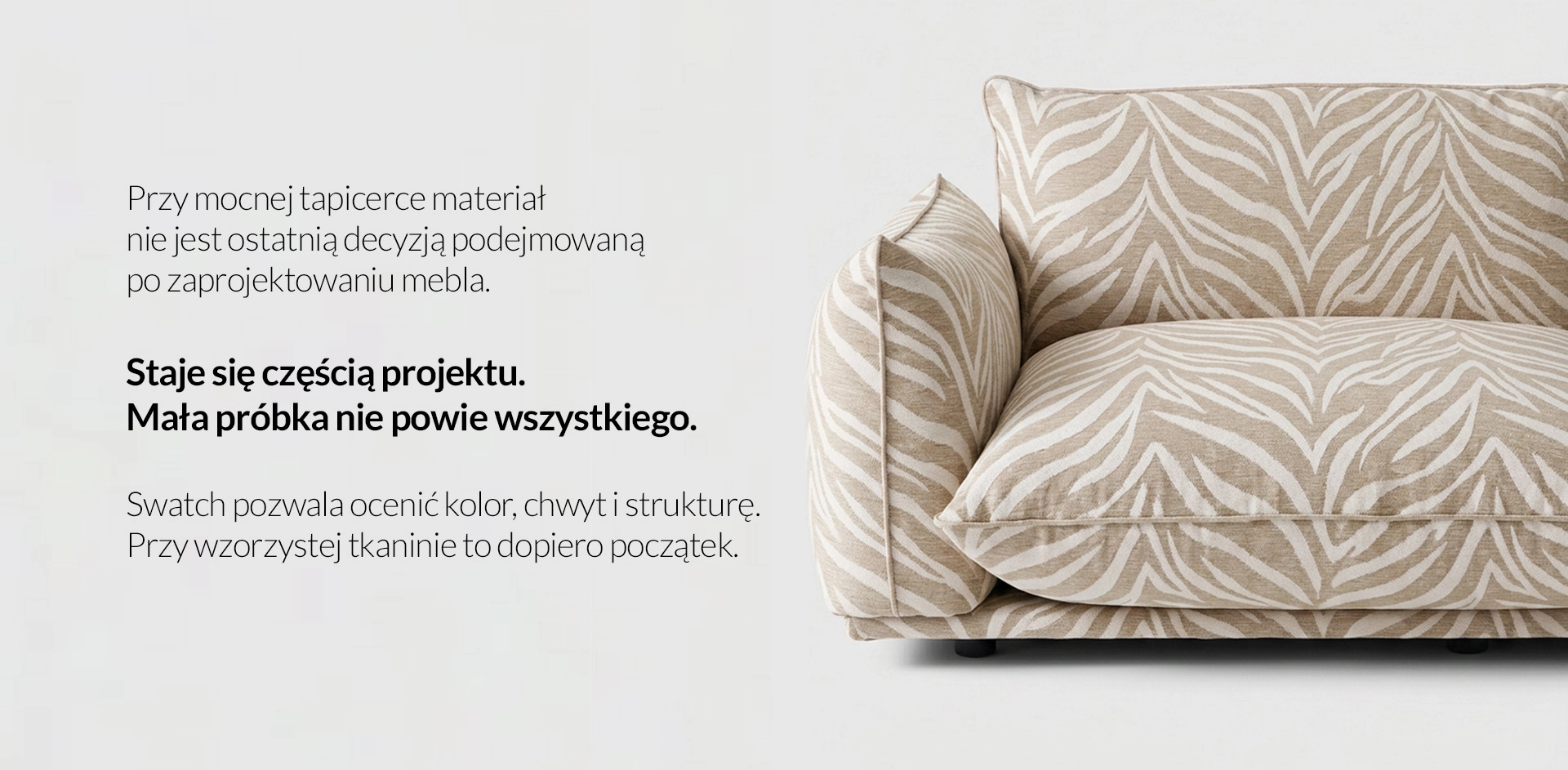
On a larger surface, the scale becomes apparent. On a curve, the rhythm changes. Only then can you see whether the pattern truly works with the proportions of the furniture.
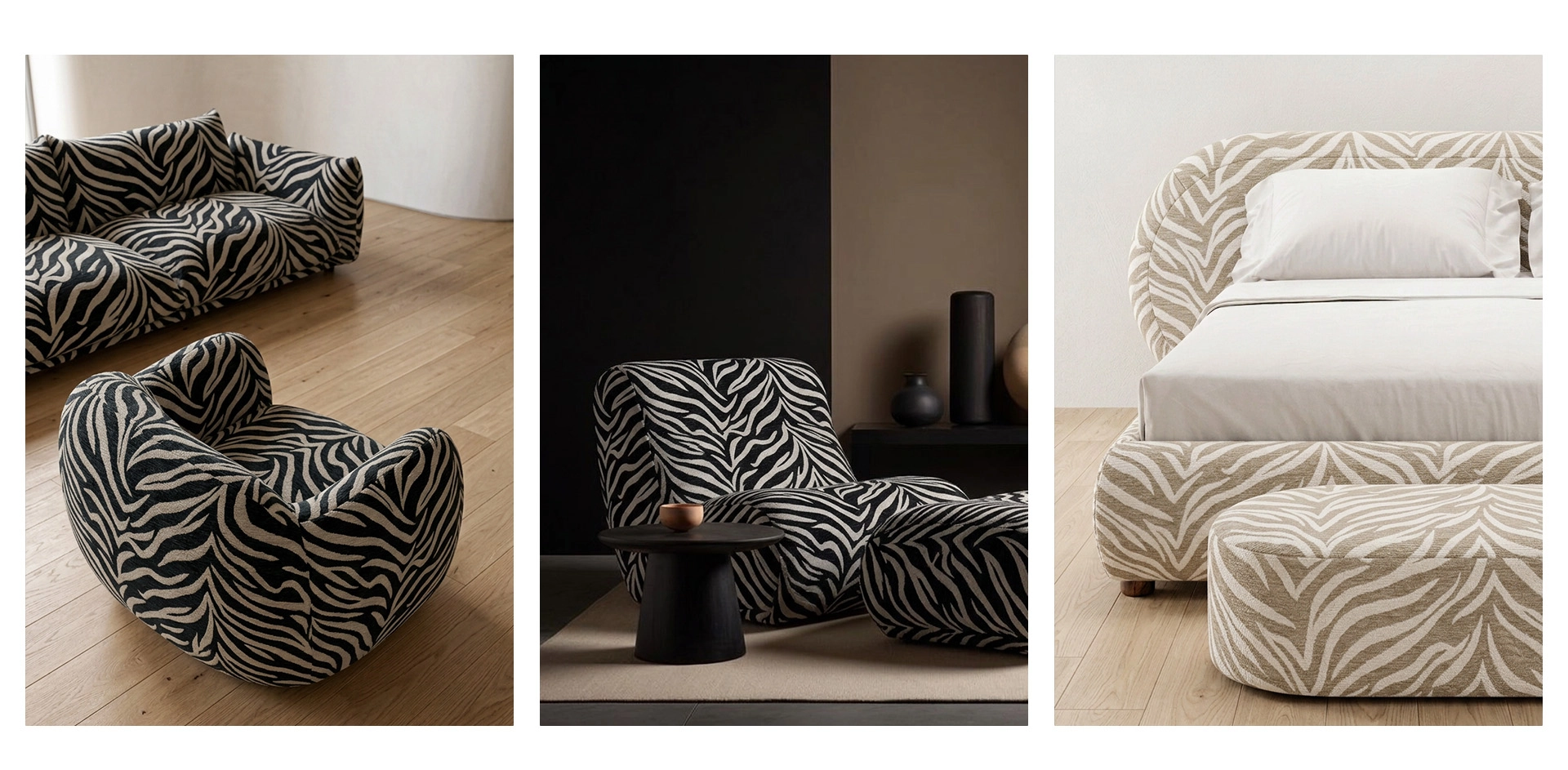
That is why, before preparing a prototype, it is worth doing one simple thing: place a larger fabric cutting against the actual furniture form. A few minutes with the fabric on the furniture can often tell you more than another visualization. One model should take the lead. A bold pattern quickly loses its impact if we try to use it everywhere. It is much more effective to create a clear hierarchy. An armchair or sofa can become the hero model — the piece that defines the main campaign image, catches attention at a trade fair stand, and gives the sales team a natural starting point for conversation.
A pouf, bench or club chair can carry the same design language into a smaller product category.
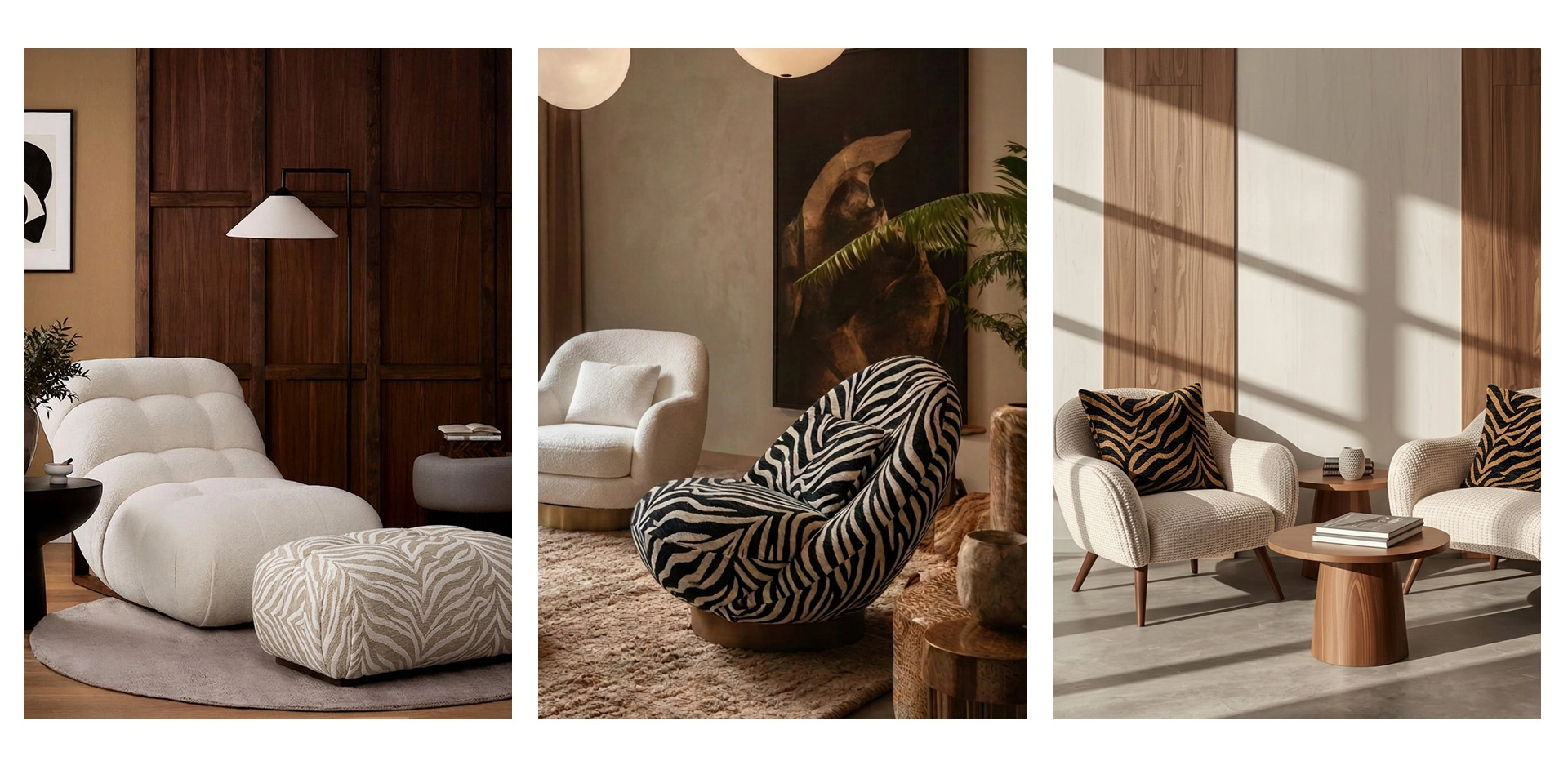
The rest of the collection can remain more understated. This is where solid fabrics come into play.
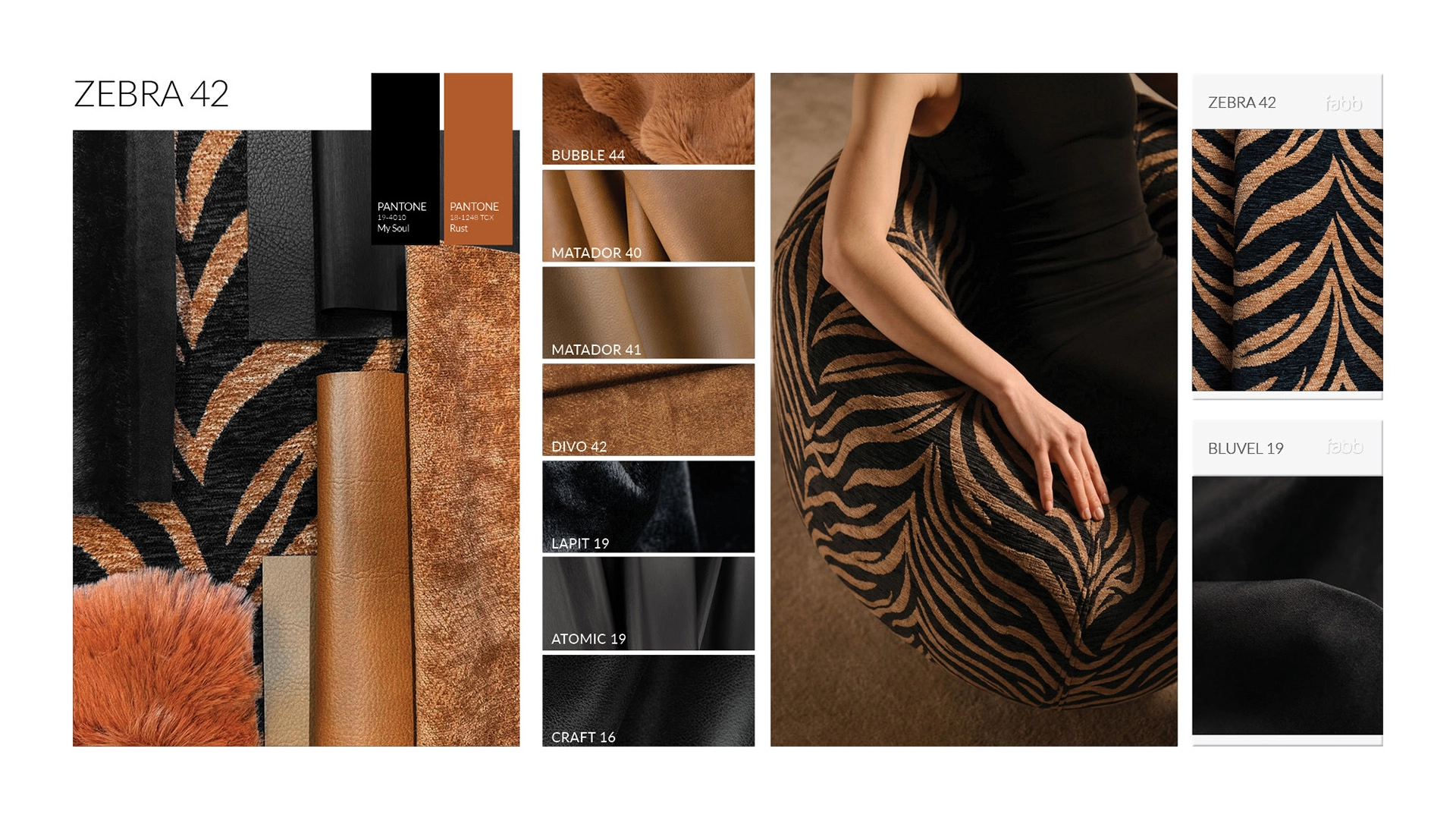
Ecru and taupe will soften the pattern. Warm browns and dark wood will add depth. Graphite, black, stone and chrome will take the overall look in a more architectural direction.
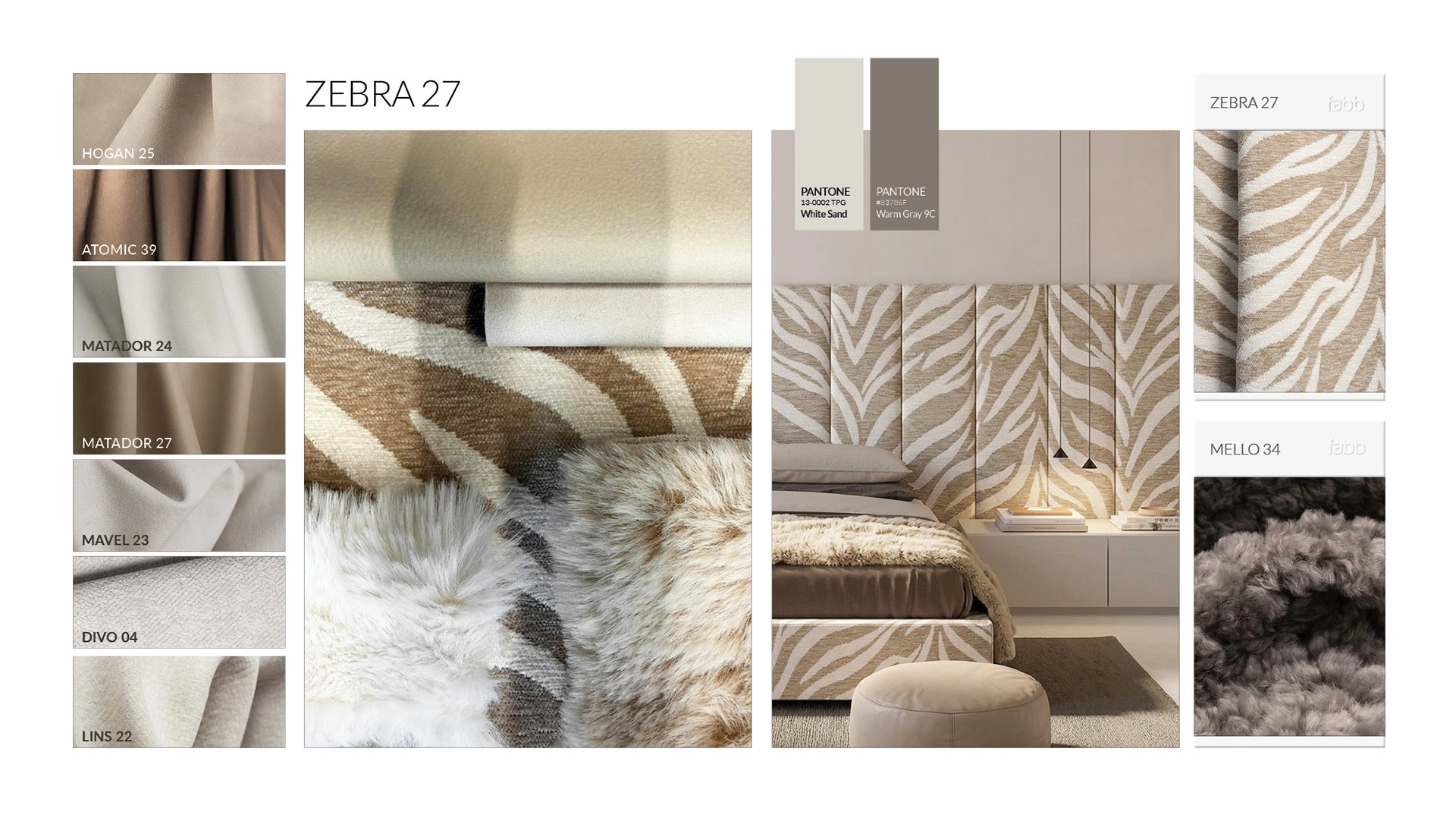
Within the FABB portfolio, selected colourways from the Matador, Hogan, Bluvel and Mavel collections can serve as a starting point for creating such combinations.
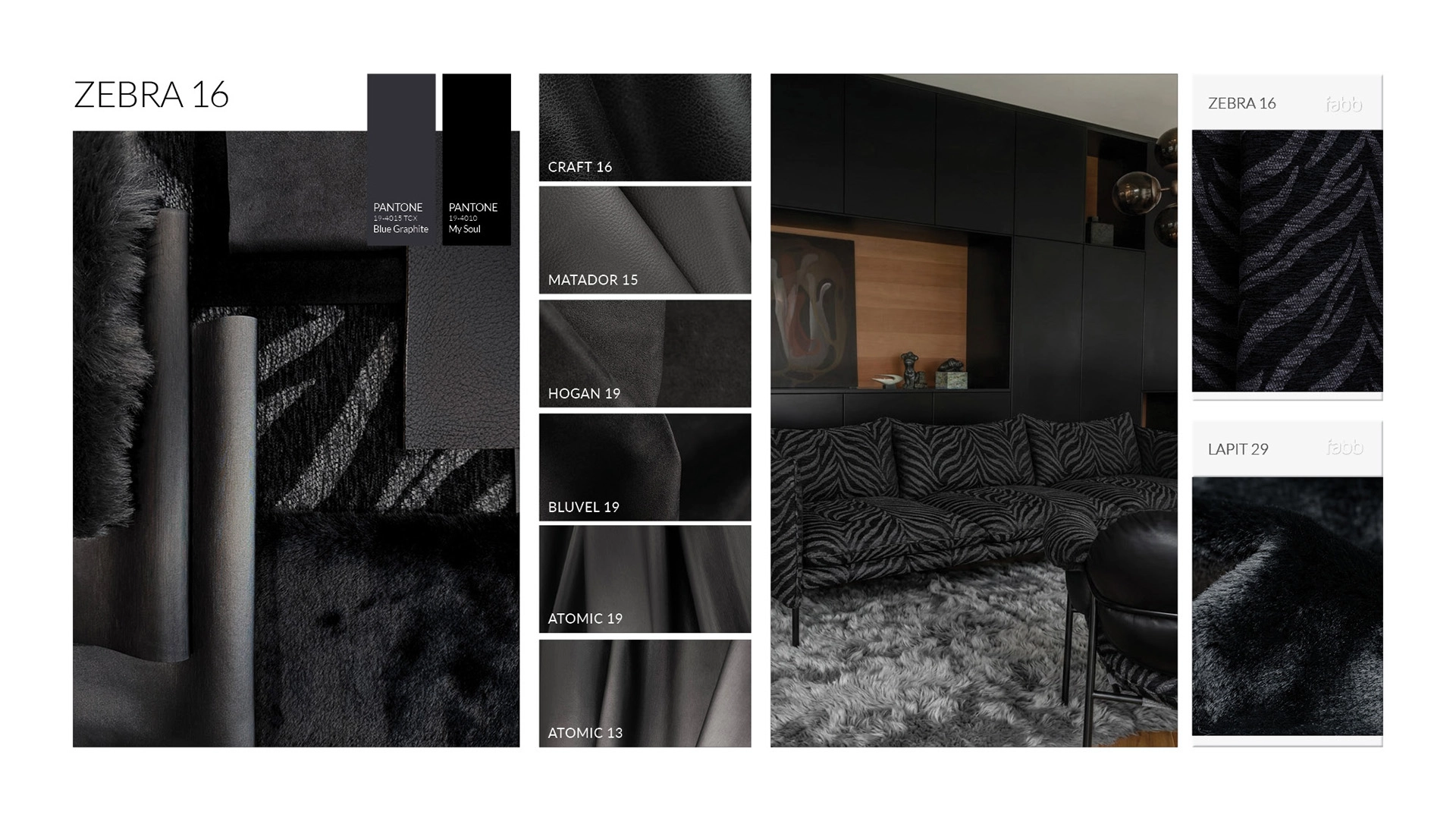
One material takes the lead. The others create the backdrop. Design has to pass the reality test.
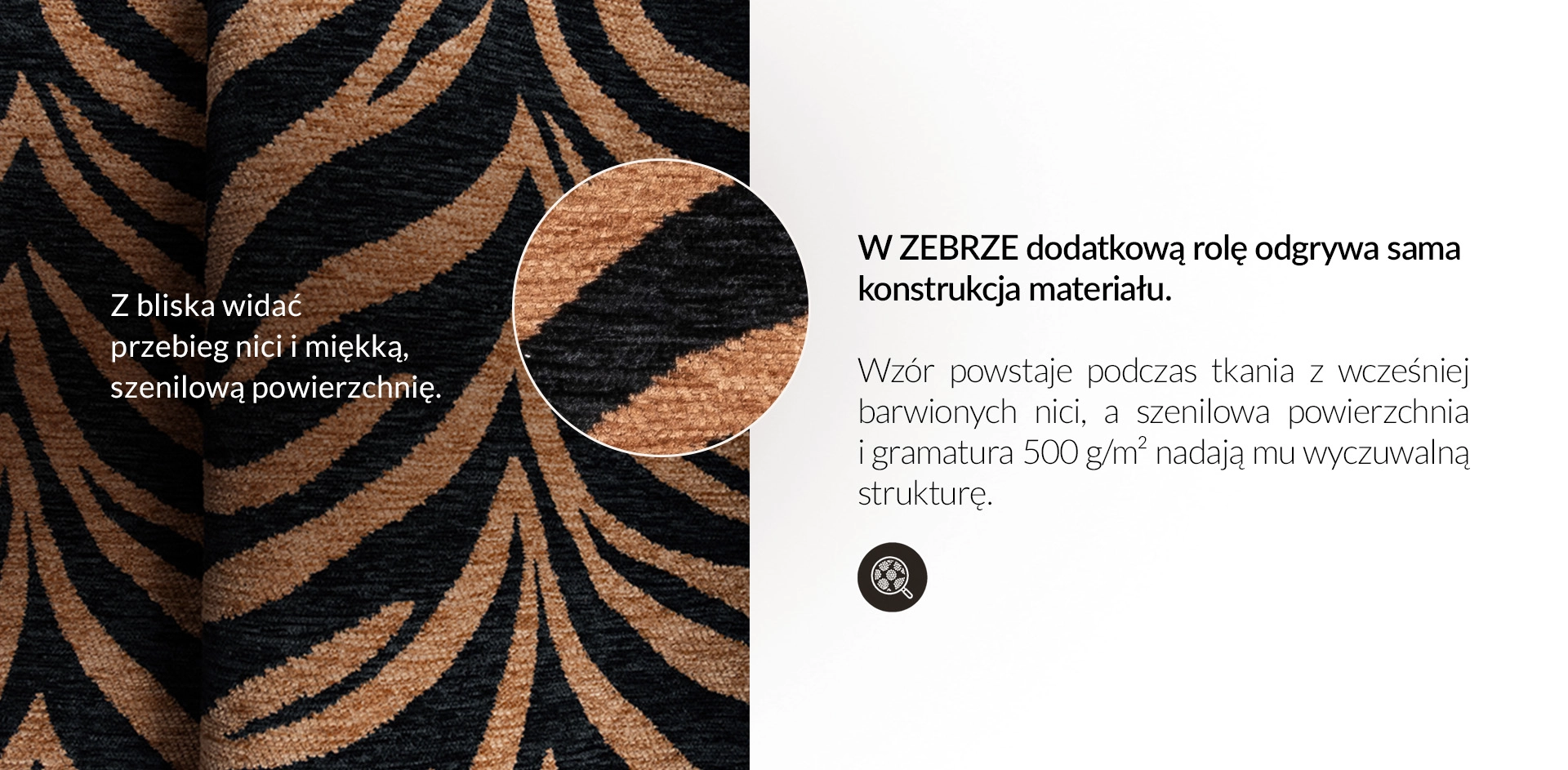
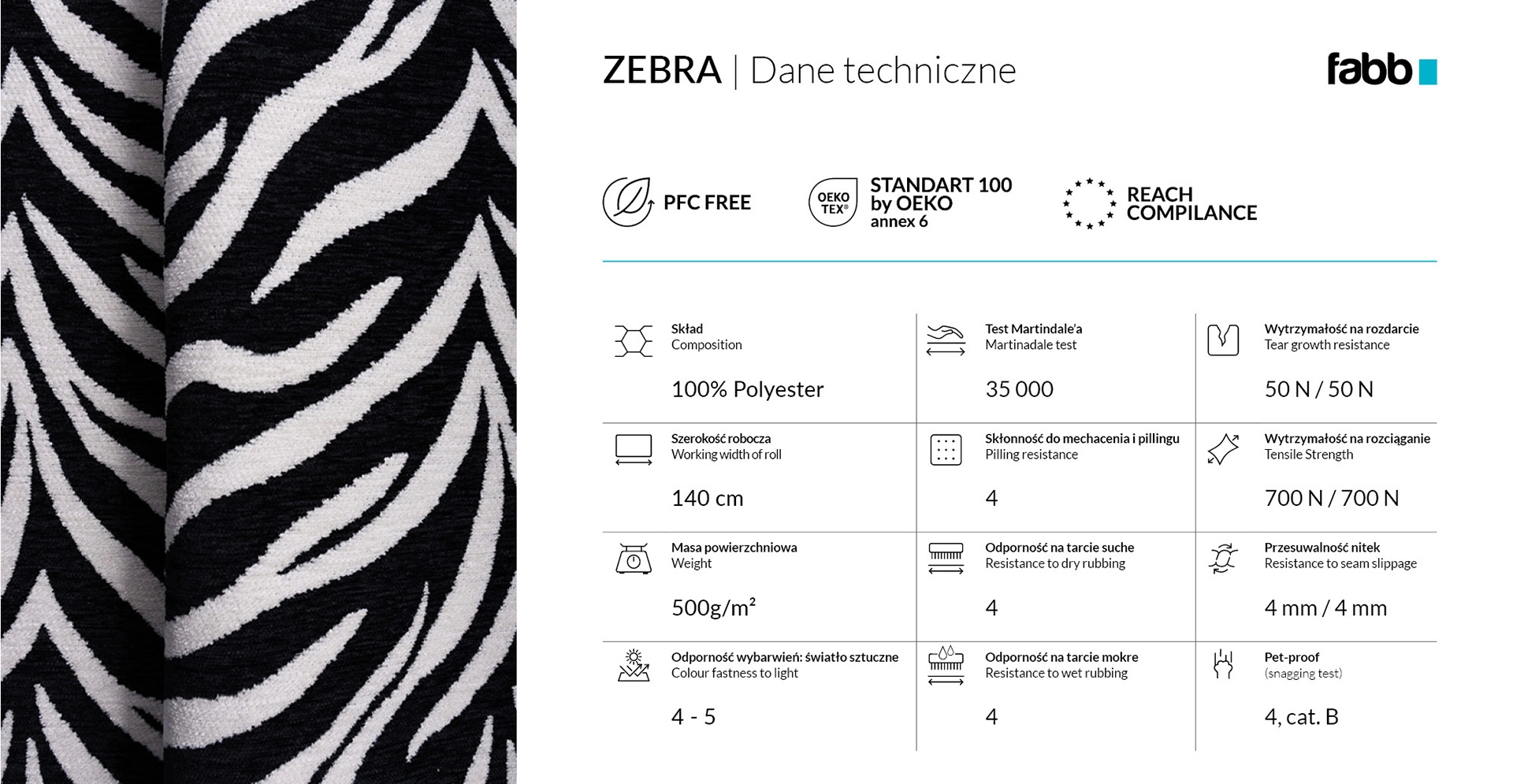
Behind ZEBRA’s visual impact are also the performance parameters required for real-world implementation: 35,000 Martindale cycles, pilling 4, lightfastness 4–5, and a snagging test result of 4, category B.
These give furniture manufacturers a solid basis for evaluating the fabric and moving on to the next stage.
The final answer, however, comes from the prototype. Only then can you see where the seams should run, how the pattern behaves on curves, whether its scale works with the size of the furniture, and how the fabric performs during upholstery.
This is the moment when inspiration becomes a product.
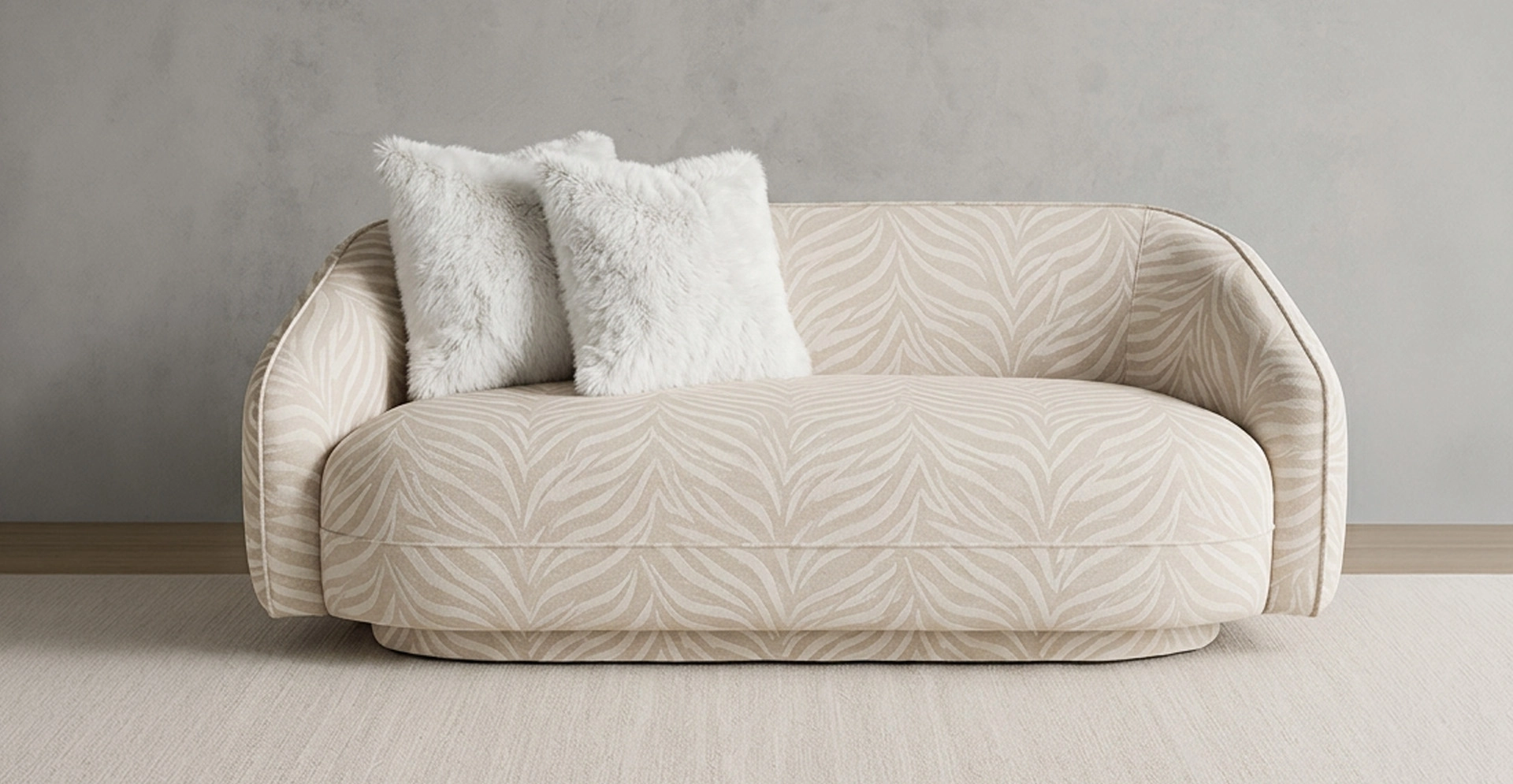
You don’t have to start with an entire collection
Sometimes, one well-chosen fabric is enough to give an existing model an entirely new story. And one strong model can then open up many more possibilities: a smaller complementary piece, new material combinations, a display concept, a campaign, or a new way of presenting the collection to customers.
That is why, with ZEBRA, we would not start by looking for ten different applications.
We would first find one that really works.