
Polyester Sofa Upholstery: Why It Works Well for Everyday Use and How to Care for It
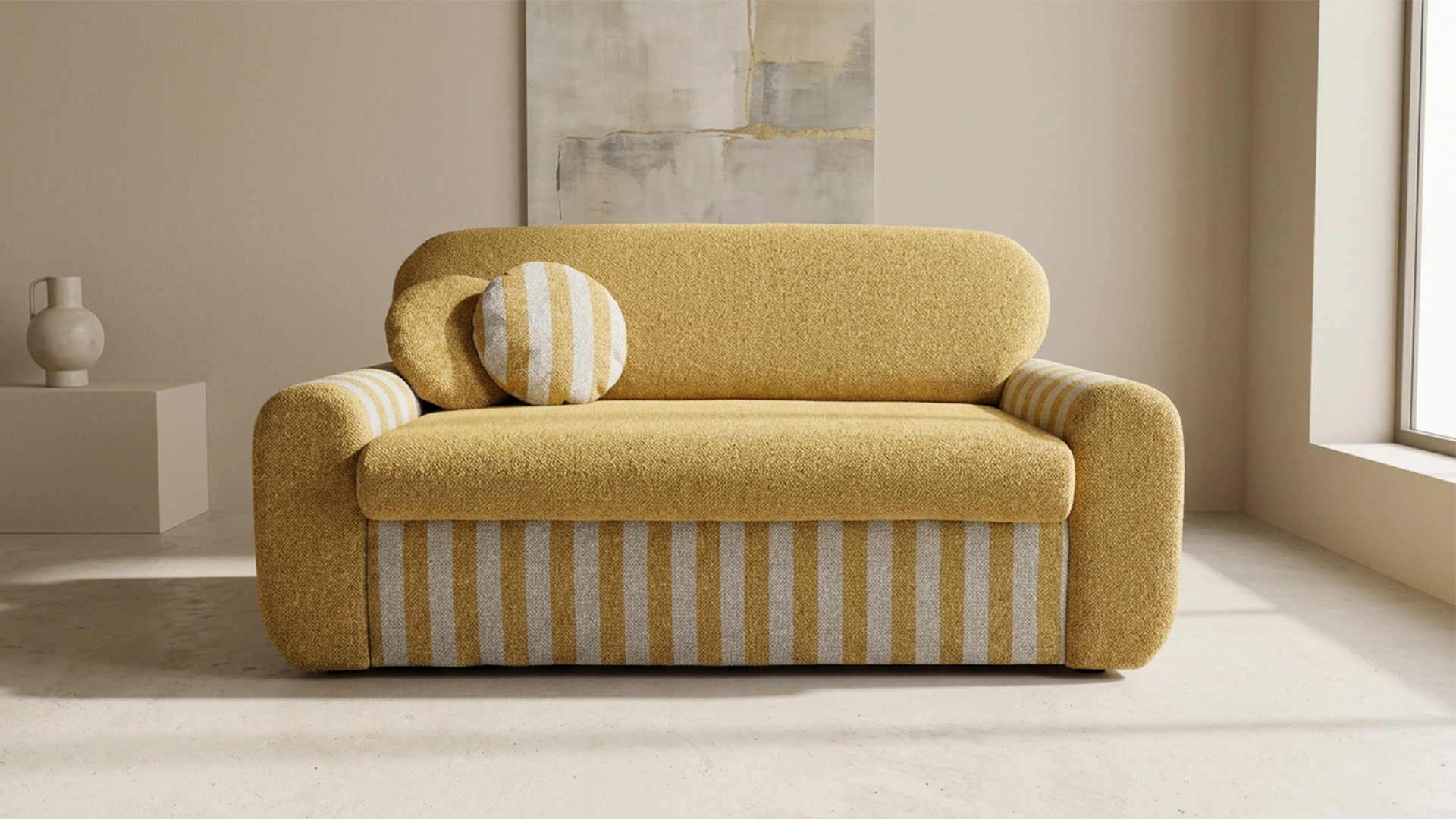
Coffee on the armrest, a wet paw print, something spilled during dinner. A sofa’s real life begins only when it leaves the furniture showroom and finds its place in a home.
And that is when colour, texture and Martindale test results are no longer the only things that matter. The material used for the upholstery is just as important.
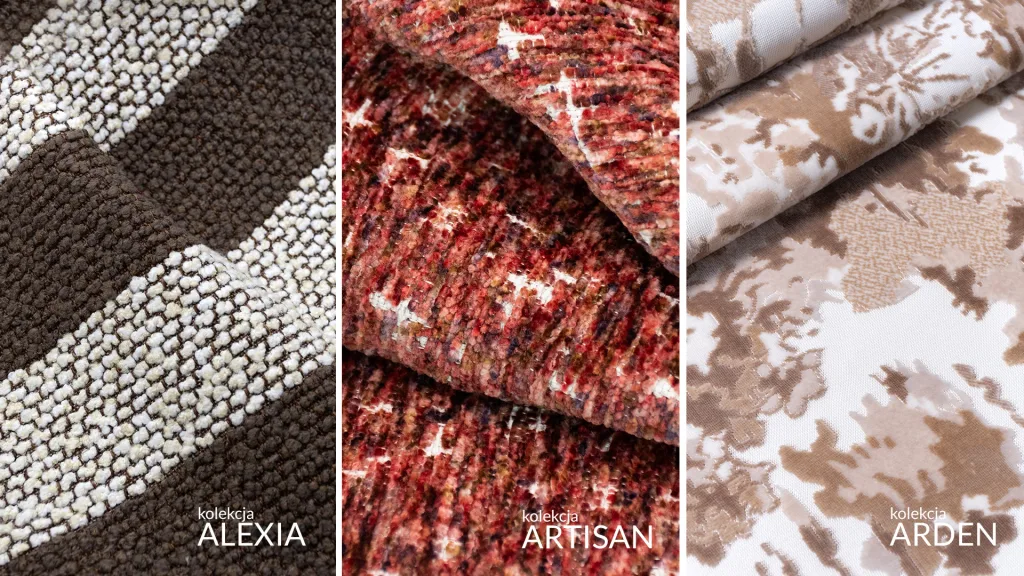
Polyester has been one of the most widely used fibres in upholstery for years. It is durable, dimensionally stable and offers extensive possibilities for creating different textures and finishes – from velvets and chenilles to bouclé and knitted fabrics. It also has very low moisture absorption, which is a significant advantage in everyday furniture use.
Why Is Polyester a Good Choice for Sofa Upholstery?
Polyester is a hydrophobic fibre. Its standard moisture regain is approximately 0.4%, meaning that the fibre itself absorbs very little moisture.
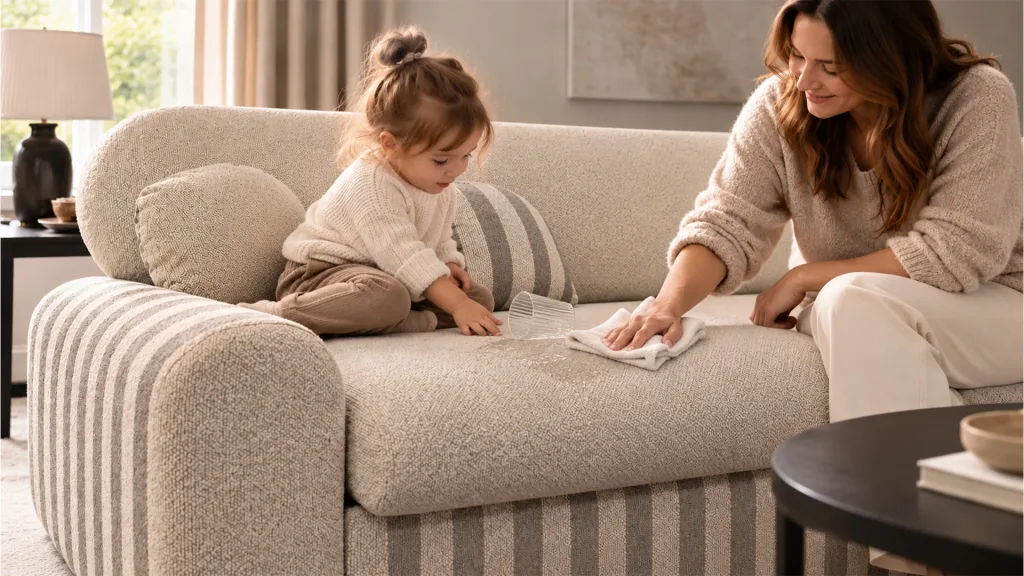
Of course, this does not mean that every spilled liquid will remain on the surface of the upholstery. The finished fabric has a specific construction, density and yarn type, which means that liquids can penetrate between the fibres.
However, low moisture absorption remains an inherent property of polyester, making it well suited to fabrics designed for everyday use.
That is why polyester is commonly used for family sofas, corner sofas, armchairs, chairs and beds – precisely where upholstery needs not only to look good but also to withstand the demands of everyday life.
Easy Clean or Additional Protection? A Factory-Applied Finish Isn’t Always Necessary
Polyester upholstery fabric does not need an easy-clean finish to be practical for everyday use.
Easy clean is an additional feature or technology applied to a specific fabric. Polyester naturally has very low moisture absorption, so the absence of such a finish does not mean that the upholstery will be difficult to maintain.
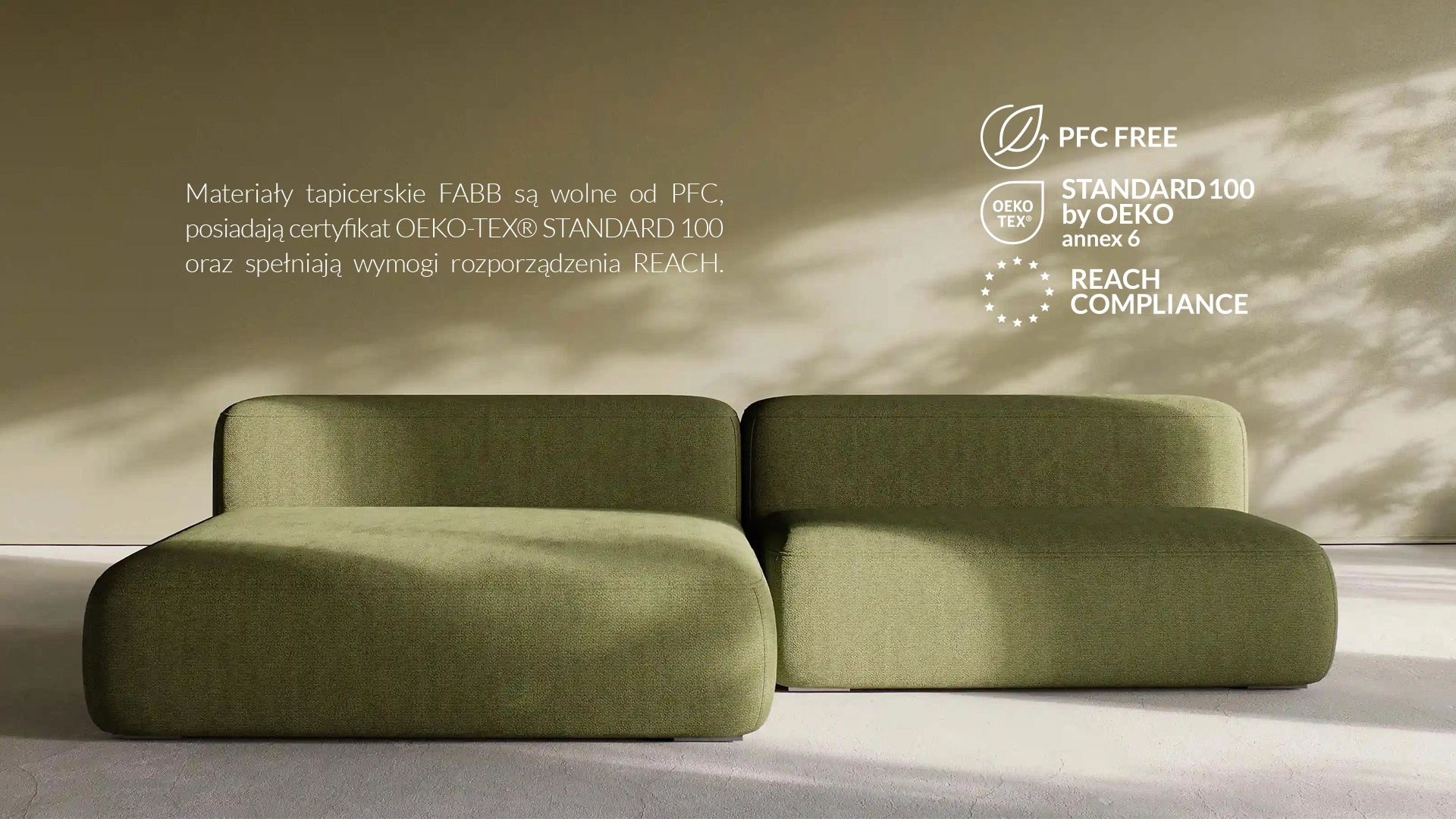
At FABB, we do not use an additional easy-clean finish. Our upholstery fabrics are PFC-free.
However, if additional protection against everyday stains is needed, it can be applied once the furniture is in use.
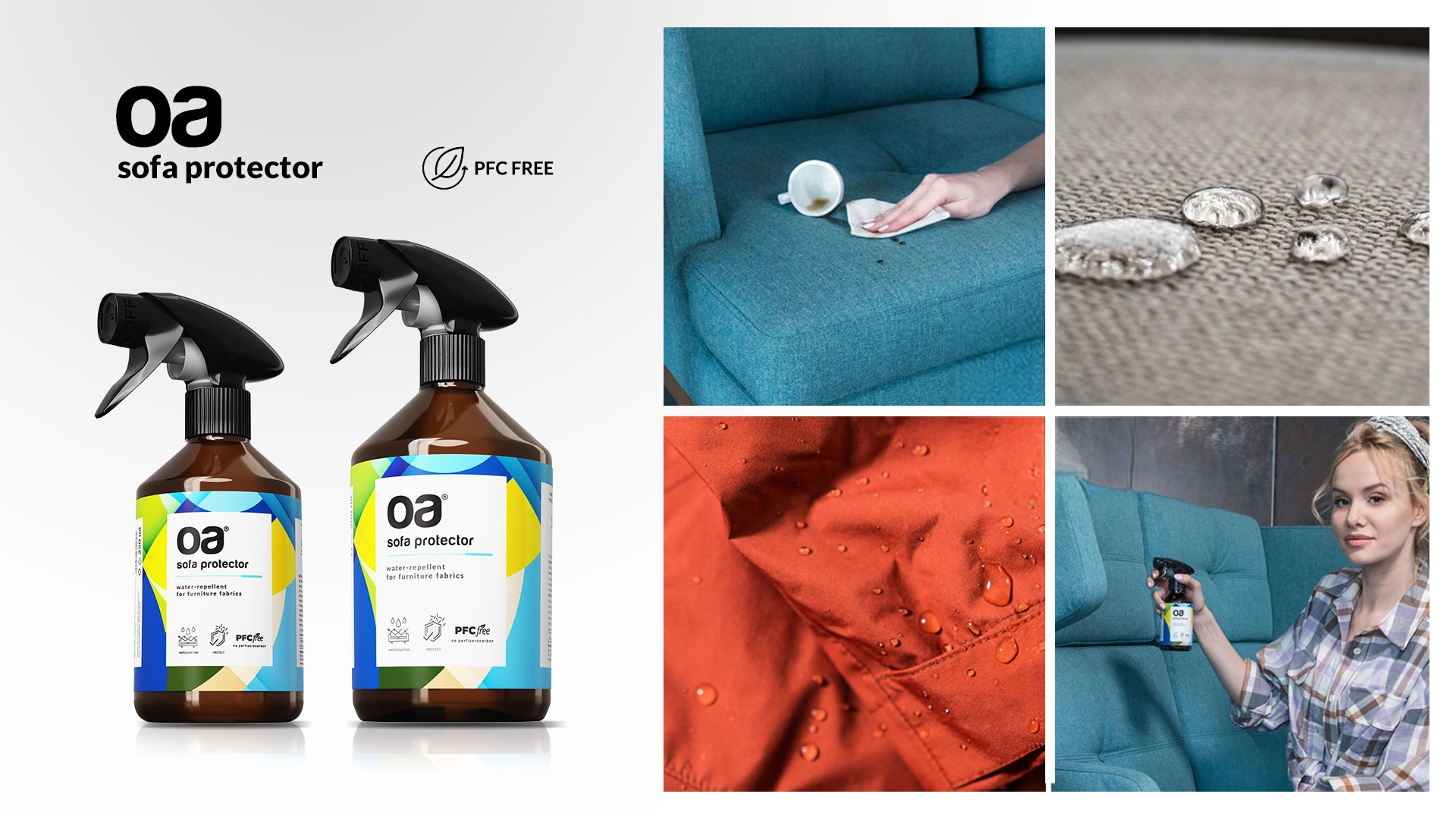
This is where OA Sofa Protector comes in – an upholstery protector that creates an invisible hydrophobic layer on the fibres, helping to reduce the penetration of moisture and dirt. Importantly, Sofa Protector is also PFC-free.
This makes it possible to distinguish between two things: the fabric itself does not need a factory-applied easy-clean finish, while additional protection can be applied when it is genuinely needed – directly to a finished sofa, armchair or chair.
How to Clean Polyester Upholstery?
Regular care and quick action are essential.
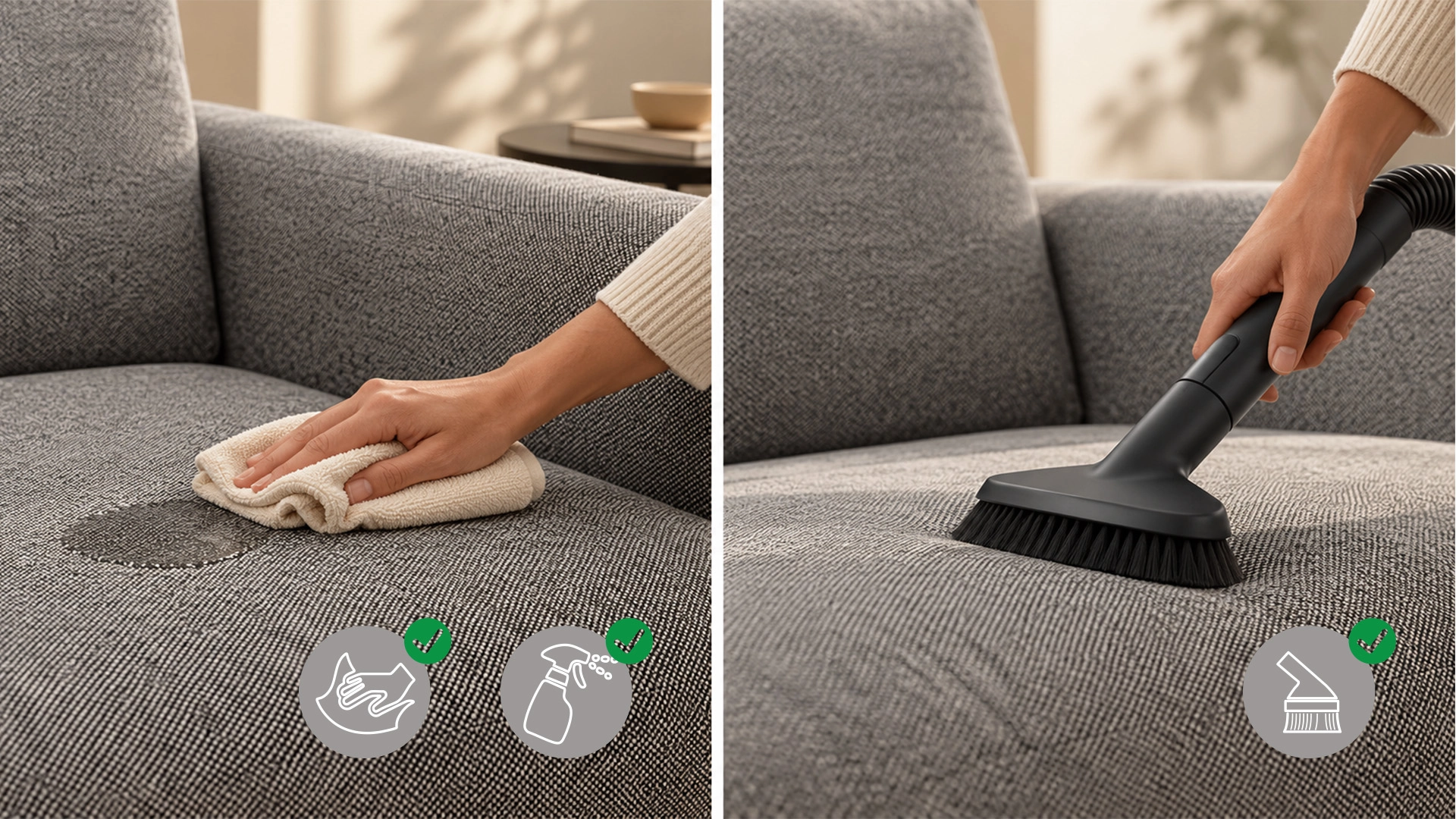
Dust should be removed using a soft vacuum cleaner attachment before it becomes embedded in the fabric during everyday use.
If something is spilled, it is best to absorb the fresh spill with a clean, absorbent cloth. Rather than rubbing the fabric vigorously, gently blot the affected area.
For regular upholstery care, OA Sofa Care can be used to clean upholstery fabrics. The product helps remove everyday dirt and stains. As with any upholstery cleaning product, it is advisable to test it on a small, inconspicuous area before first use.
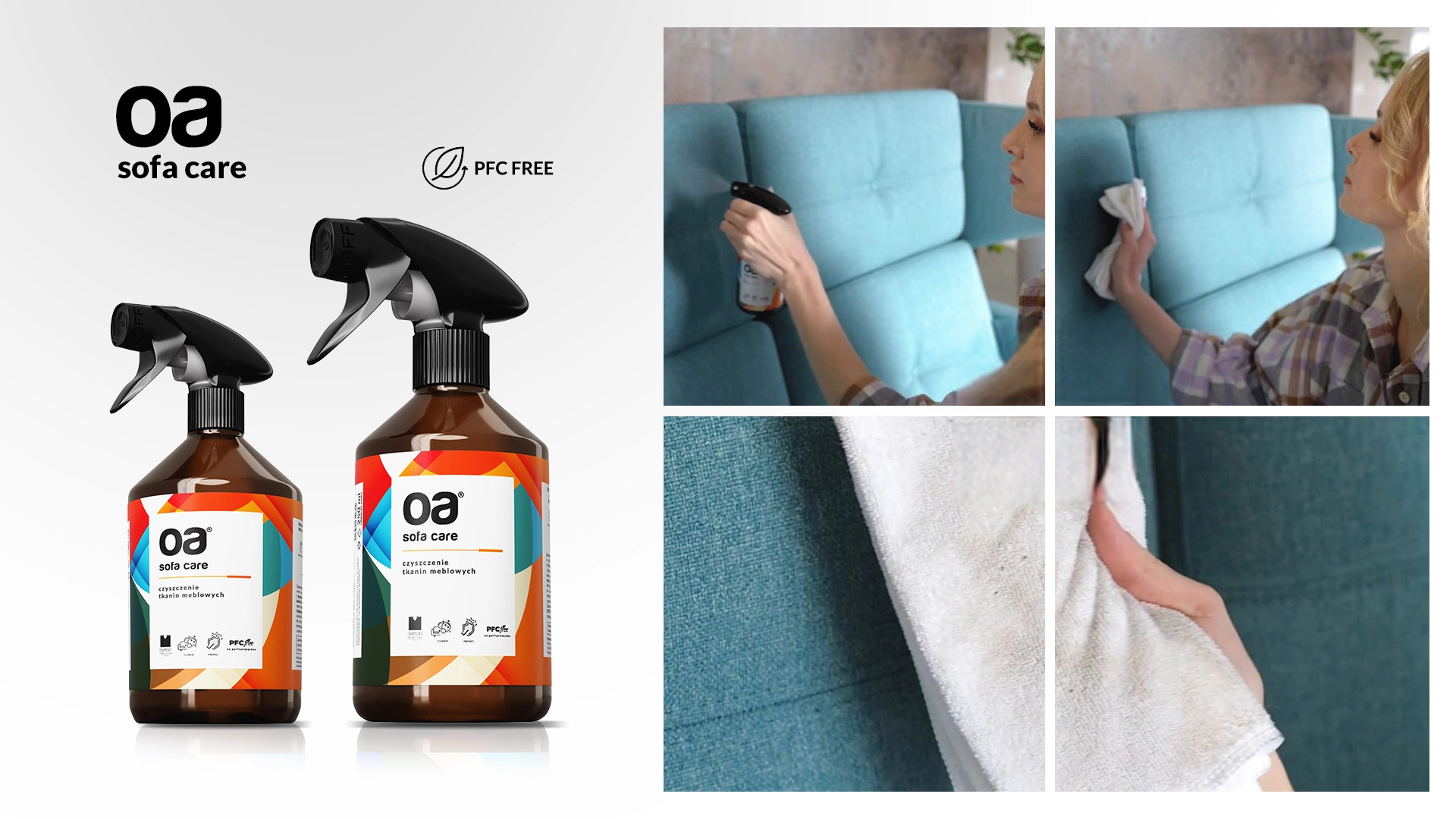
Greasy stains require particular attention. Polyester absorbs very little water but may have a greater affinity for oils. That is why stains from hand cream, greasy sauces or frequently soiled armrests should be cleaned as quickly as possible.
If additional fabric protection is also planned, the order is simple: first clean the upholstery with Sofa Care, then, once the fabric is completely dry, apply Sofa Protector.
100% polyester doesn’t mean all fabrics behave the same way
Fibre composition alone does not tell the whole story.
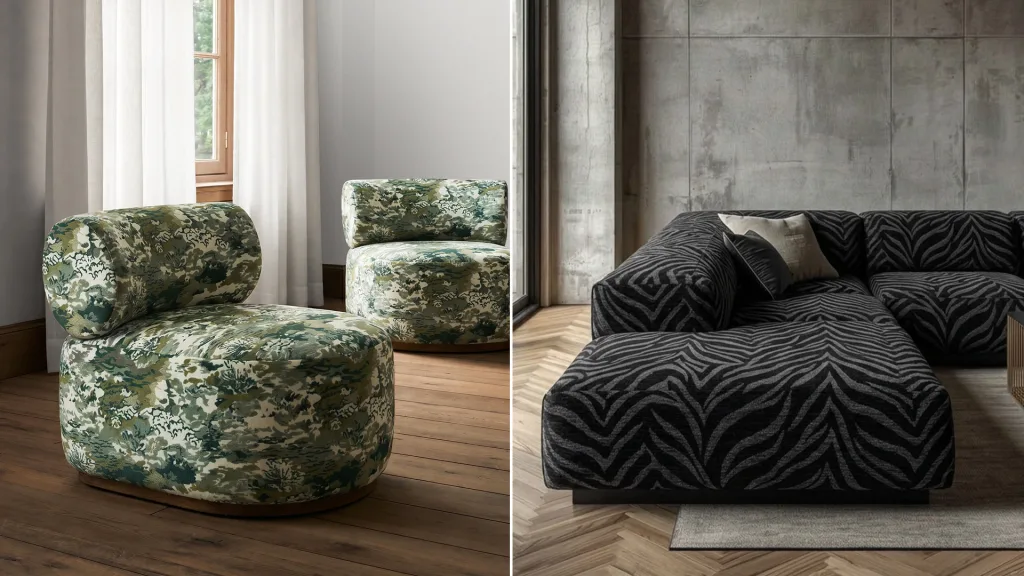
Velvet behaves differently from three-dimensional bouclé. A smooth fabric performs differently from a soft knitted fabric or a pronounced chenille. Fabric construction, density, yarn type and surface texture all play an important role.
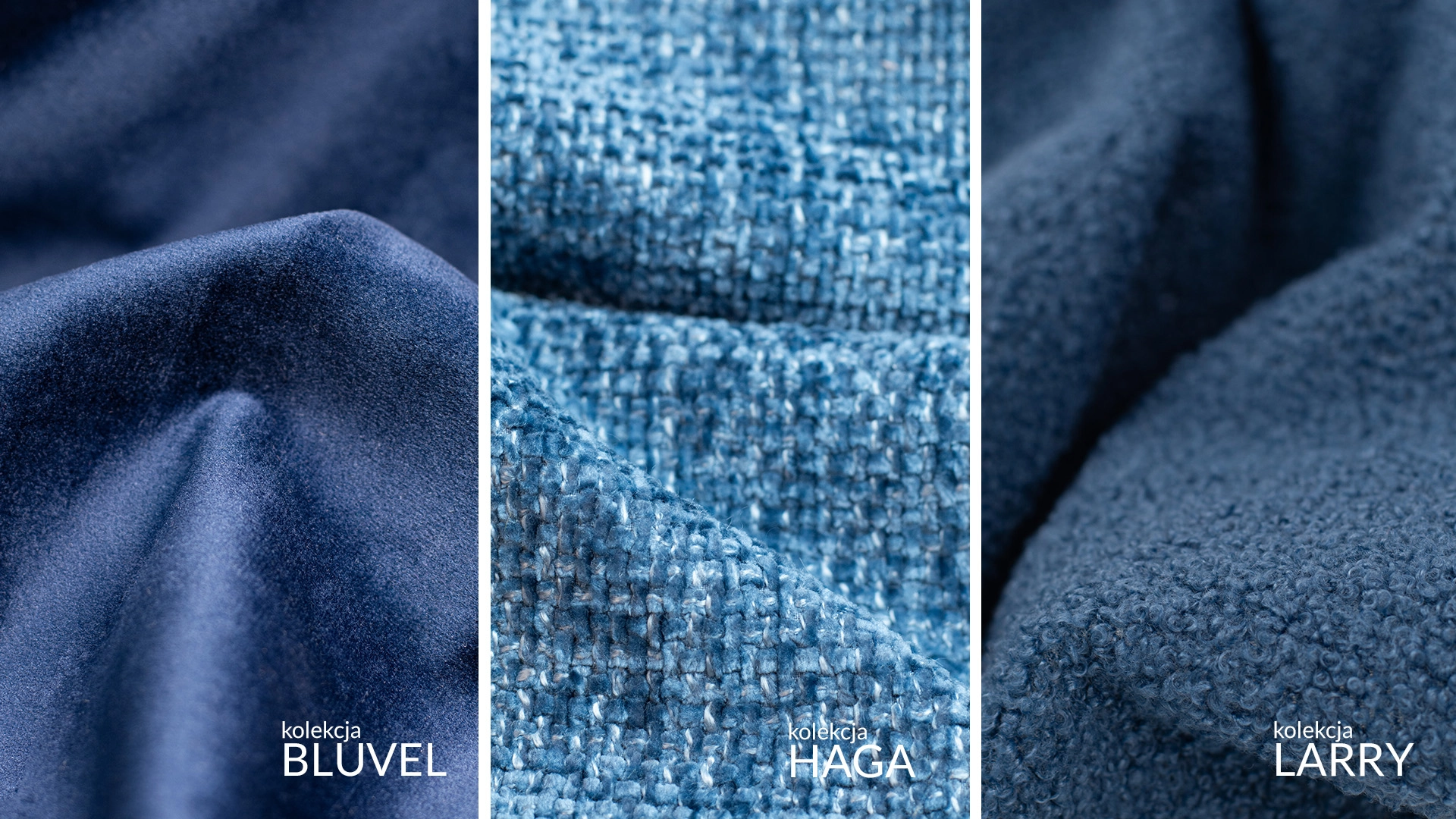
That is why, when choosing an upholstery fabric, it is important to consider the composition, construction and technical specifications of the specific collection.
The same applies to fabric care. Care recommendations should always be tailored to the particular material, rather than based solely on the “100% PES” information on the label.
Polyester sofa upholstery: a practical material that still needs care
Polyester is not indestructible – and there is no need to present it as such.
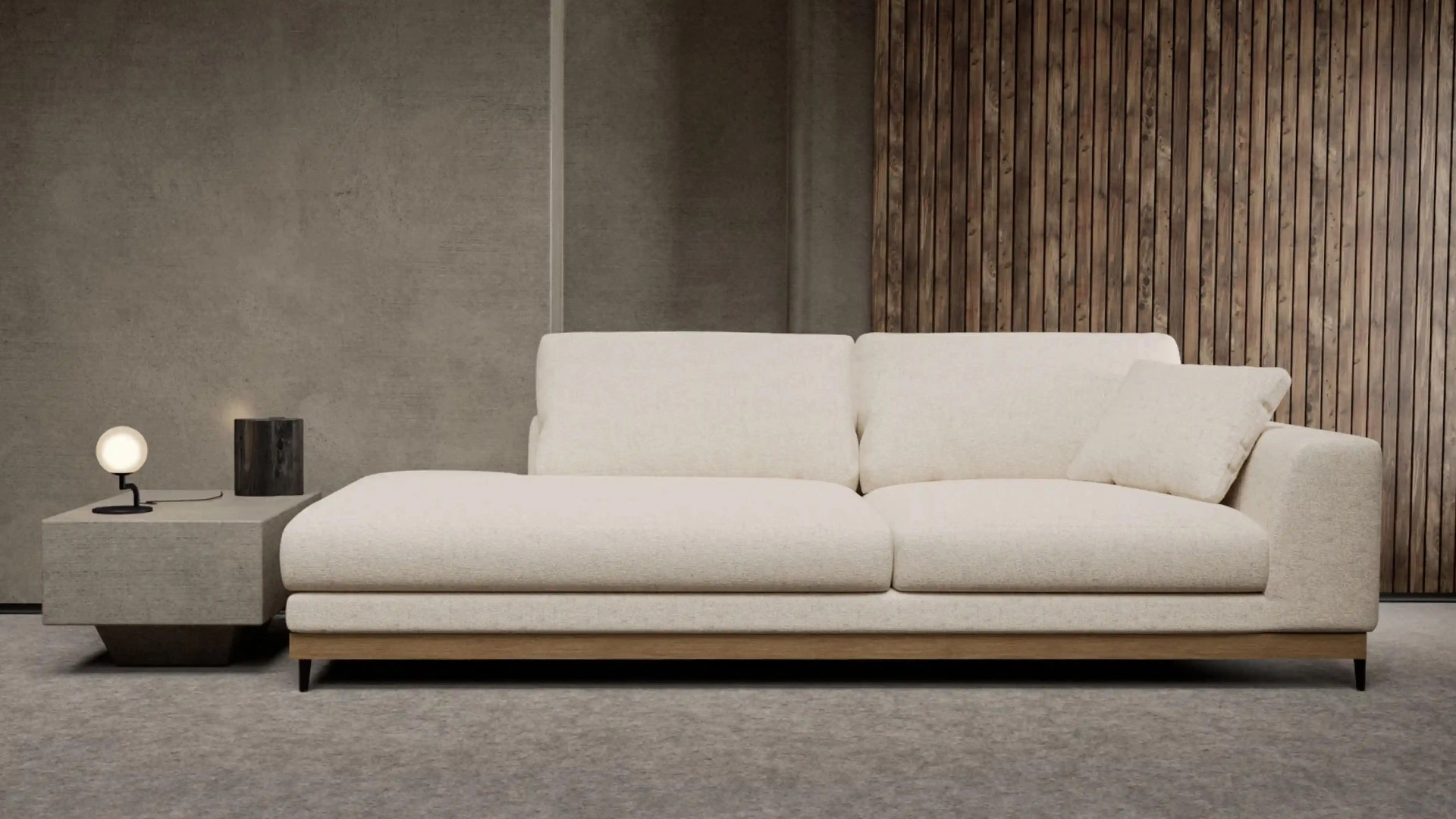
Its advantage is much simpler: it combines durability, extensive design possibilities for fabric surfaces and very low moisture absorption, making it well suited to the demands of modern furniture.
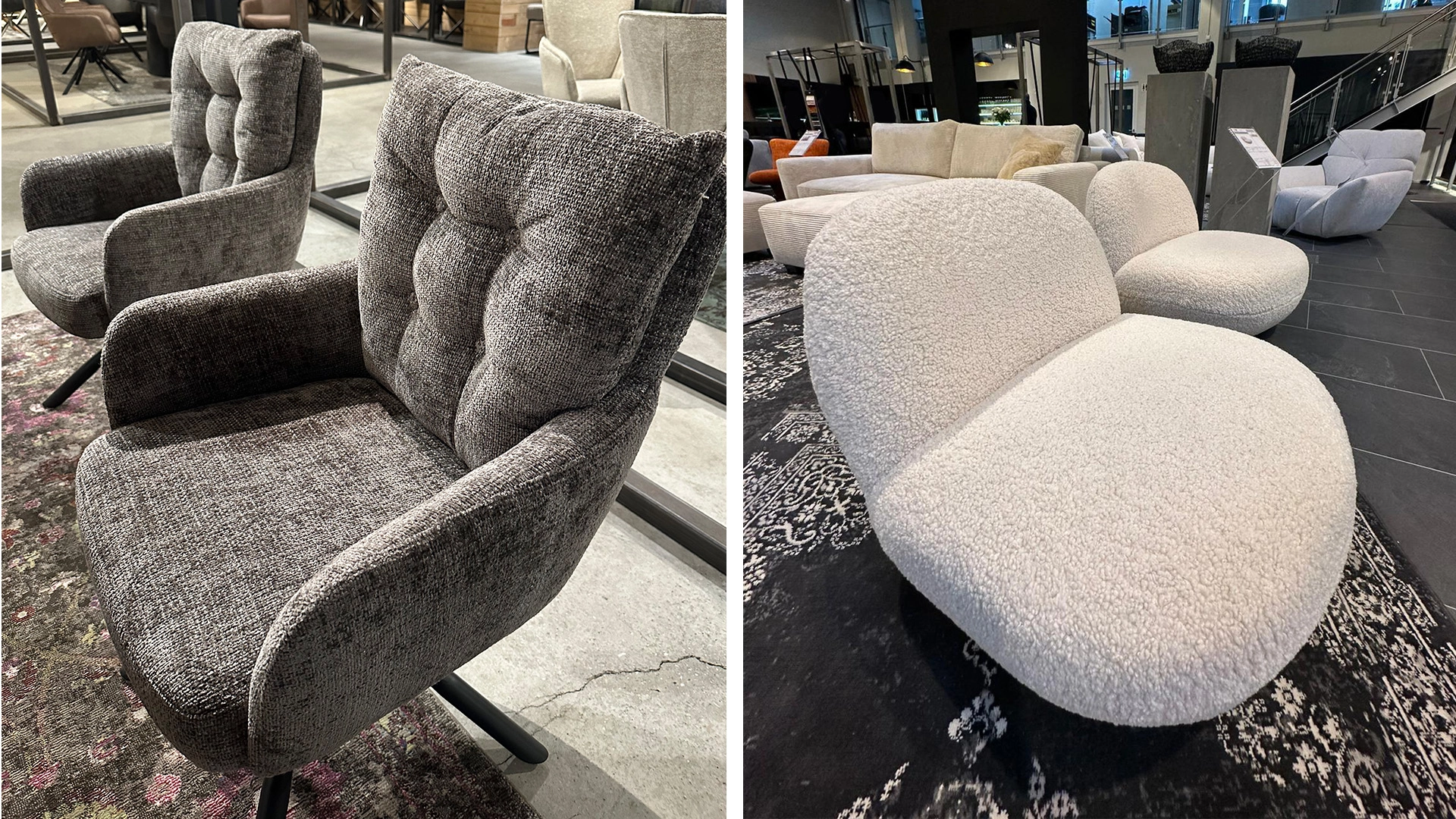
At FABB, we choose upholstery fabrics without an additional easy-clean finish and free from PFCs. We leave fabric care for when it is actually needed – once the furniture is in use.
OA Sofa Care helps keep upholstery clean, while OA Sofa Protector provides additional protection – also PFC-free.
Want to test a fabric before introducing it into your furniture collection? Order a sample book or request fabric metres for a prototype.
See more on social media:
Yes. It is durable, stable and has very low moisture absorption, making it one of the most commonly used fibres in upholstery materials.
No. The absence of an easy-clean finish does not mean that polyester upholstery will be difficult to maintain in everyday use. The inherent properties of the fibre and the construction of the specific fabric both play an important role.
Regular vacuuming and prompt action when spills occur are recommended. OA Sofa Care can be used to clean fabric upholstery according to the product instructions.
After cleaning and allowing the fabric to dry completely, OA Sofa Protector can be applied. The product helps protect fibres against moisture and dirt penetration and is PFC-free.