
Picasso – a fabric from nature, created for interiors with character

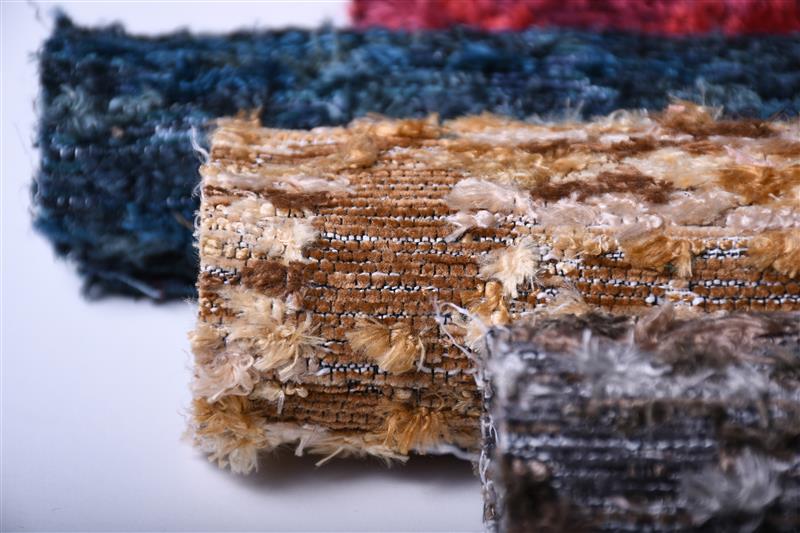
In recent seasons, designers have been boldly moving away from cold geometry and minimalism. Instead, they are returning to organic forms – irregular, sensual, inspired by the natural world, just like the Picasso collection. This dynamically designed jacquard, interwoven with different types of yarns, creates a “living” texture whose perception changes depending on the angle of view and the light.
On the biophilia trend and materials that stir the senses
While designing Picasso, we drew on the organic trends showcased at Heimtextile and Salone del Mobile. A remarkable example was Patricia Urquiola’s installation in Frankfurt, featuring forms woven from materials with soft, convex shapes and textures reminiscent of moss, lichens, and fungi.

Following the same path, the iconic Edra proved that nature can be a pretext for building a collection of refined luxury. Their new sofa models appeared in fabrics with mineral-like structures, noble sheen, and deep color. Thus, fabric becomes more than a finish for furniture – it becomes something that evokes emotions, stimulates the senses of touch and sight, and provides unique experiences.

Woven, not printed – what makes jacquard special?
Unlike printed fabrics, Picasso’s pattern is not applied to the surface but created directly within the fabric structure, thanks to modern jacquard looms. Each weft thread can be controlled individually, allowing for precise detailing, depth, and surface relief.
What’s more, Picasso is crafted using:
• multifilament yarns – for durability (50,000 Martindale) and resistance to deformation,
• decorative fancy yarns – to achieve a unique, slightly hairy cover and soft handfeel.
These elements create its characteristic, shifting sheen and “living” surface that reacts to light and angle.
Double-sided – one fabric, two effects
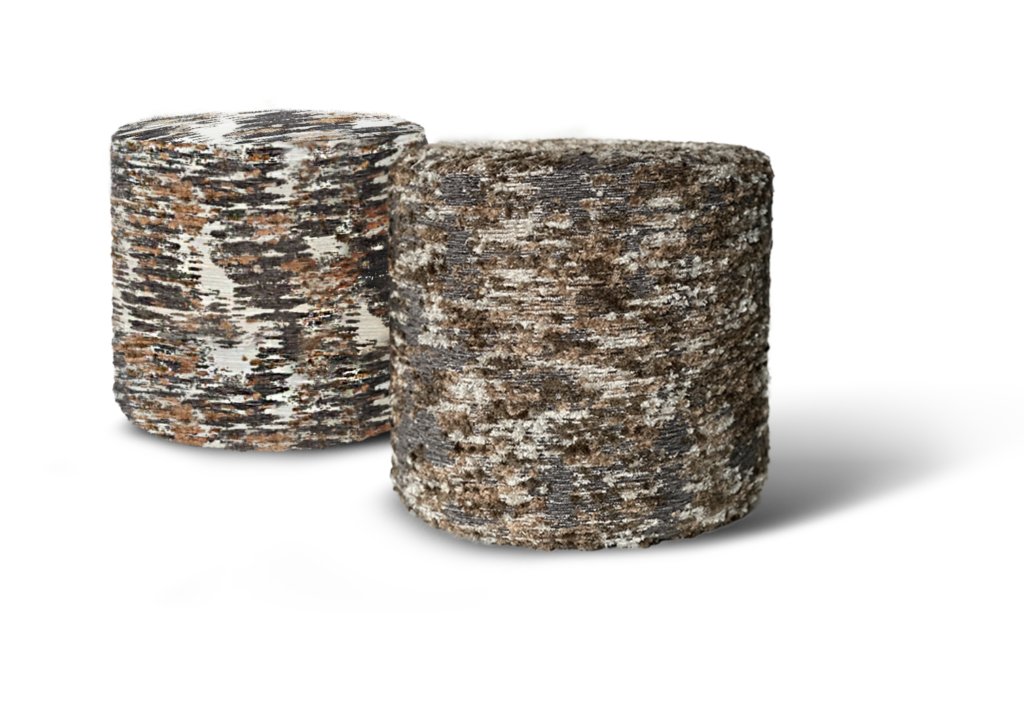
On one side – a raised, structural texture. On the other – flatter and more subtle. Both can be used interchangeably, without losing functional quality. This solution:
• increases design flexibility
• simplifies logistics and production,
• enables the creation of cohesive yet visually diverse furniture.
It’s also a fabric that drapes beautifully over large forms, with a texture that photographs exceptionally well – making it perfect for showrooms and promotional shoots.
Natural inspiration, technical precision
Picasso draws on the biophilia trend, but not literally. Here, nature is not a motif – it is expressed in structure, color, and light.
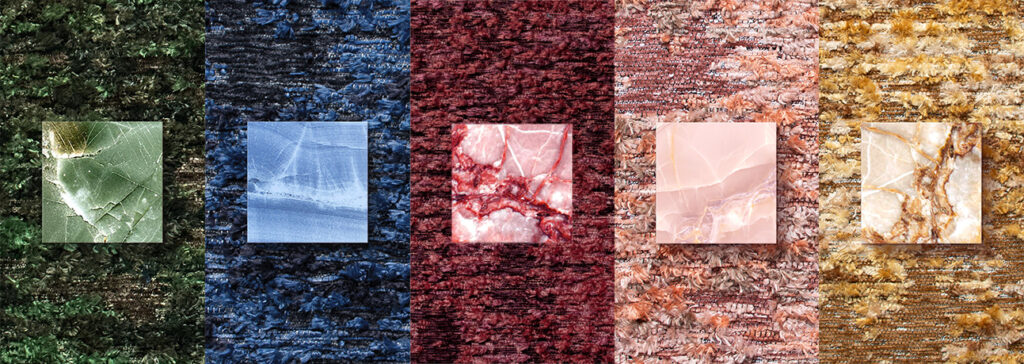
• Forest Green – moss and forest floor
• Navy Blue – shadow of waves at night
• Cherry Red – the burgundy of pomegranate stone
• Salmon – sea coral
• Turmeric – amber and clay
Because of its three-dimensional character, Picasso pairs best with:
• smooth materials like suede and eco-leathers (Hogan, Maloy) – for harmony and subtlety,
• soft and delicate ones (Bluvel, Mavel) – to enhance color depth,
• fabrics with distinct weave but toned-down colors (Lins, Lotta) – for texture consistency,
• or those with a slight sheen (Havana, metallic Atomic) – for an elegant “light and shadow” effect.


A fabric that makes a difference
Picasso is more than just a new pattern in the collection. It’s a design tool – for those who need a fabric that stands out while still meeting all production and functional requirements. It’s also a choice for the discerning end customer – one who knows that furniture texture matters and seeks a material that tells a story through touch and light.
