
Furniture China 2026 shows that the sofa is no longer standing still
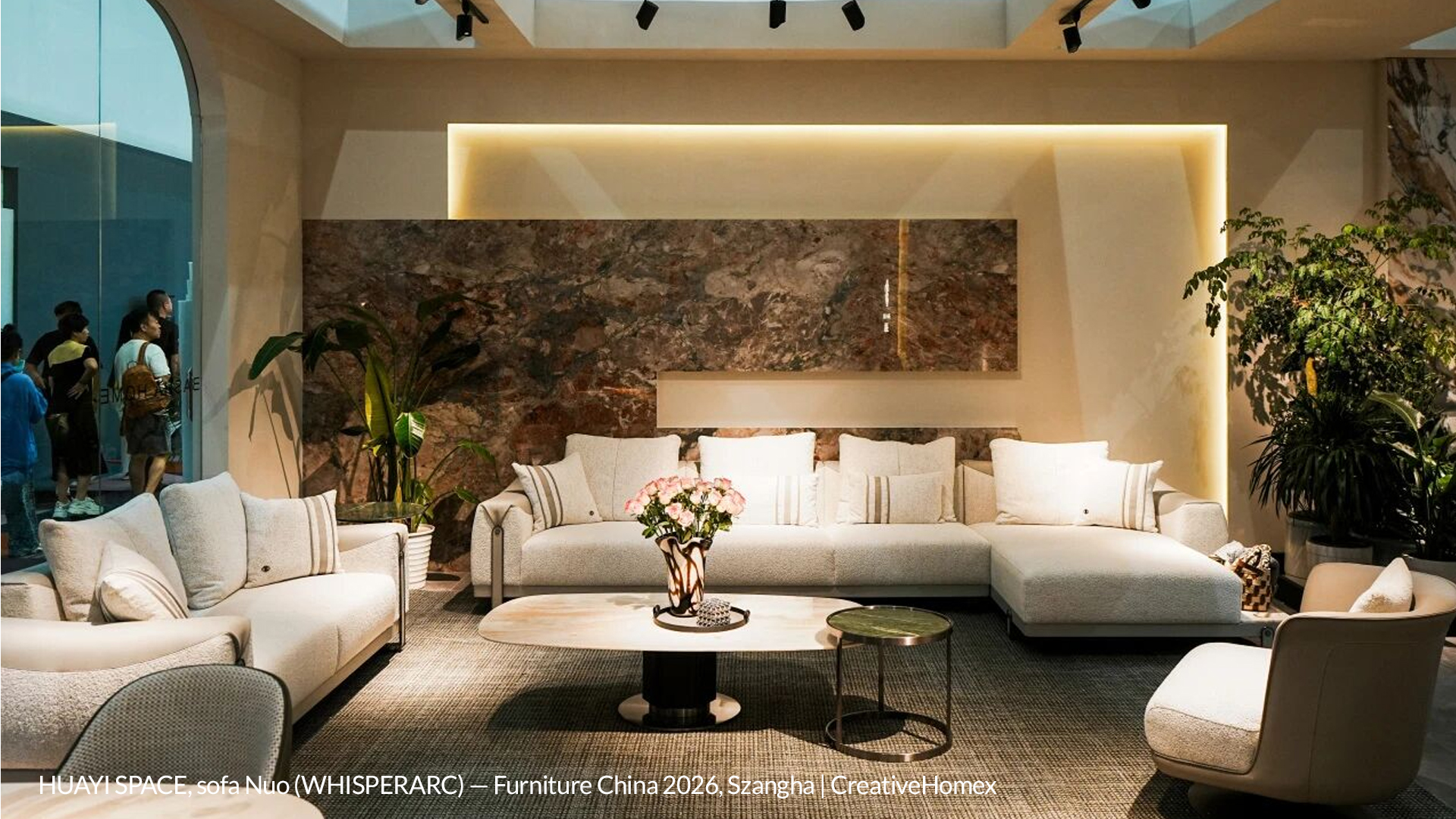
Until recently, a sofa was designed as a piece of furniture meant to last for years. You chose a model, placed it in a specific spot and only replaced it during the next renovation. This year’s Furniture China in Shanghai, however, showed that this way of thinking is clearly changing. Increasingly, sofas are expected to adapt not only to the interior but also to the user’s lifestyle. They can be expanded, rearranged, adjusted in seat depth, or configured with cushions in different ways depending on changing needs.
Furniture China is one of the largest trade fairs for the furniture industry in Asia. From 7–11 September 2026, the event took place alongside Maison Shanghai at two exhibition centres in Shanghai’s Pudong district. This year’s edition brought together more than 3,200 brands, while the organisers recorded 180,448 visits – over 10% more than the previous year.
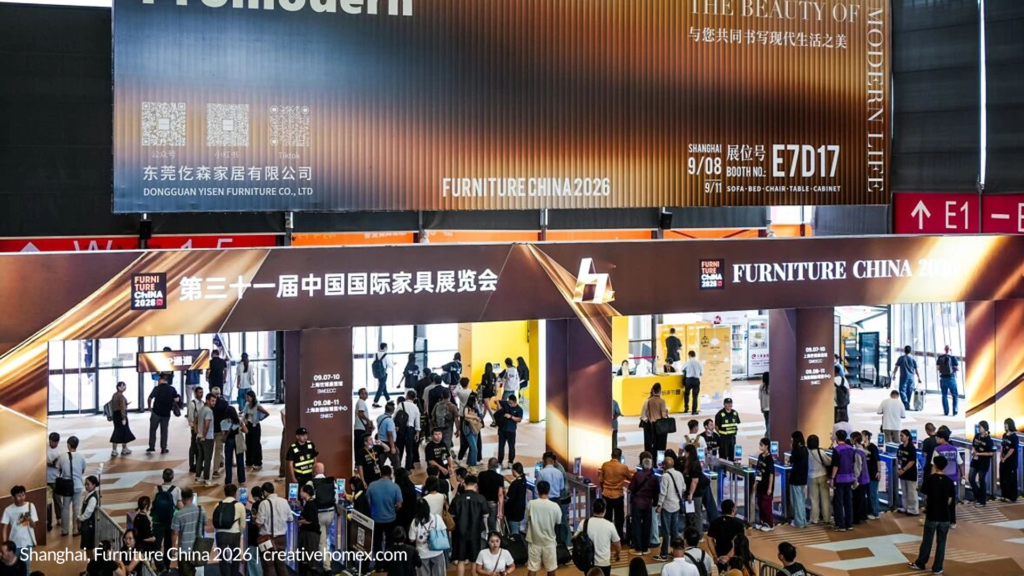
What we found particularly interesting was what was happening in upholstered furniture – not only in terms of form, but above all in how furniture construction is increasingly influencing the choice of upholstery material.
The sofa is no longer a fixed form
The most visible direction? Modularity.
At many stands, the sofa was no longer presented as a finished, fixed object, but as a system of elements that could be combined, added or rearranged.
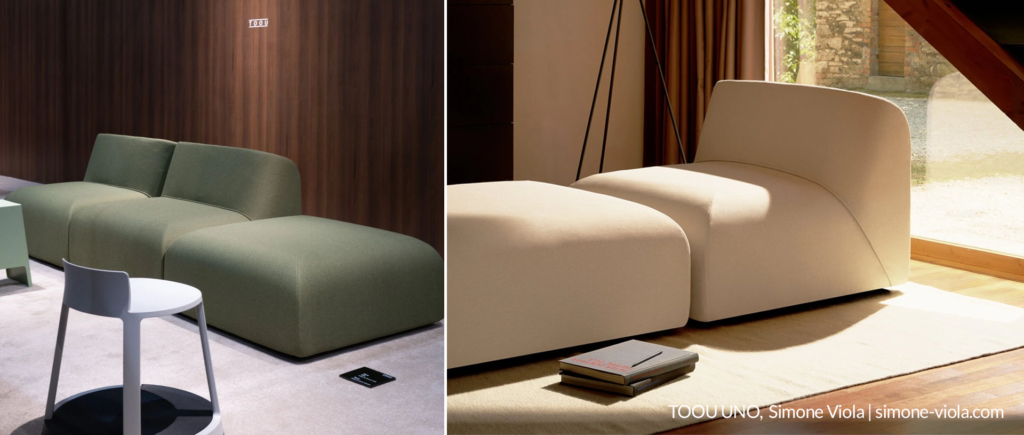
TOOU presented UNO – a modular sofa that can be expanded or reconfigured as the interior or the needs of its users change. A similar approach could also be seen in the collections by BASHA HOME and DASHCASA.
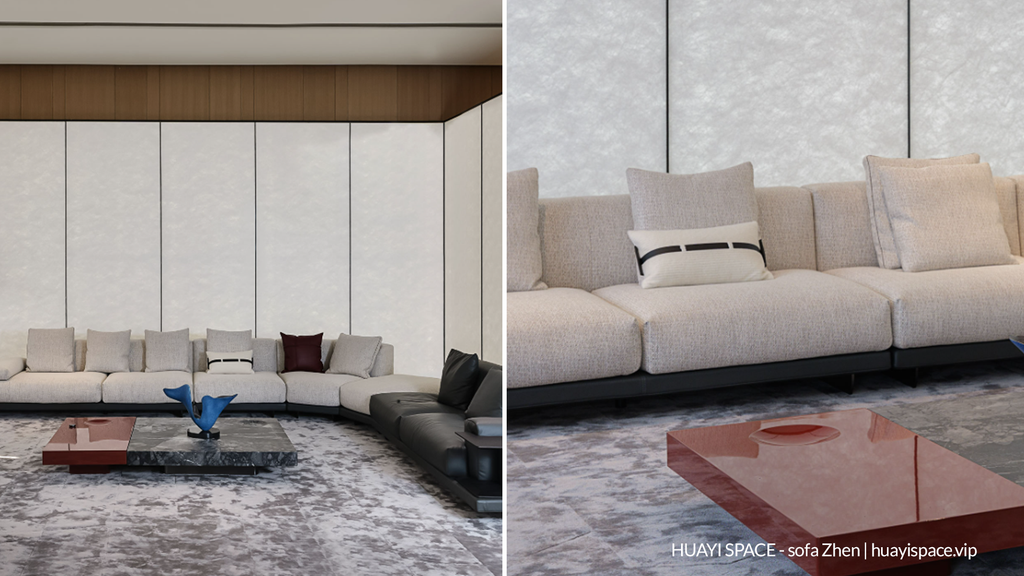
HUAYI SPACE took this concept even further. In the Zhen model, a mechanism hidden in the backrest allows the seat depth to be adjusted. The Xi sofa, meanwhile, features loose back cushions that users can freely move and rearrange.
The same direction was also visible at Maison Shanghai. One of the displays was designed as an apartment for renters who move to a new home every few years. The furniture was intended to be easy to move, rearrange and adapt to a new space.
It is no longer just about changing the way a sofa looks. Its function is changing too. The furniture is designed to adapt and work together with the user.
Fashion is becoming increasingly visible in upholstery
A second strong direction was the growing crossover between furniture design and fashion. A good example was EXPOCASA’s CHI collection, created in collaboration with fashion designer Zhang Chi.
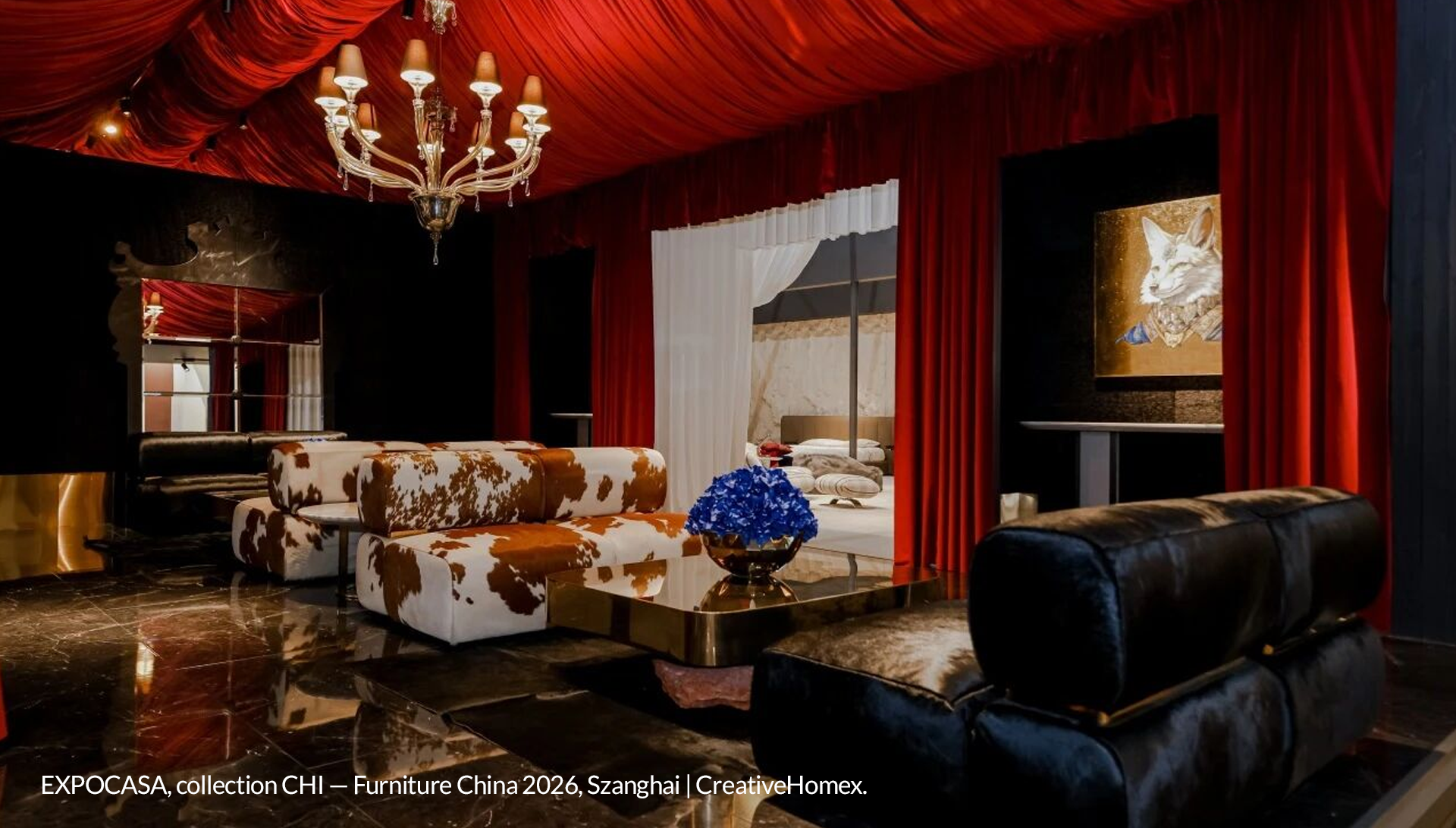
The sofas featured patchwork combinations, intentionally distressed surfaces and decorative stitching placed in areas where it would not traditionally be used in upholstery. Leather was combined with fabric in a way that had more in common with a well-designed jacket than a conventional sofa.
Alongside these bold designs, there were also more understated interpretations of upholstery materials.
NEST SPACE presented wool-upholstered sofas in warm, minimalist interiors with a Scandinavian feel. DASHCASA, meanwhile, used regular quilting to create a geometric rhythm across the surface of the backrest.
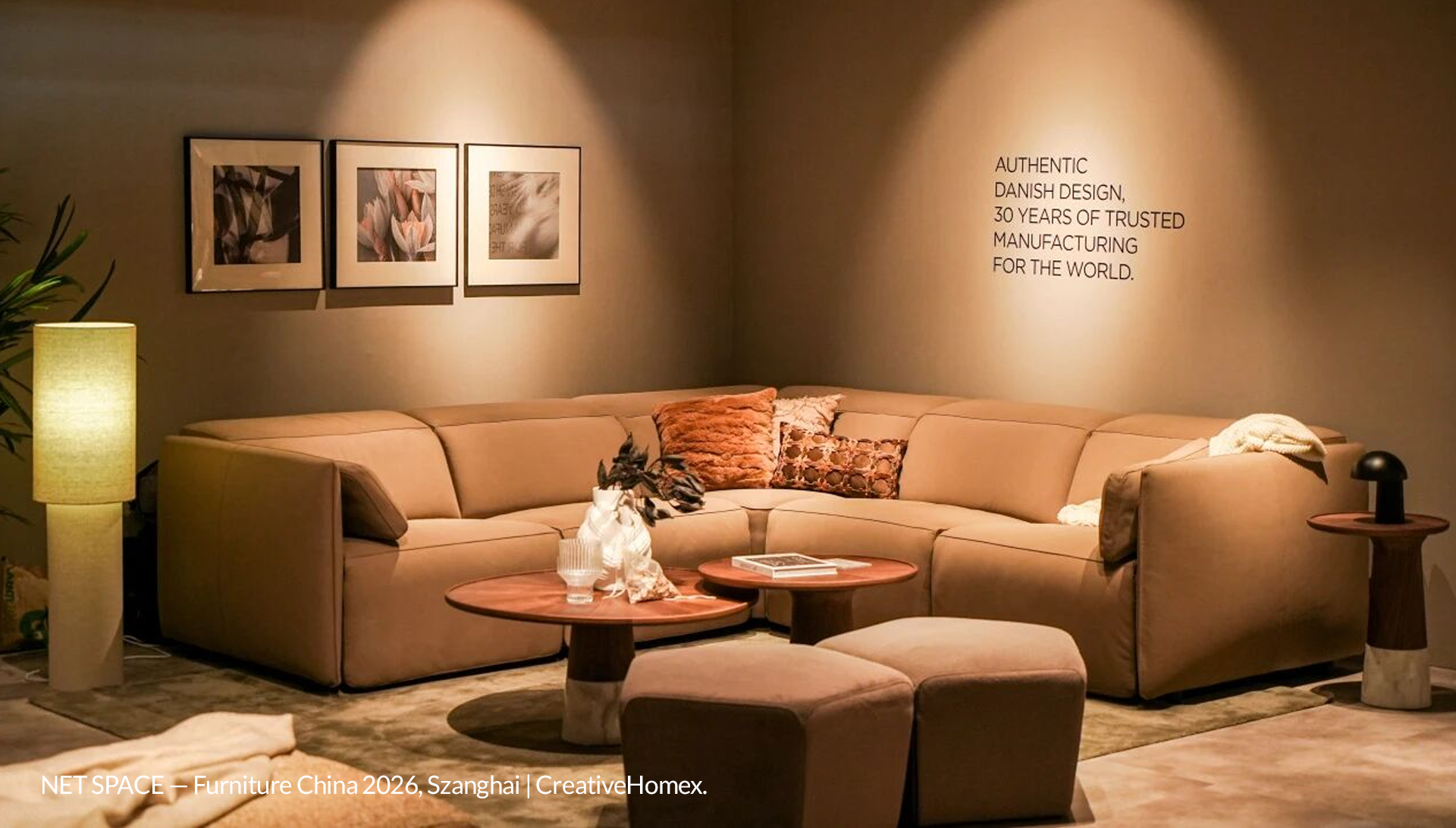
They all have one thing in common: upholstery material is no longer a neutral background for the furniture’s form. Increasingly, it shapes the character of the piece itself.
And this is where furniture design is becoming increasingly connected with material technology.
What does a modular sofa mean for upholstery materials?
More movement means more demands on the upholstery material.
A modular sofa places different demands on upholstery than a traditional piece of furniture that remains in the same configuration for many years. Take a simple example: a customer buys a sofa and adds another module a year later. The new element is placed directly next to one that has already been in use for months.
In this type of design, what matters is not only how the fabric looks on the day of purchase, but also how it performs over time: whether its surface changes evenly, how it responds to friction, and how it behaves on elements that are in constant contact with one another.
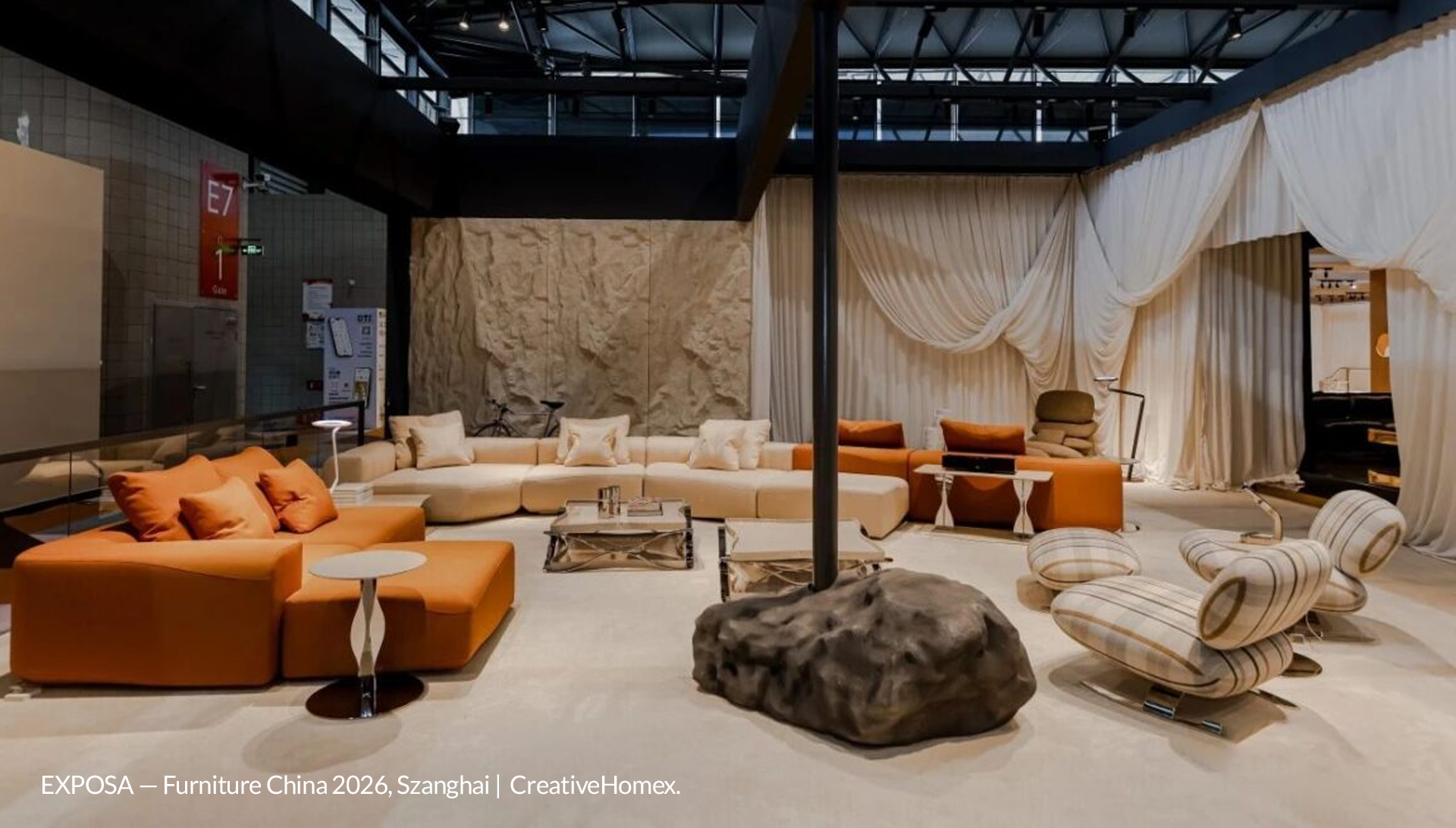
The same applies to loose cushions.
A cushion that is moved, turned and repositioned every day behaves very differently from a fixed element. The material is bent, stretched and rubbed against neighbouring surfaces more frequently.
Decorative stitching creates yet another set of requirements. If a seam is meant to remain visible and become part of the design, it cannot be treated purely as a technical detail. The material also needs to perform well where the stitching serves an aesthetic purpose. Stability, surface behaviour and the way the fabric sits around the seam all become important.
That is why, with this type of furniture, it is becoming increasingly difficult to leave the choice of upholstery material until the very end of the design process.
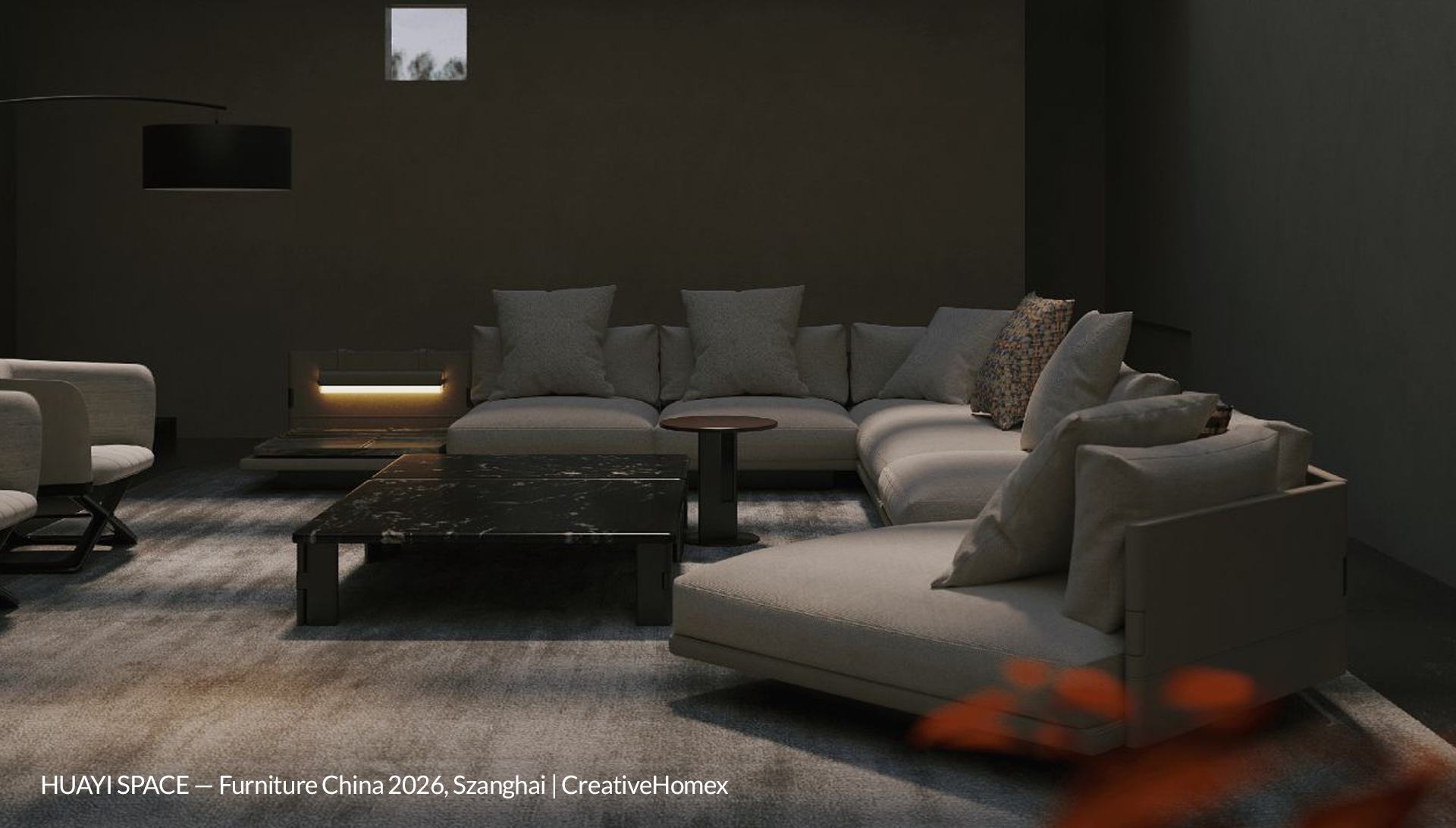
The fabric should already be considered when the furniture construction is being developed. Upholstery is no longer the final decision.
This is probably the most important takeaway from FABB’s perspective. For years, the design process often followed a similar pattern. First came the form, construction and function of the furniture, and only then was the material chosen to “dress” it.
With modular sofas, adjustable backrests, loose cushions and decorative stitching, this order is becoming less and less obvious.
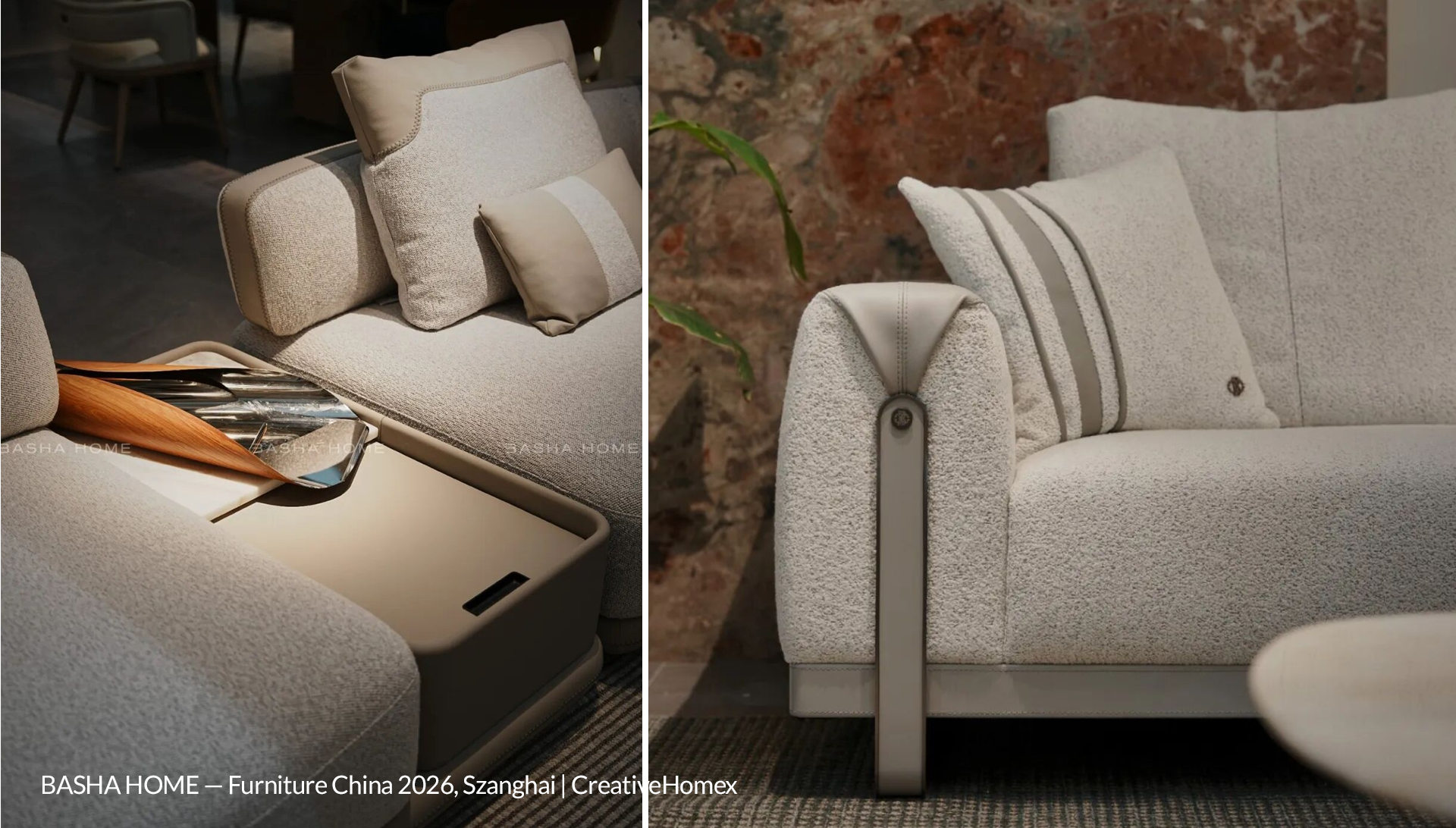
The type of material can influence the radius of curves, the way seams are constructed, the size of individual elements, how cushions behave and how the entire upholstered surface performs in use.
This means that the conversation about fabric needs to start earlier.
Not when the finished sofa is already waiting to be upholstered, but when the designer is still answering the question: how should this piece of furniture work?
Why do we go to trade fairs in Shanghai today?
Not just to find a finished product. According to data from the organisers, only 11.5% of visitors said that placing orders on site was the purpose of their visit. Far more often, visitors came to find suppliers, explore the market, and discover new products and trends.
Trade fairs are where conversations about future projects begin.
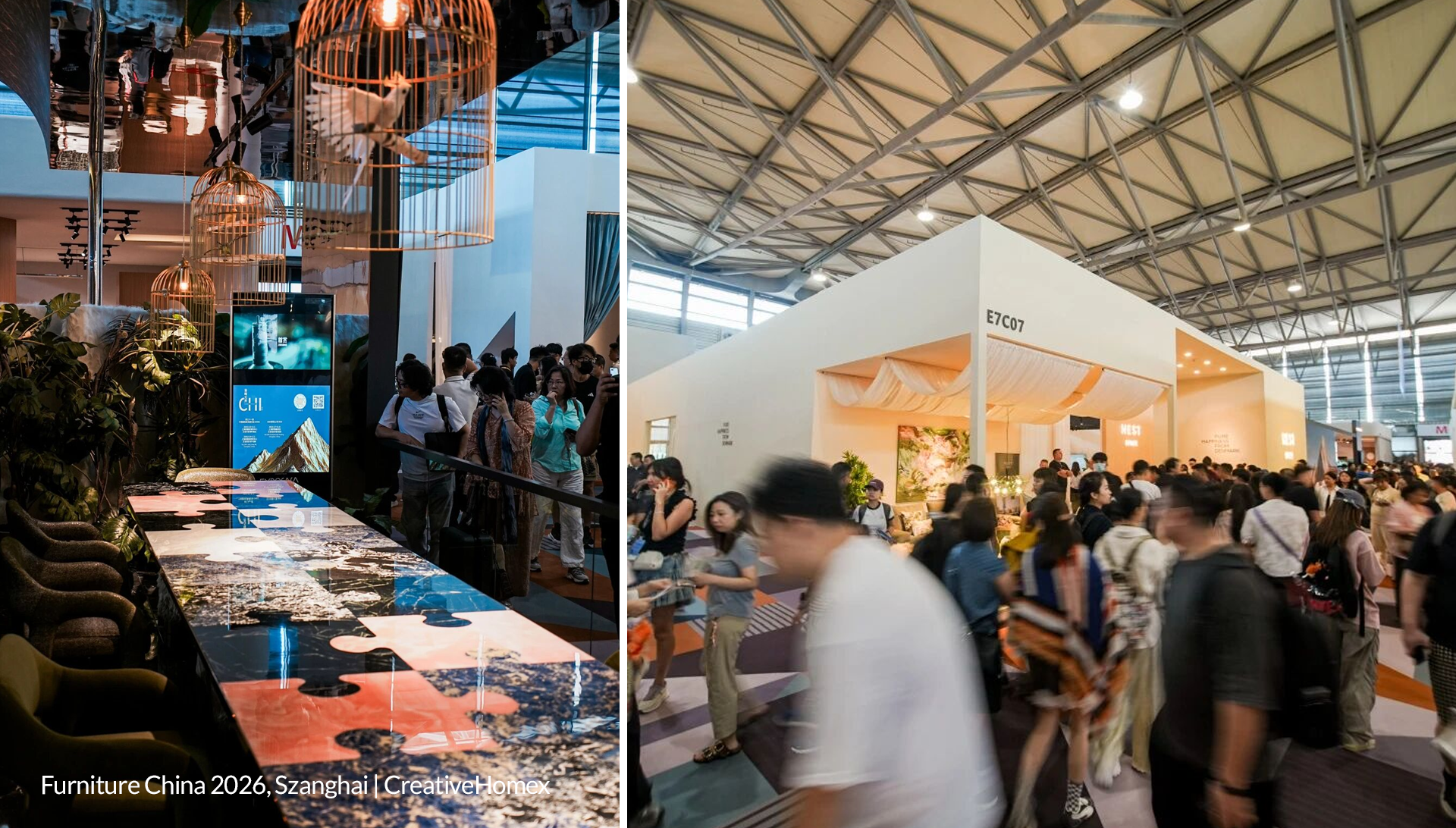
This year’s edition was also exceptionally international. The organisers recorded a record 37,394 visits from international attendees – 14.6% more than the previous year. Visitors came from 184 countries and regions, with more than one in five international attendees representing Europe. From the perspective of an upholstery materials manufacturer, this is an important signal.
Engagement with the material begins long before an order is placed. It often starts at the stage of searching for the right partner, developing the initial furniture concept and considering how the product should perform over the years to come.
What do we take away from Furniture China 2026?
Above all, we leave with the sense that a sofa is increasingly becoming something more than a fixed, unchanging object.
It is designed to grow with the home, adapt to new spaces and allow users to change its configuration. It is also drawing more boldly on the language of fashion – patchwork, contrasting material combinations, decorative stitching and surfaces designed to stand out rather than remain neutral.
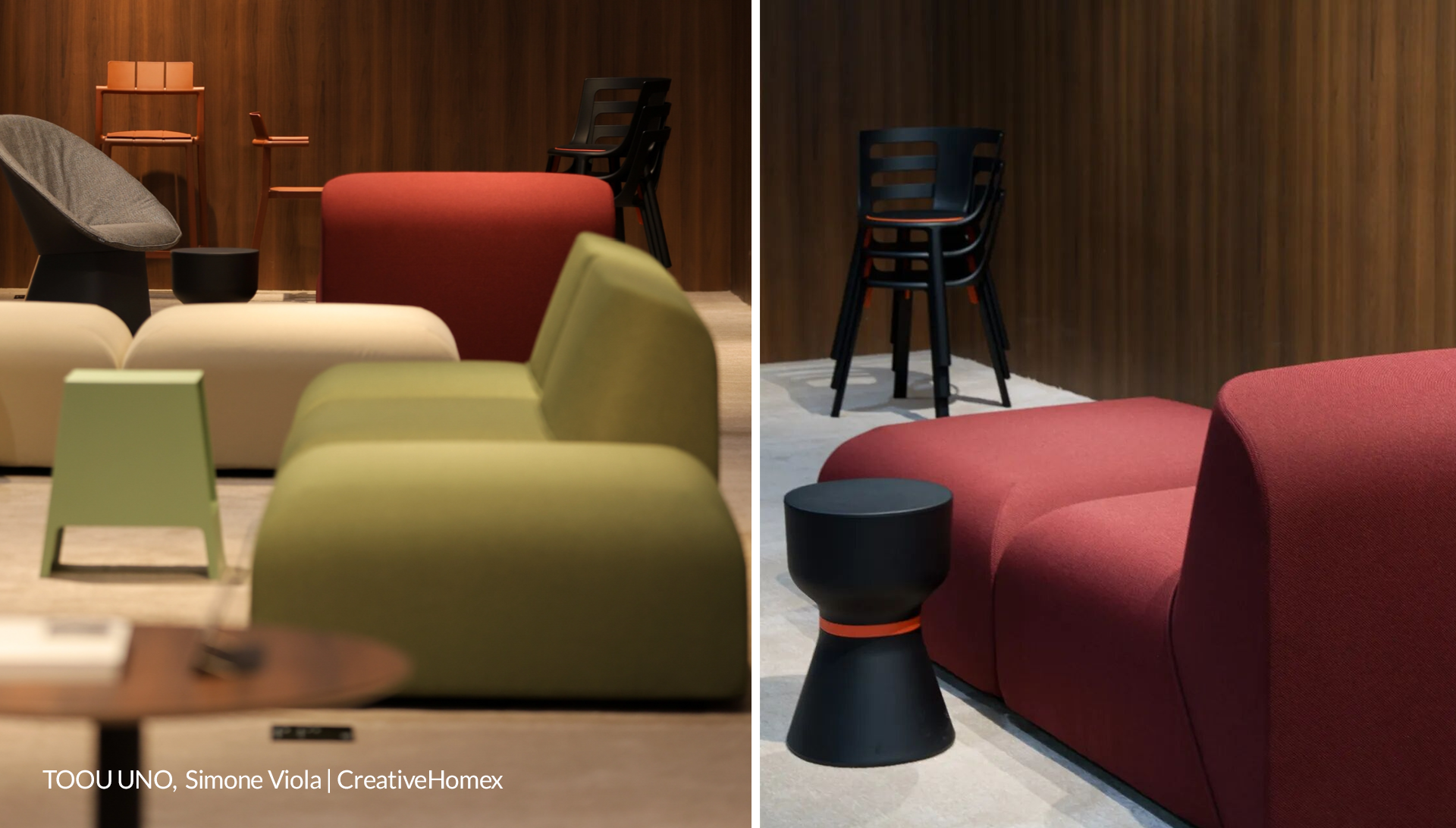
For furniture manufacturers, this means new design possibilities.
For upholstery material manufacturers, it means new requirements.
And for us at FABB, there is one particularly important takeaway:
Upholstery material is increasingly becoming more than the final decision in a project. More and more often, it is one of the starting points.
The next edition of Furniture China and Maison Shanghai will take place in Shanghai from 7–11 September 2027.
Follow us on social media for more:
Furniture China 2026 took place from 7–11 September 2026 in Shanghai’s Pudong district. The event was held alongside Maison Shanghai at the SNIEC and SWEECC exhibition centres.
The organisers recorded 180,448 visits, an increase of 10.3% compared with the previous year. Visitors came from 184 countries and regions.
One of the strongest trends was modularity and the ability to customise furniture: expanding sofas with additional modules, adjusting seat depth and using loose cushions. The influence of fashion on upholstery was also clearly visible, with patchwork, decorative stitching, distressed finishes and combinations of leather and fabric.
Because individual elements may be moved, rearranged and purchased at different times. The material needs to withstand friction, bending and frequent repositioning while maintaining a consistent appearance across the entire piece of furniture.
Because the properties of the material influence, among other things, how seams are constructed, how the surface sits, the construction of the cushions and how the upholstery performs in use. In more complex designs, upholstery becomes part of the furniture’s structural and visual concept rather than simply its final finish.
The next edition of Furniture China and Maison Shanghai is scheduled to take place in Shanghai from 7–11 September 2027.