
Pet bed fabrics. How to choose the right material for your design?
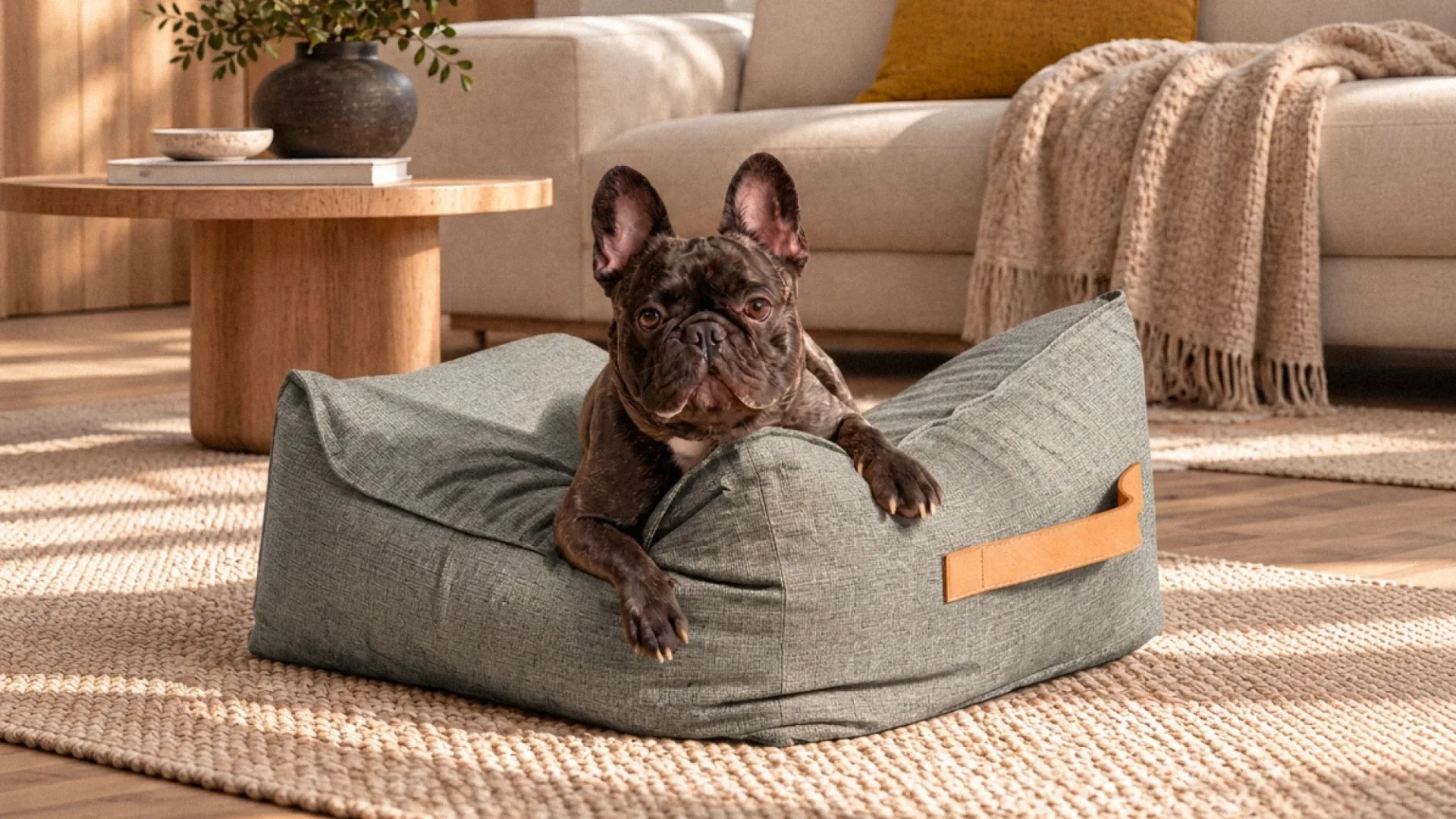
A pet bed sits next to the sofa, beside the bed or in a favourite corner of the living room. It should be comfortable for the pet, but it is also part of the interior. That is why designing a pet bed means considering not only the fabric’s appearance and softness, but also how well it withstands everyday use. Choosing the right fabric goes beyond colour. Seams, filling, the base and how the cover is cleaned all need to be considered. Only then can you determine whether a particular material is suitable for a specific pet bed design.
Where to start when choosing fabric for a pet bed?
Start by looking at the shape of the pet bed. A flat mat, a soft cushion bed and a bed with high sides each require different solutions. Fabric behaves differently on curves and around seams, and may need different types of support.
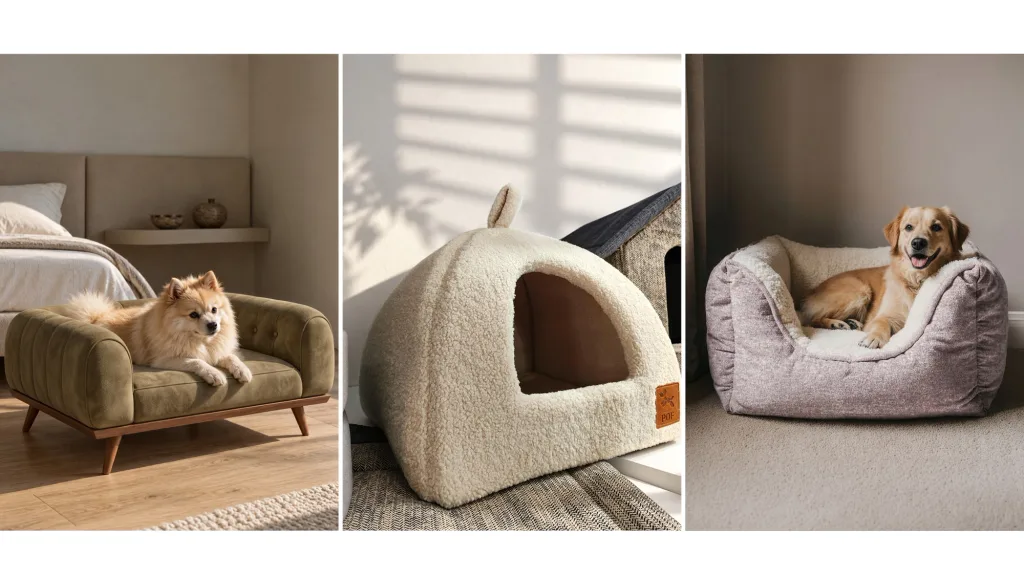
At this stage, it is also worth deciding whether the cover will be removable and how it should be cared for. The zipper should allow the filling to be removed easily, and putting the cover back on should be just as simple.
When choosing a fabric, we focus primarily on:
- resistance to snagging, abrasion and pilling,
- durability and performance at seams,
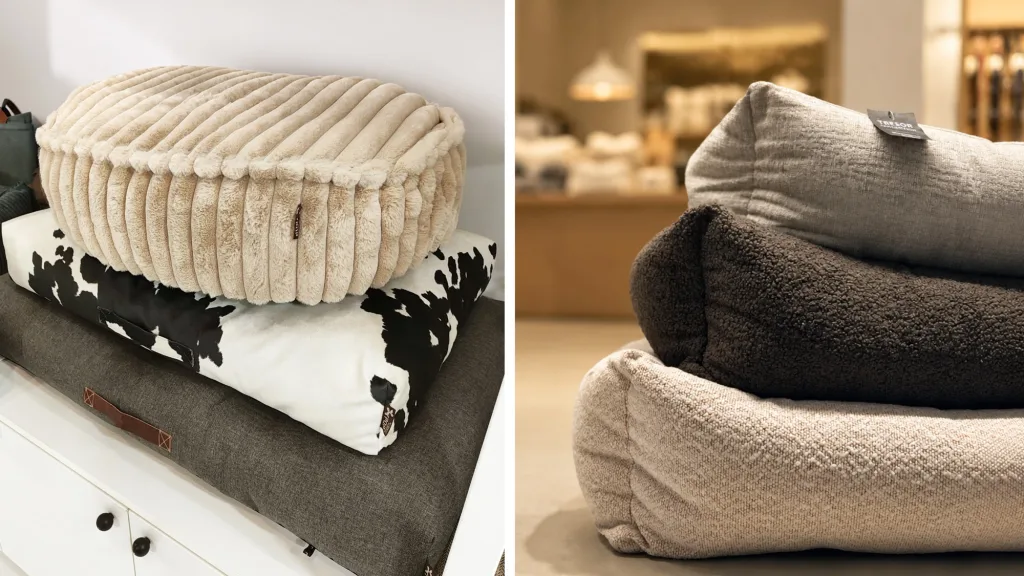
- softness, texture and how the fabric drapes over the shape,
- cleaning and care recommendations.
A high score in one test does not answer every question. A fabric may perform well in abrasion resistance tests while still requiring careful consideration of its cleaning and care instructions.
What does pet-friendly mean?
When it comes to pet beds, fabric resistance to snagging is particularly important, as measured by the snagging test. This test helps assess how the fabric surface performs under specific test conditions.
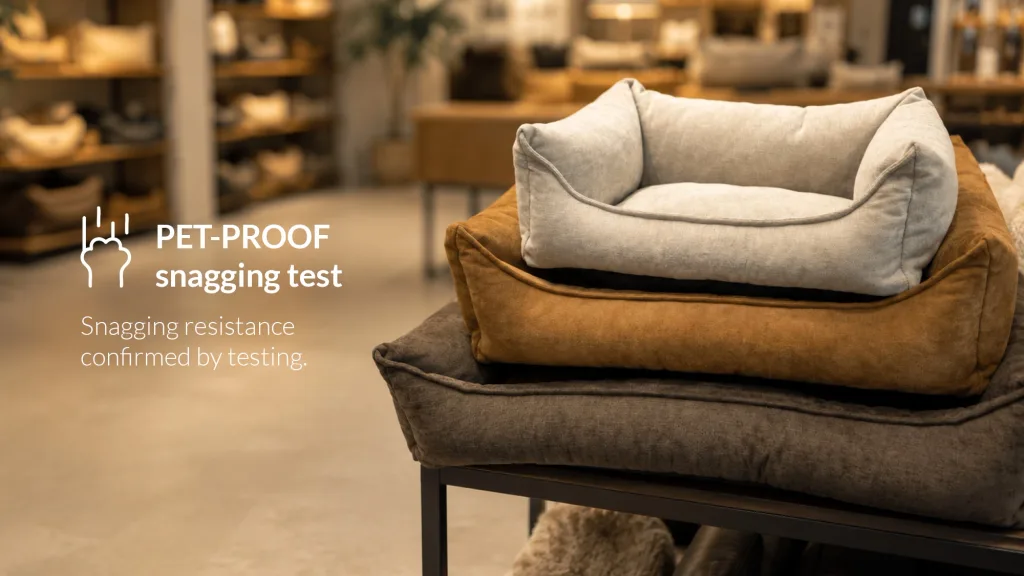
However, this does not mean that the fabric can withstand all scratching or biting. That is why terms such as pet-friendly and PET-PROOF should always be considered alongside the technical documentation of each collection.
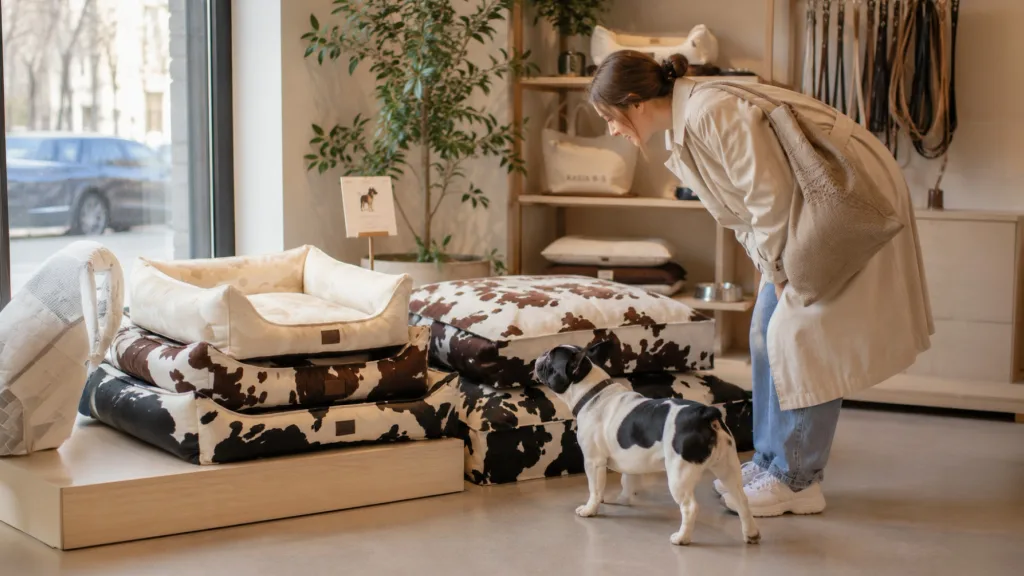
When choosing fabric for a pet bed, resistance to snagging, abrasion and pilling, as well as care recommendations, are important factors. Test results help compare fabric collections, but they do not guarantee complete resistance to scratching or biting.
When a soft, furry texture is a priority
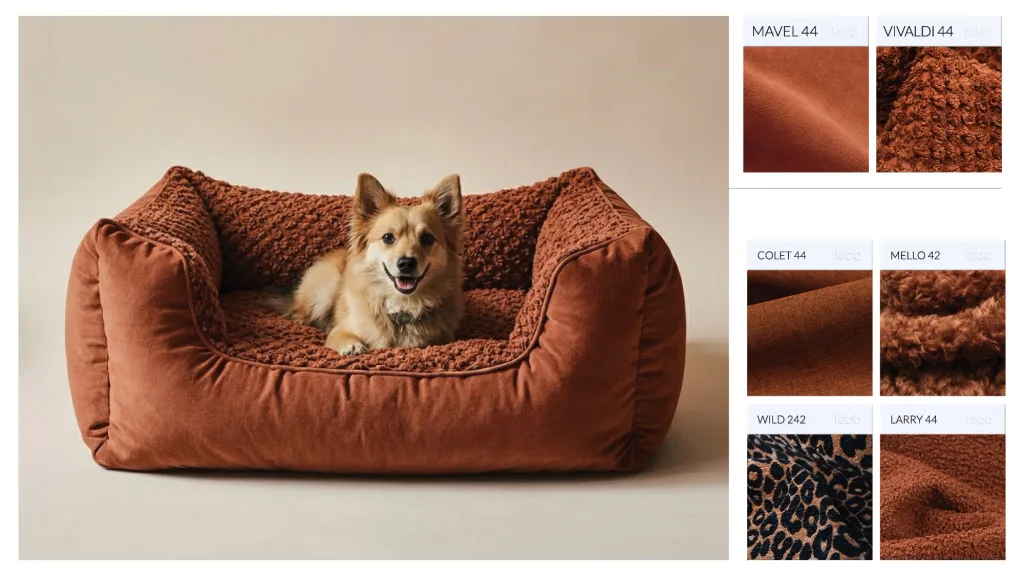
One of FABB’s fabric options for designs with a soft, furry feel is MELLO. MELLO is worth considering for pet bed designs where texture plays a key role in defining the overall look. It is a warp-knitted fabric with a dense, soft surface and a gently wavy texture that resembles fur.
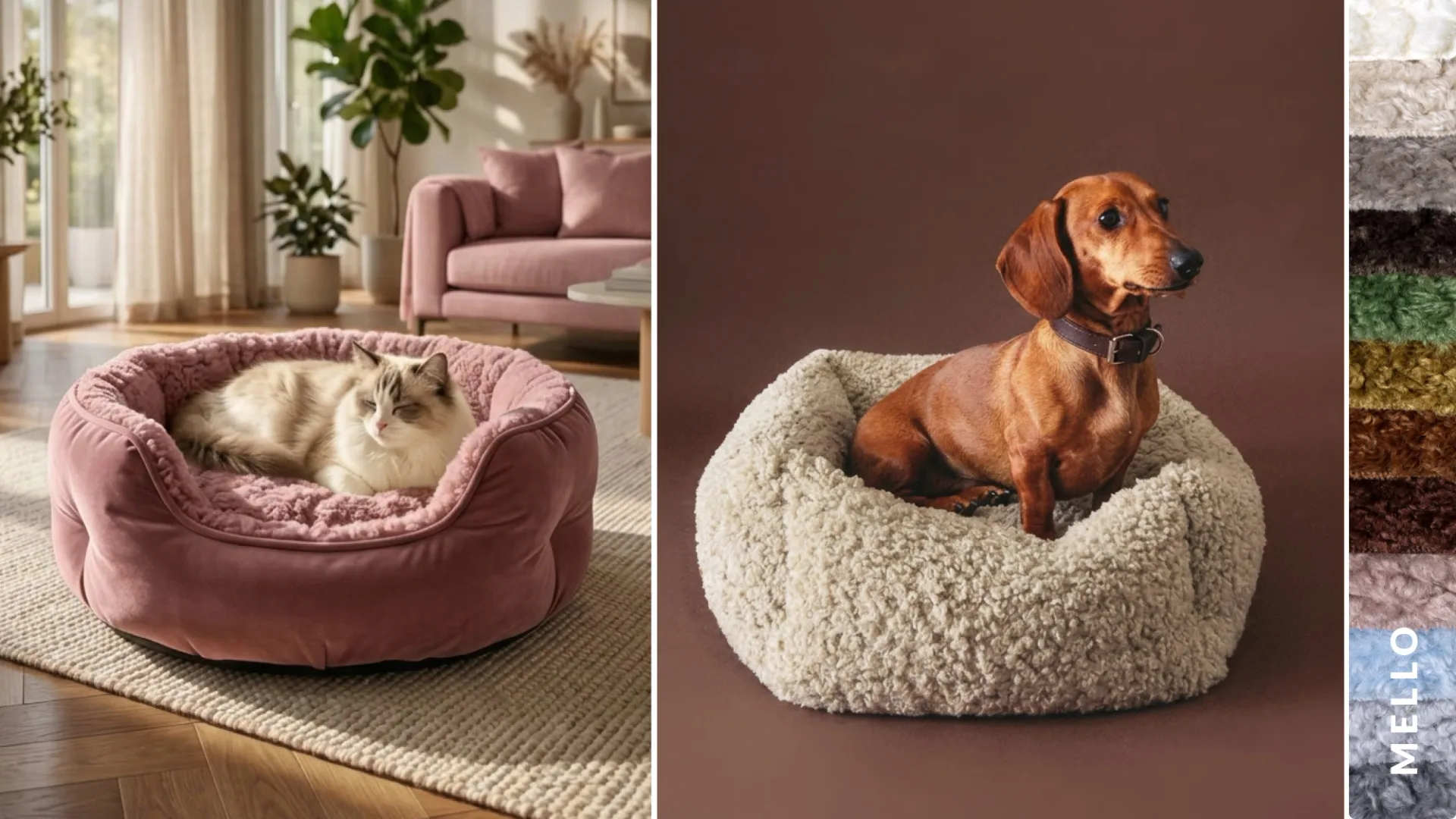
Its technical specifications include a weight of 570 g/m², abrasion resistance of 60,000 Martindale cycles, and a pet-proof test result of 5, category X, according to BS 8479.
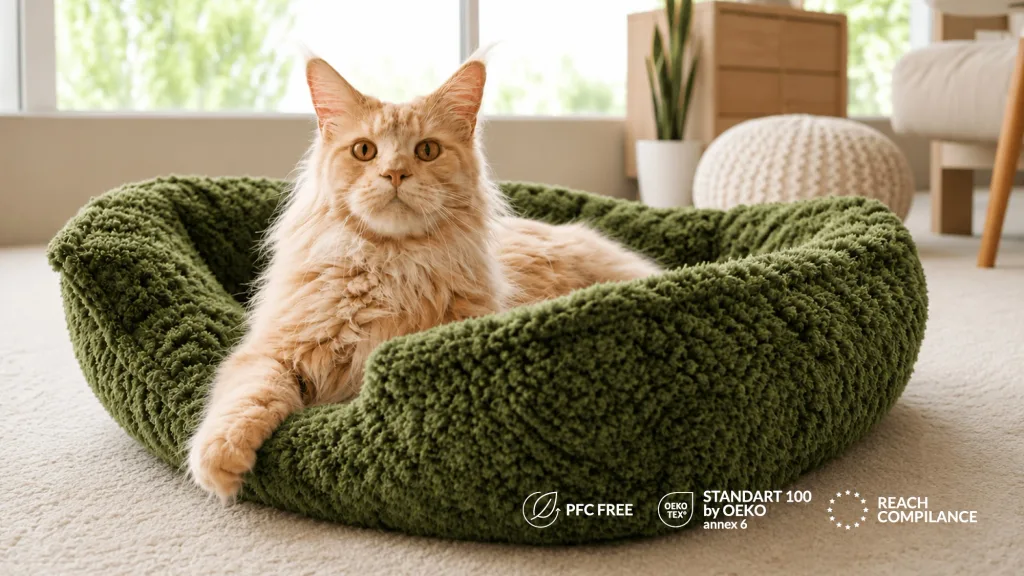
When working with this fabric, it is also important to consider the pile direction during cutting, as it affects how the individual pieces will look once sewn together.
The base of a pet bed matters too
We usually start with the fabric we can see and touch. However, the base also affects how the pet bed behaves on the floor when an animal steps onto it, settles down or jumps off.
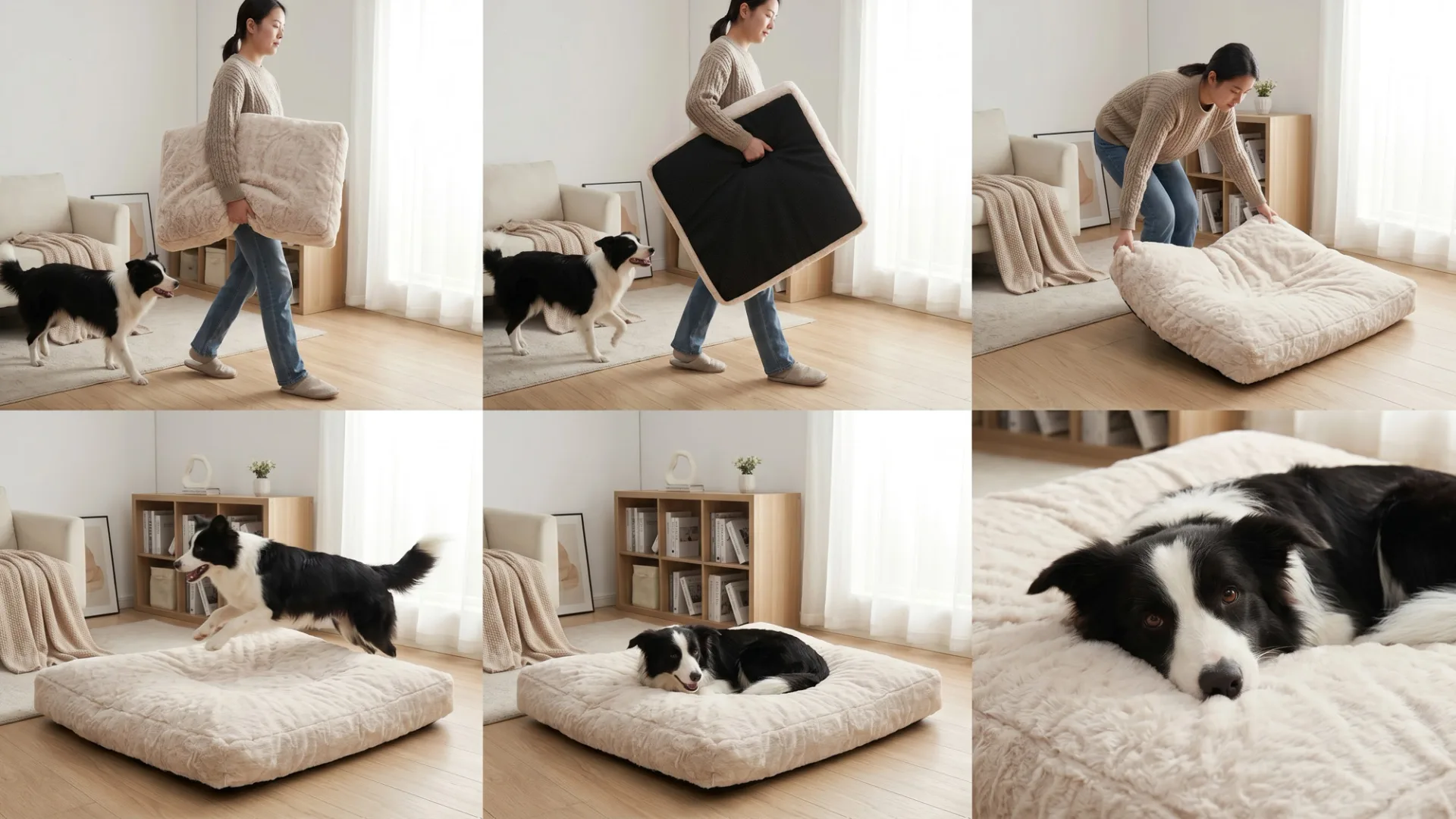
ANTURA can be used for this part of the pet bed. It is a technical fabric with a polyester base and PVC dots that help reduce slipping on the floor.
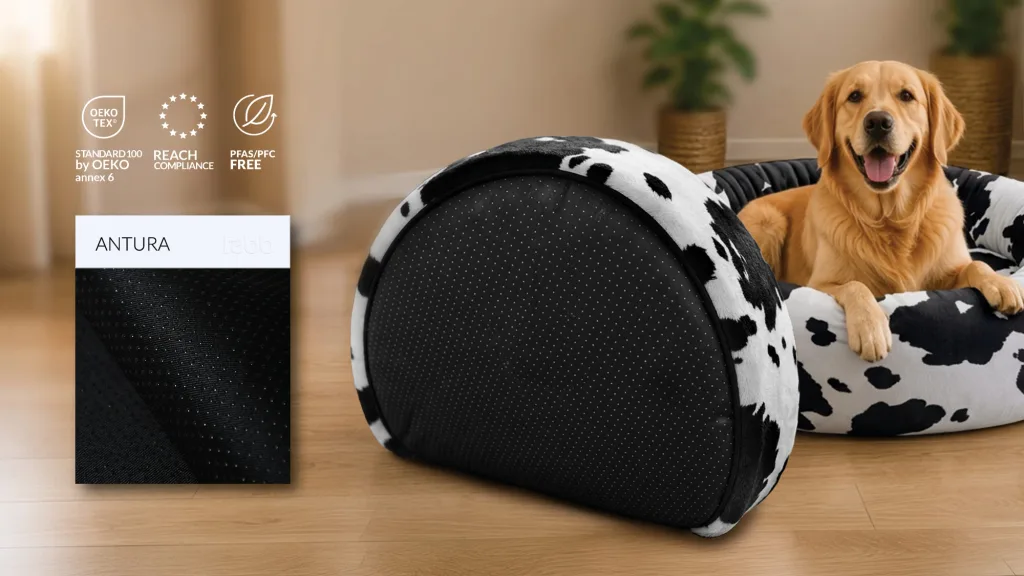
This means that a single fabric does not have to fulfil every function. The top can provide softness and visual appeal, while the base offers better grip. This combination is worth testing on the finished pet bed, on the types of surfaces where it will be used.
How to plan for cleaning the pet bed cover?
A removable cover is a practical solution, but having a zipper does not necessarily mean that the entire cover is machine washable.
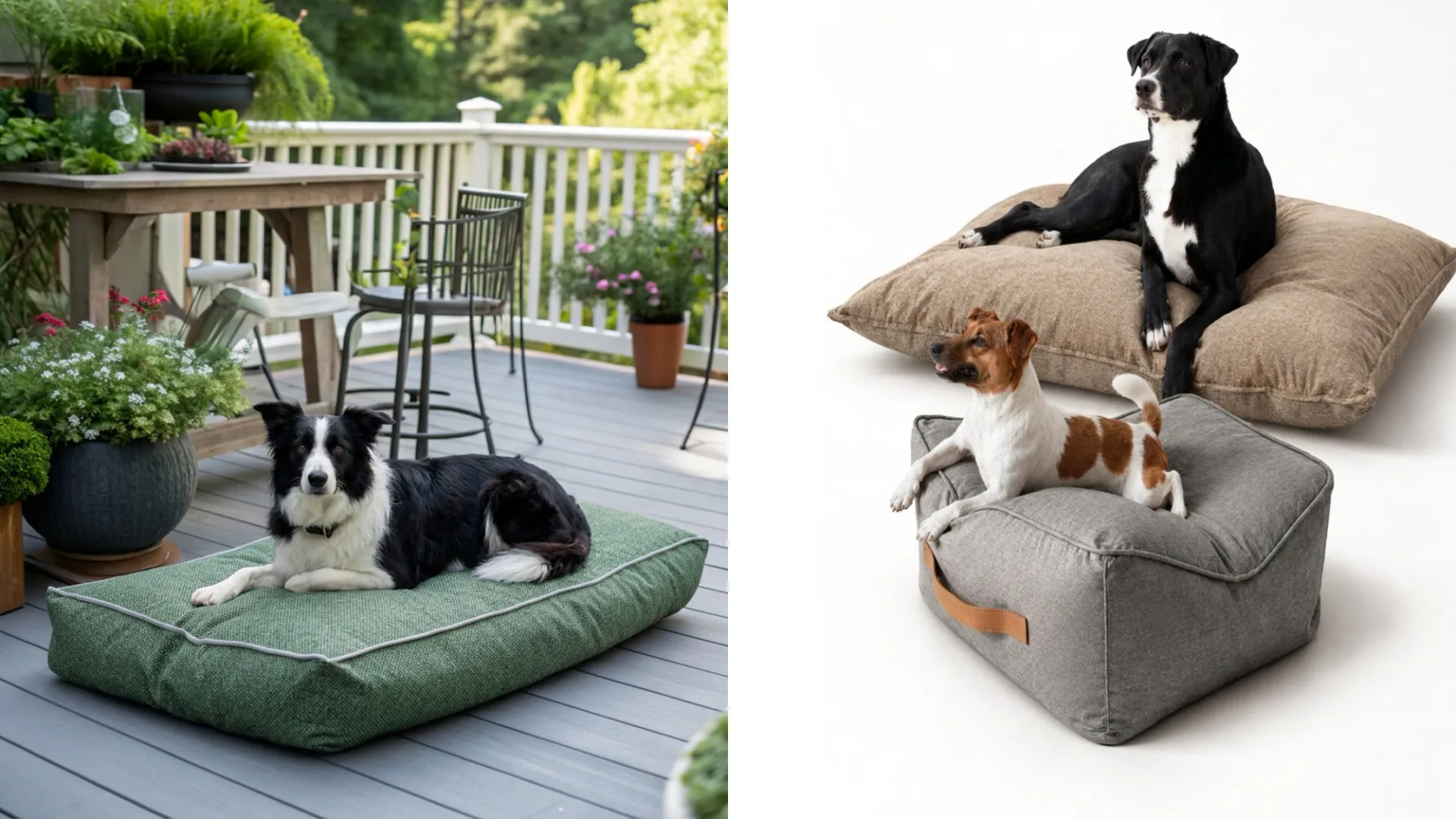
Care instructions should be based on the recommendations for the outer fabric, base material and additional components. If the filling is also intended to be washed, its care requirements should be checked separately.
Before starting production, it is worth testing the recommended cleaning method. Check whether the cover retains its dimensions, how its surface looks after cleaning and whether it still fits the filling properly. These details can make a significant difference to the end user.
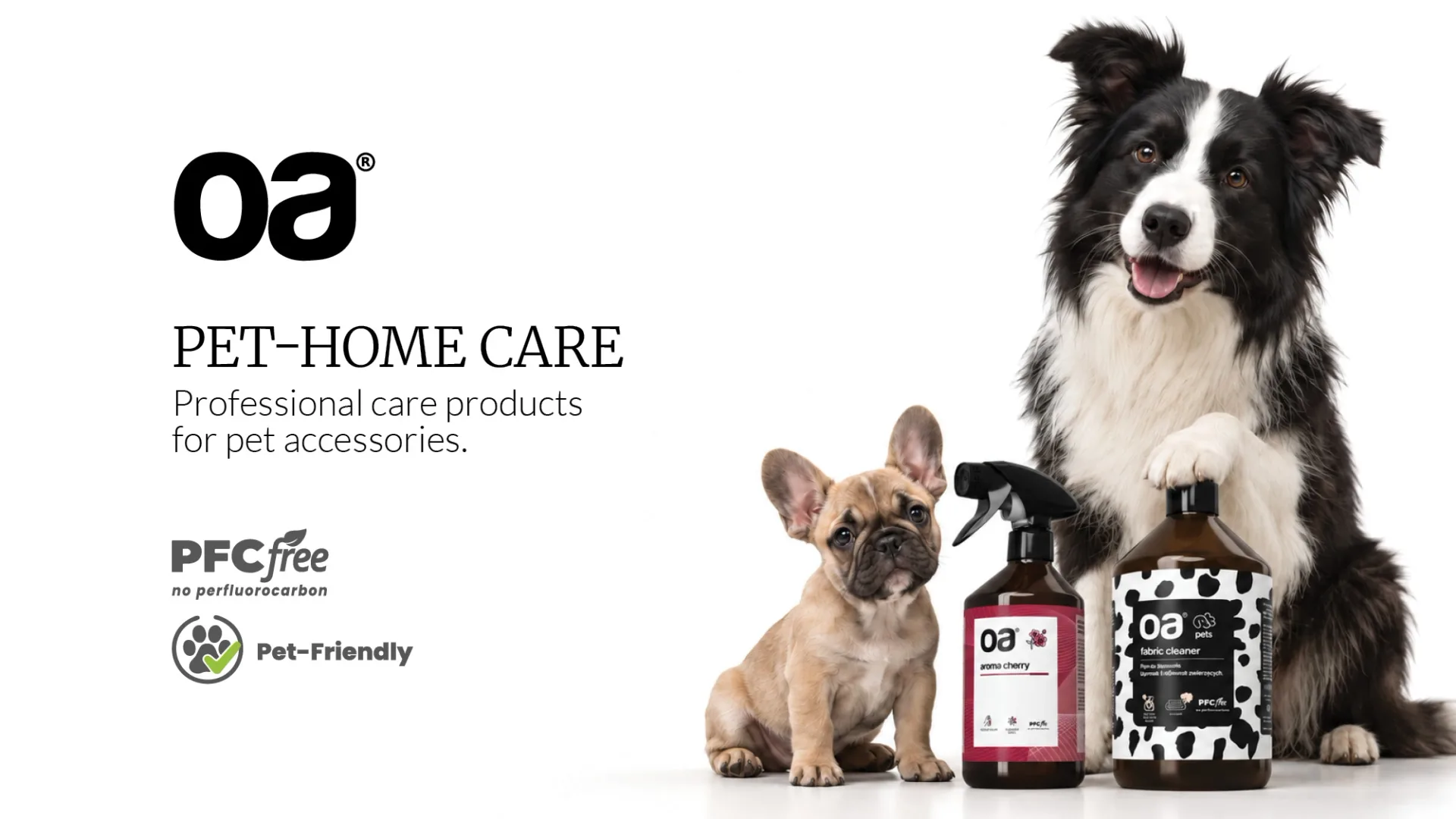
Pet bed care can also be complemented with OA products for cleaning and odour neutralisation, selected according to the fabric’s care recommendations. More details are available on the OA product website.
A pet bed as part of the interior
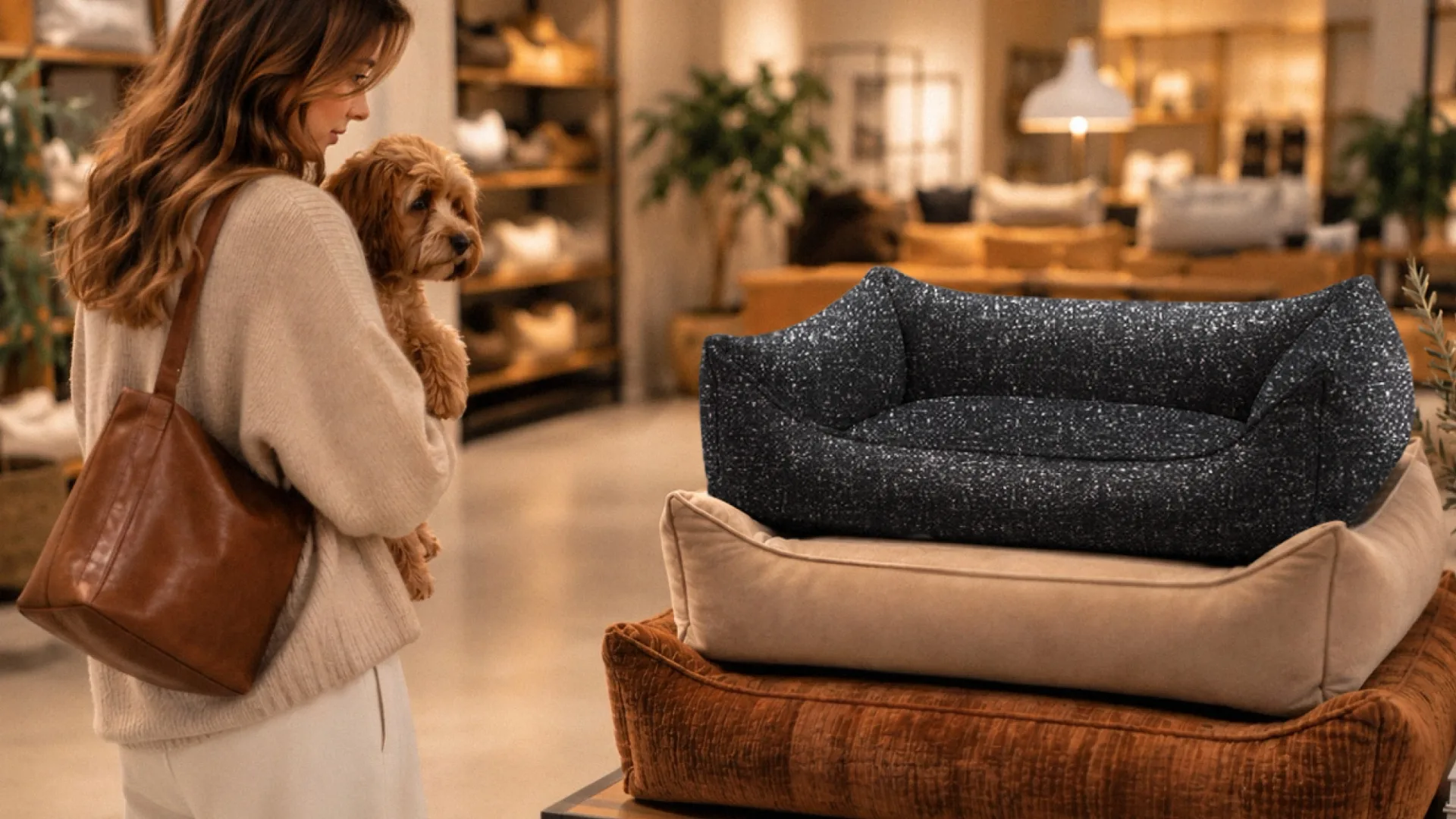
When designing a pet bed, it is worth approaching it in much the same way as a small upholstered piece of furniture. Proportions, colour, finishing details and how the fabric complements the overall shape all matter.
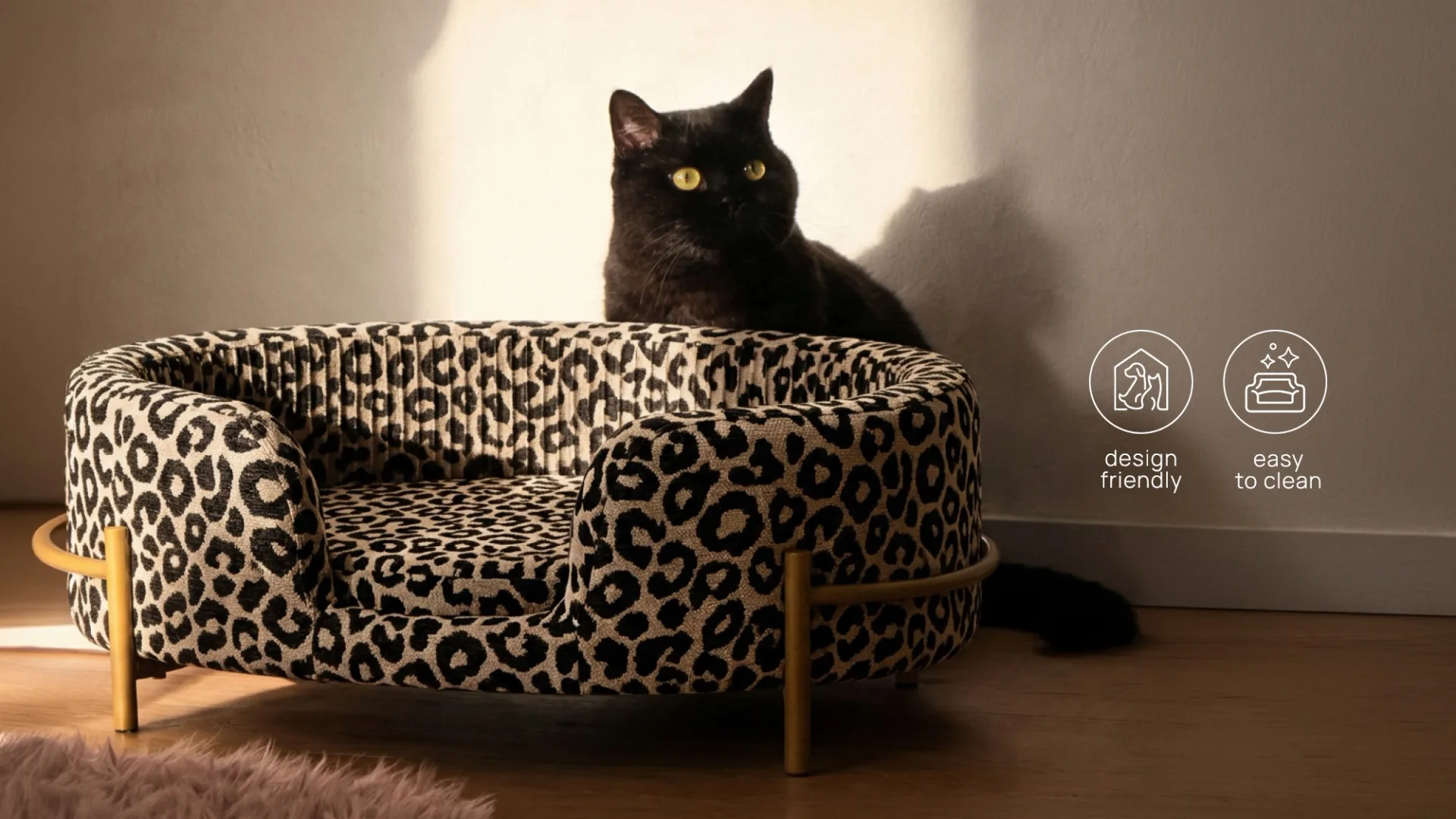
A soft, furry surface will emphasise the cosy feel of the pet bed. A finer texture and a neutral colour will make it easier to integrate into a living room or bedroom interior.
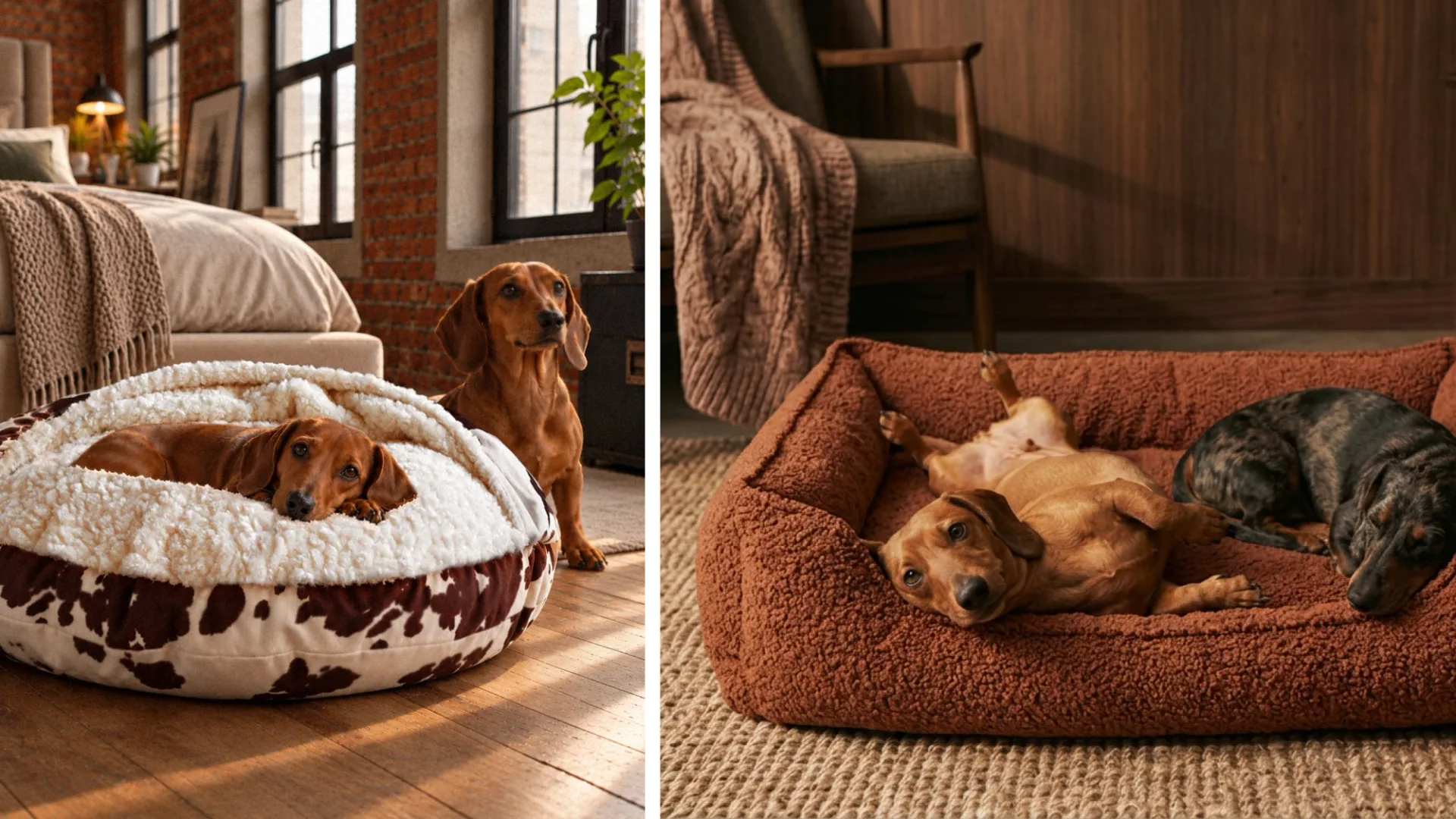
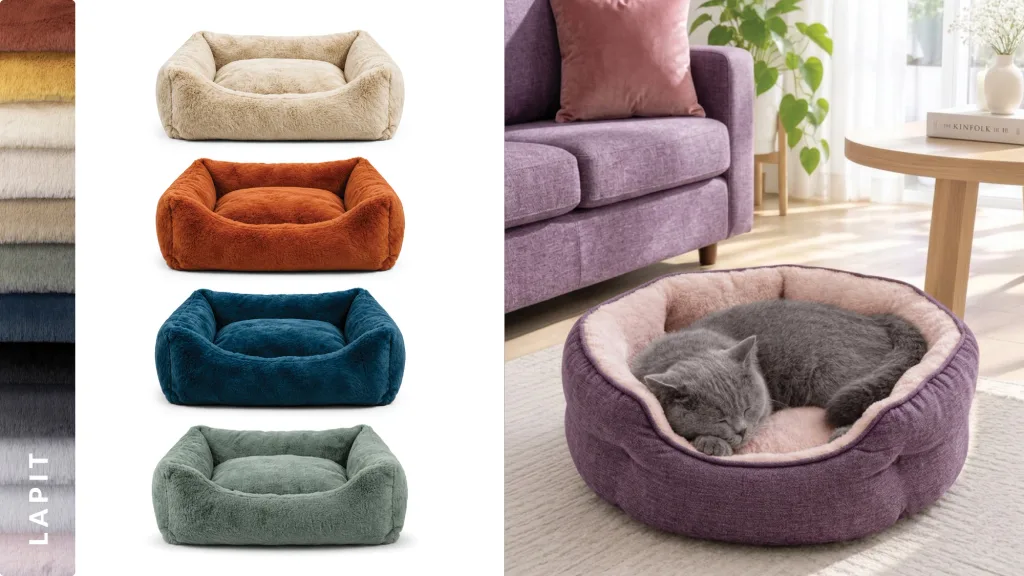
If you are developing an entire collection, it is worth comparing several fabrics on the same pet bed design. Sometimes, a change in texture alone is enough to give the same model a completely different character. This makes it easier to assess which variations work well together and create a cohesive product range.
From fabric sample to finished pet bed
A fabric sample allows you to choose the colour and assess how the material feels to the touch. However, it does not show how the fabric will look when combined with the filling or how it will drape over the sides of the pet bed.
That is why it is worth making a prototype before starting production. Examine the seams, check the curves, and remove and refit the cover. See whether the base provides sufficient grip on the floor and whether the pet bed retains its shape after cleaning.
This is the stage when you can still refine the pattern, adjust the zipper placement or choose a different fabric for a particular part of the pet bed. A finished prototype makes it much easier to identify details that are not visible in a fabric sample.
FABB fabrics for PETS collections
When choosing fabrics for pet beds, it is worth comparing several options. Consider their textures, technical properties and care requirements, then test them on your own pet bed design.
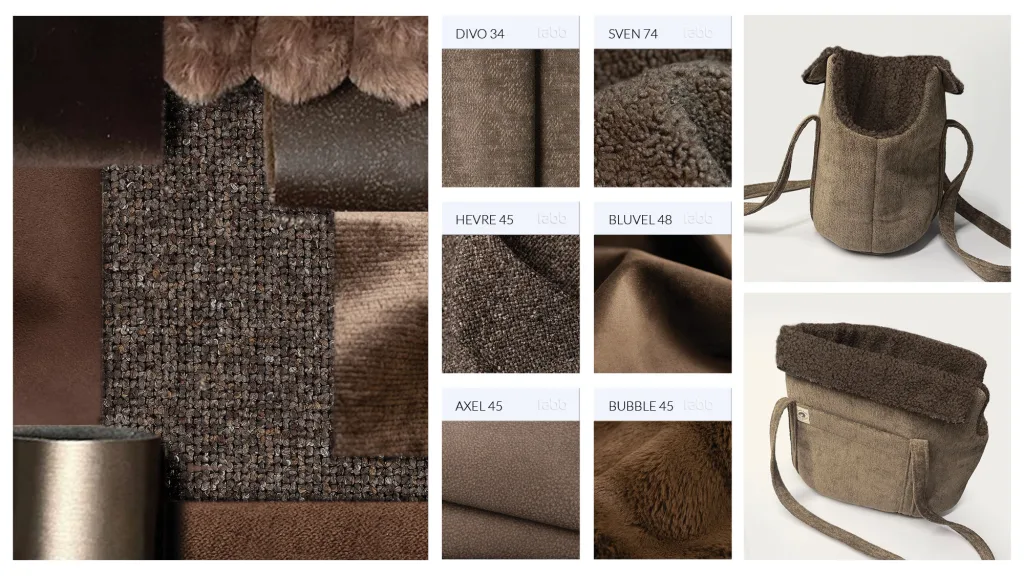
In the FABB PETS catalogue, we have brought together a selection of fabrics worth considering when designing pet beds and other pet products.
A fabric hanger or fabric by the metre for your prototype?
It is worth looking for a fabric with a pleasant feel and documented resistance to snagging and abrasion. Pilling resistance, seam strength and care recommendations are also important. The final choice is best tested on a pet bed prototype.
It does not mean complete resistance to damage. Snagging resistance test results help compare fabrics, but they do not guarantee that the surface will withstand all scratching or biting.
No. The Martindale test measures abrasion resistance. It does not assess snagging, staining or washability, so the fabric’s other properties must also be considered.
A technical fabric with a non-slip finish, such as ANTURA, is worth considering. Its performance should be tested on the finished pet bed and on the type of flooring where the product will be used.
Only if the care instructions for all its components allow it. A removable cover is not automatically machine washable. The recommended cleaning method should be clearly stated in the pet bed’s care instructions.
It is also worth exploring the OA range of pet bed cleaning and odour neutralising products.
The pet-friendly label alone does not guarantee easy pet hair removal. Surface texture, the type of pet hair and the cleaning method all play a role. It is worth testing this in practice before choosing a fabric for your collection.
No. They can serve different purposes. The sleeping surface can be made from a fabric chosen for its softness and appearance, while the base can use a material that helps prevent the pet bed from slipping.