
MOO: the material that can start an entire collection
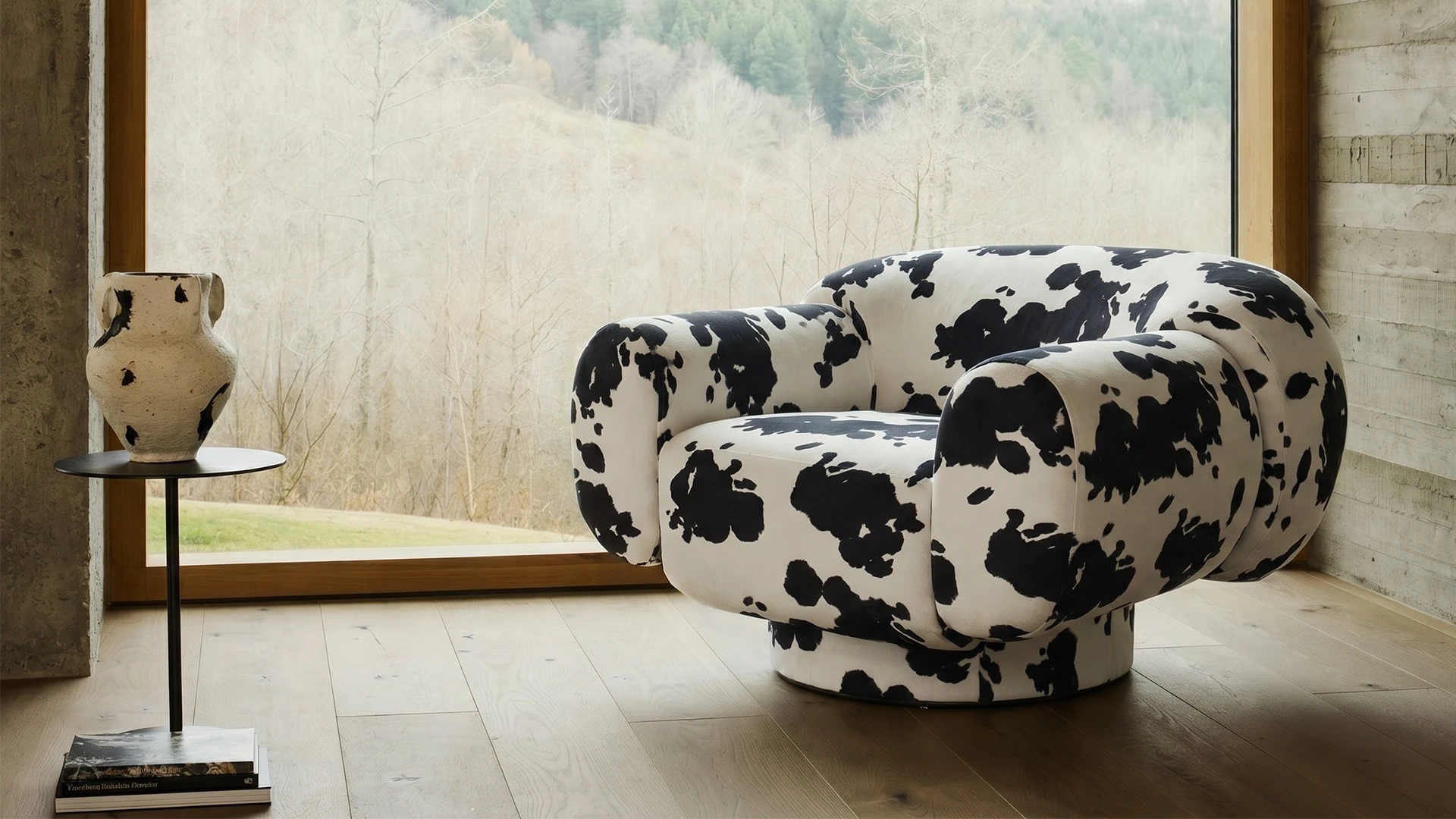
The most interesting piece of furniture on a stand is not always the one that will sell in the highest numbers. Sometimes its job is to make a customer stop and notice the brand before they even ask about price, options or delivery times.
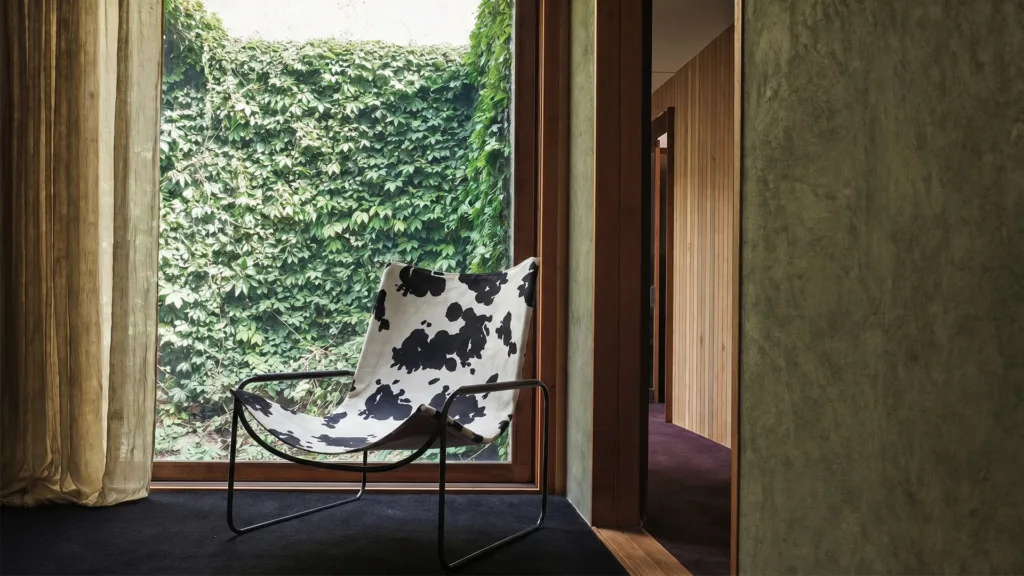
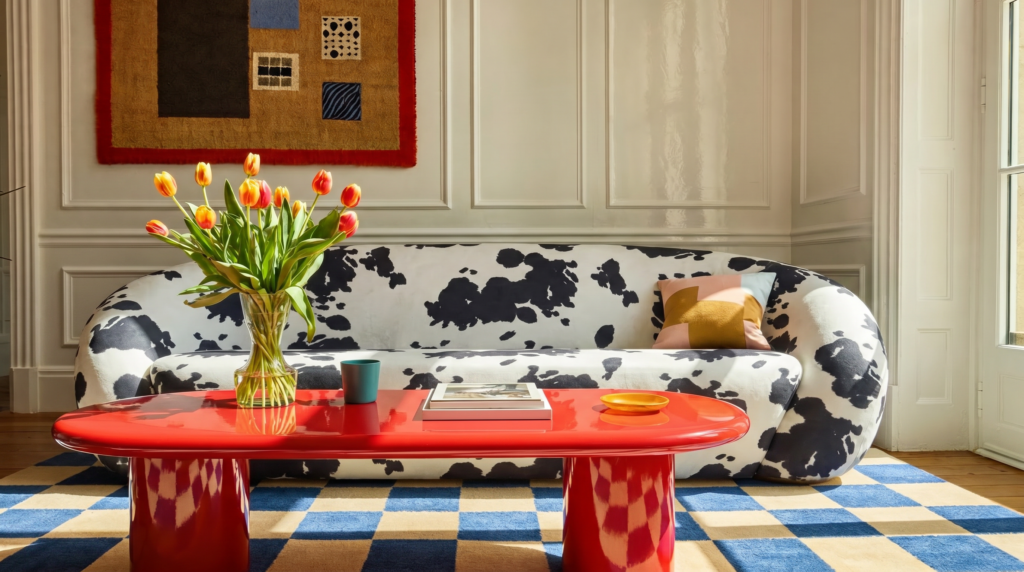
That is exactly the role MOO was created for. Not as a quiet backdrop for another sofa, nor as a pattern intended to cover every model in a collection. MOO is an upholstery knit for pieces that open a collection, lead a campaign and give a showroom display its own rhythm.
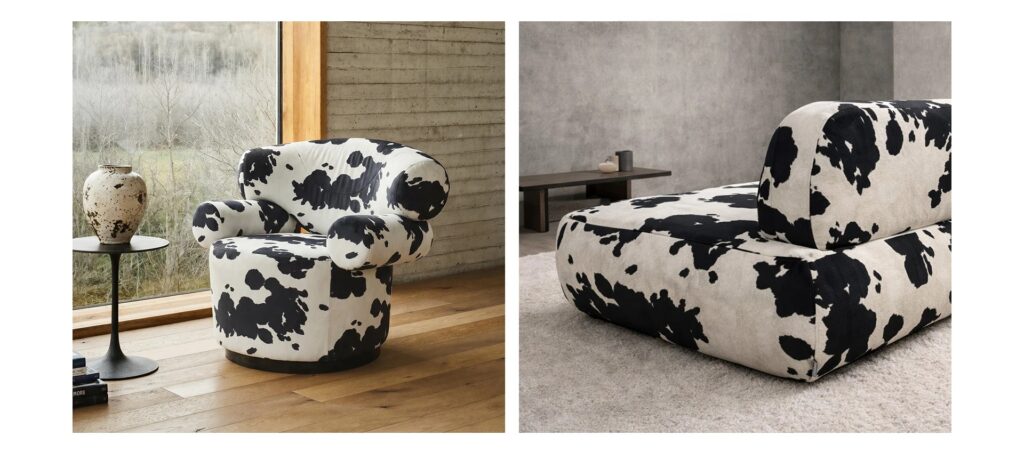
Cow print has moved beyond the Western look
For years, cow print remained closely associated with ranches, rodeos and cowboy styling. Fashion, however, recognised quite early that irregular patches could work as a strong graphic element without bringing the entire Wild West aesthetic with them.
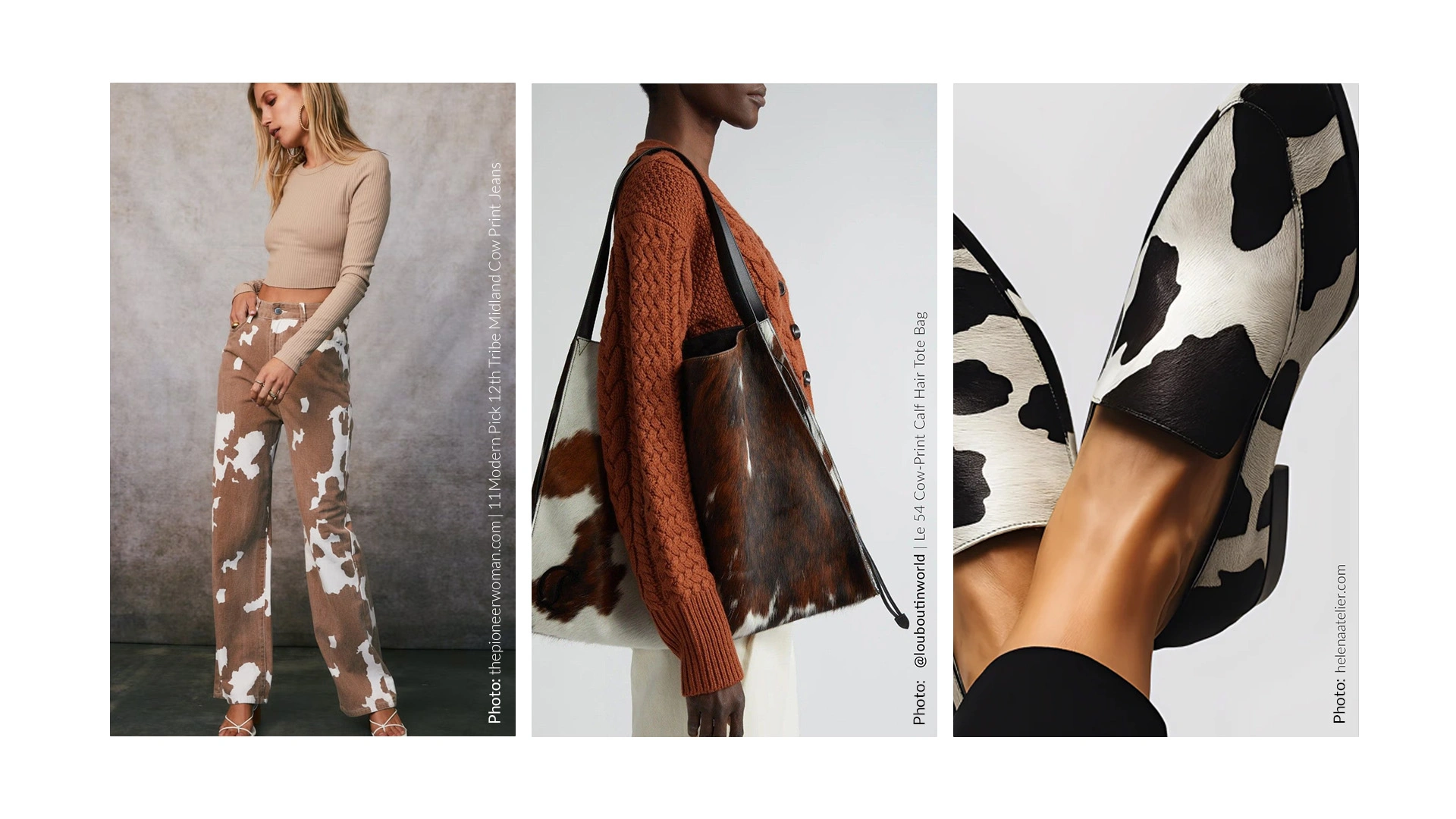
British Vogue points to Prada’s Spring/Summer 1991 collection as a moment when cow print emerged as a less obvious alternative to leopard print. Leopard creates a dense, decorative rhythm. Zebra leads the eye through lines. Cow print is built from larger areas of colour, leaving more visual breathing room between them.
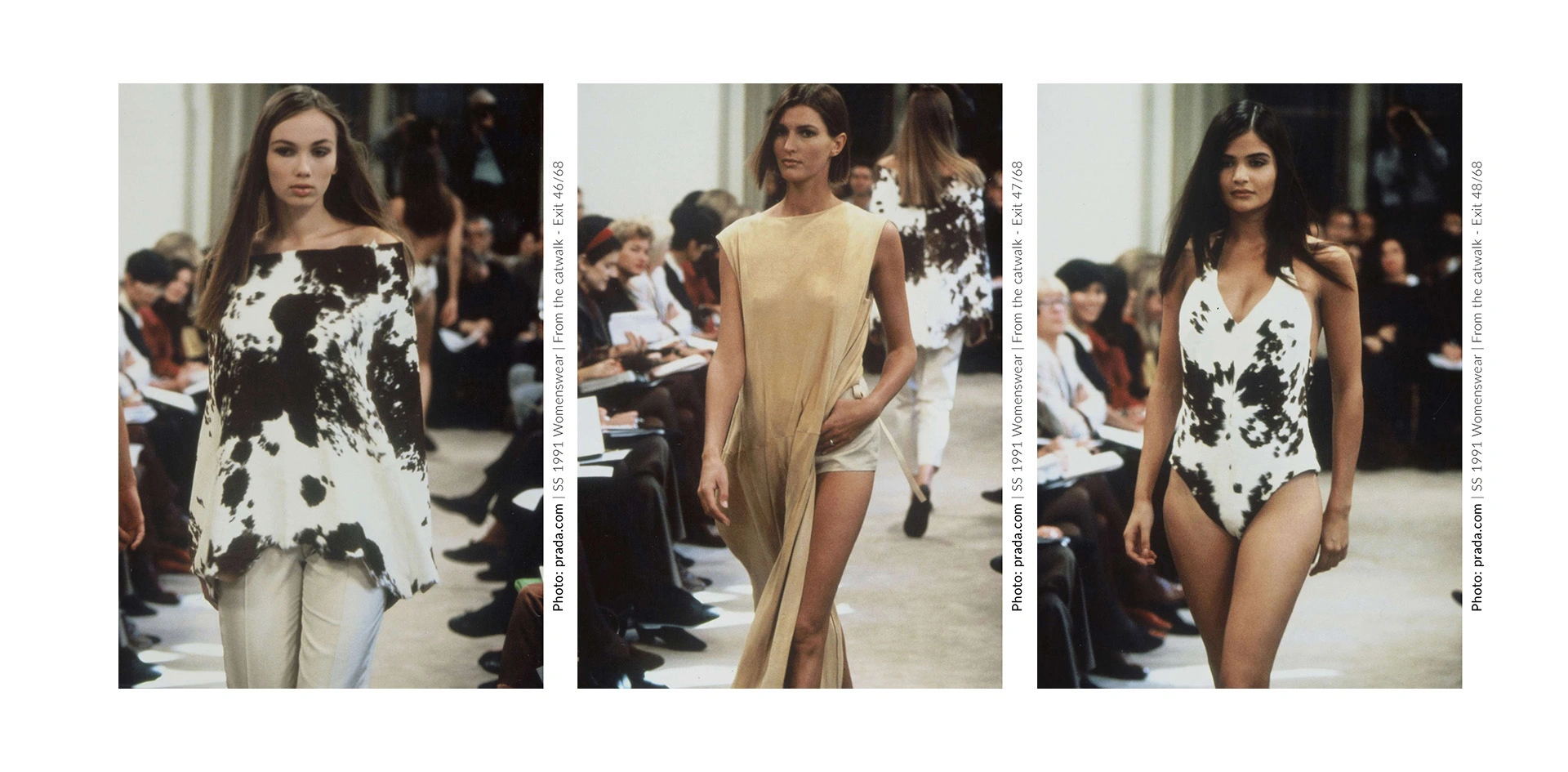
Seen up close, it is clearly an animal-inspired motif. From several metres away, it begins to read almost like an organic abstraction. Paired with wood and beige tones, it becomes softer. Alongside chrome, black and stone, it takes on a more architectural character.
The pattern alone does not define the direction. The furniture does.
A contrast rooted in design history
The cowhide look did not begin with Instagram. For almost a century, it has appeared in designs where an organic surface breaks the discipline of a precise structure.
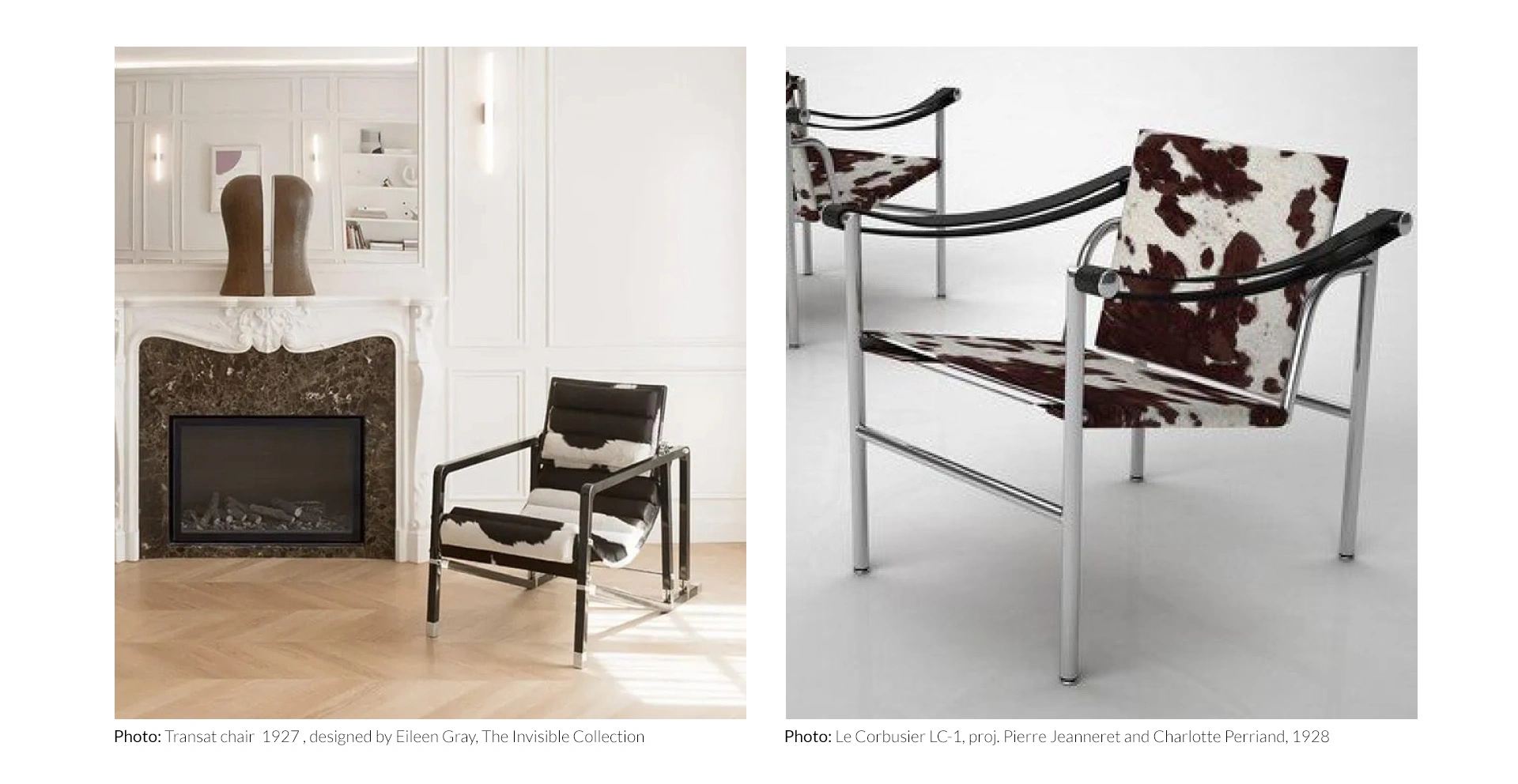
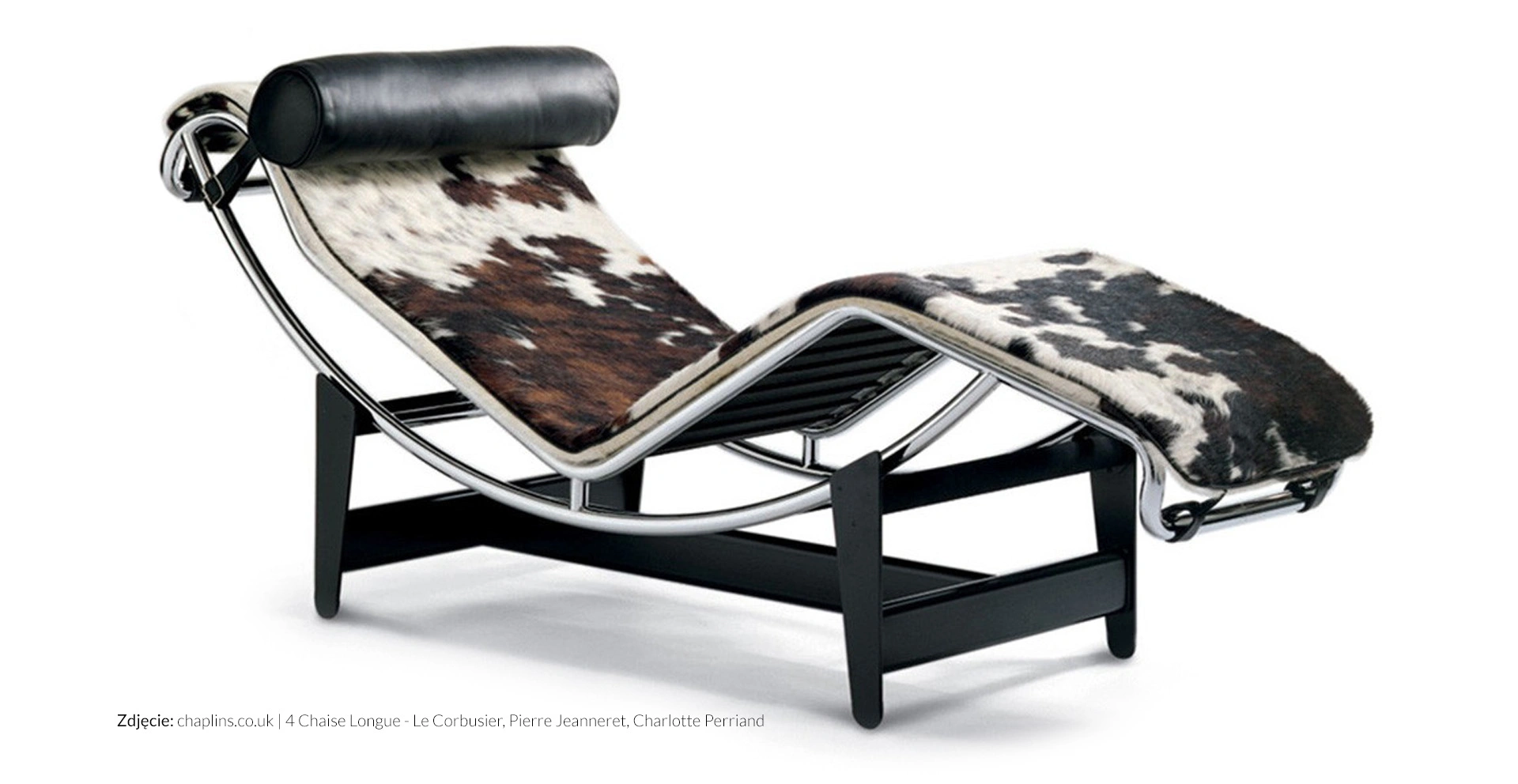
A strong example is the LC4 chaise longue, designed in 1928 by Charlotte Perriand, Le Corbusier and Pierre Jeanneret. In one of its most recognisable versions, a chrome, almost technical frame is paired with hide retaining its natural hair. The geometry is precise; the surface is unpredictable. The structure remains controlled while the material introduces an element of chance.
For furniture manufacturers, there is a useful lesson here: creating something distinctive does not always require another complicated form. Sometimes a proven model and the right material are enough to show it from an entirely different perspective.
MOO needs surface, not decoration
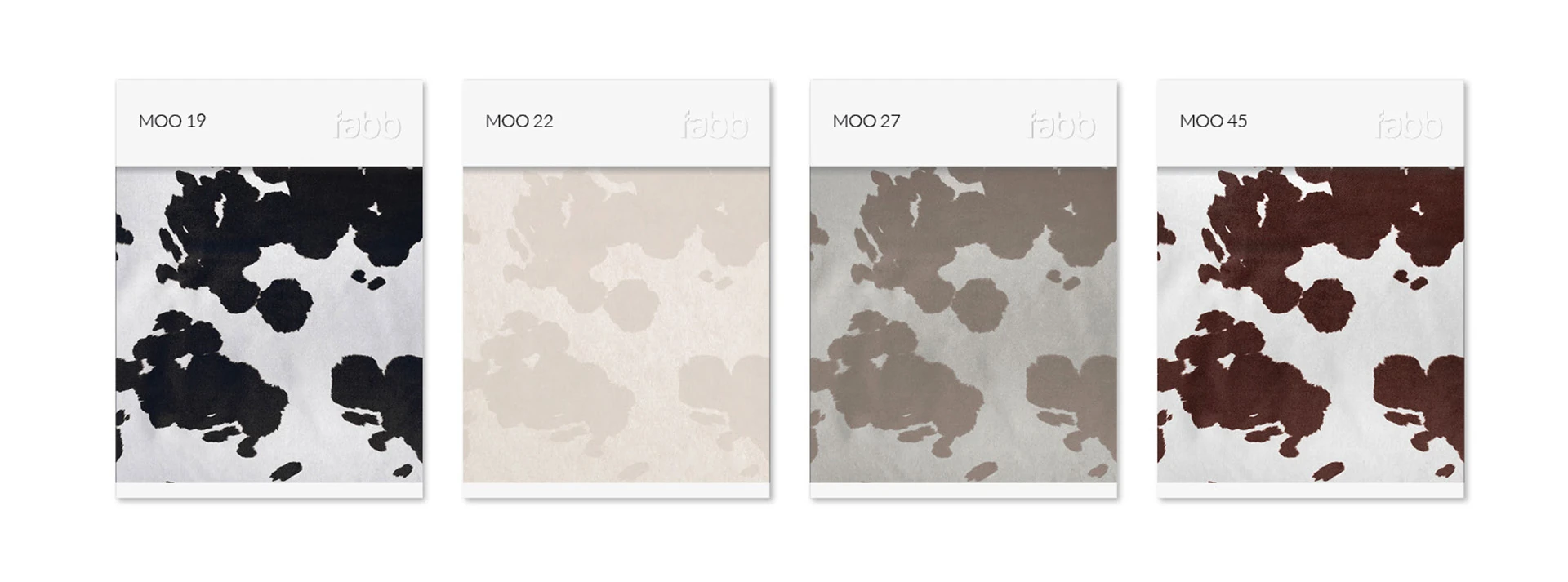
A large-scale pattern works best across calm, uninterrupted surfaces that allow its proportions to remain visible. With MOO, design discipline is a greater advantage than adding another decorative detail.
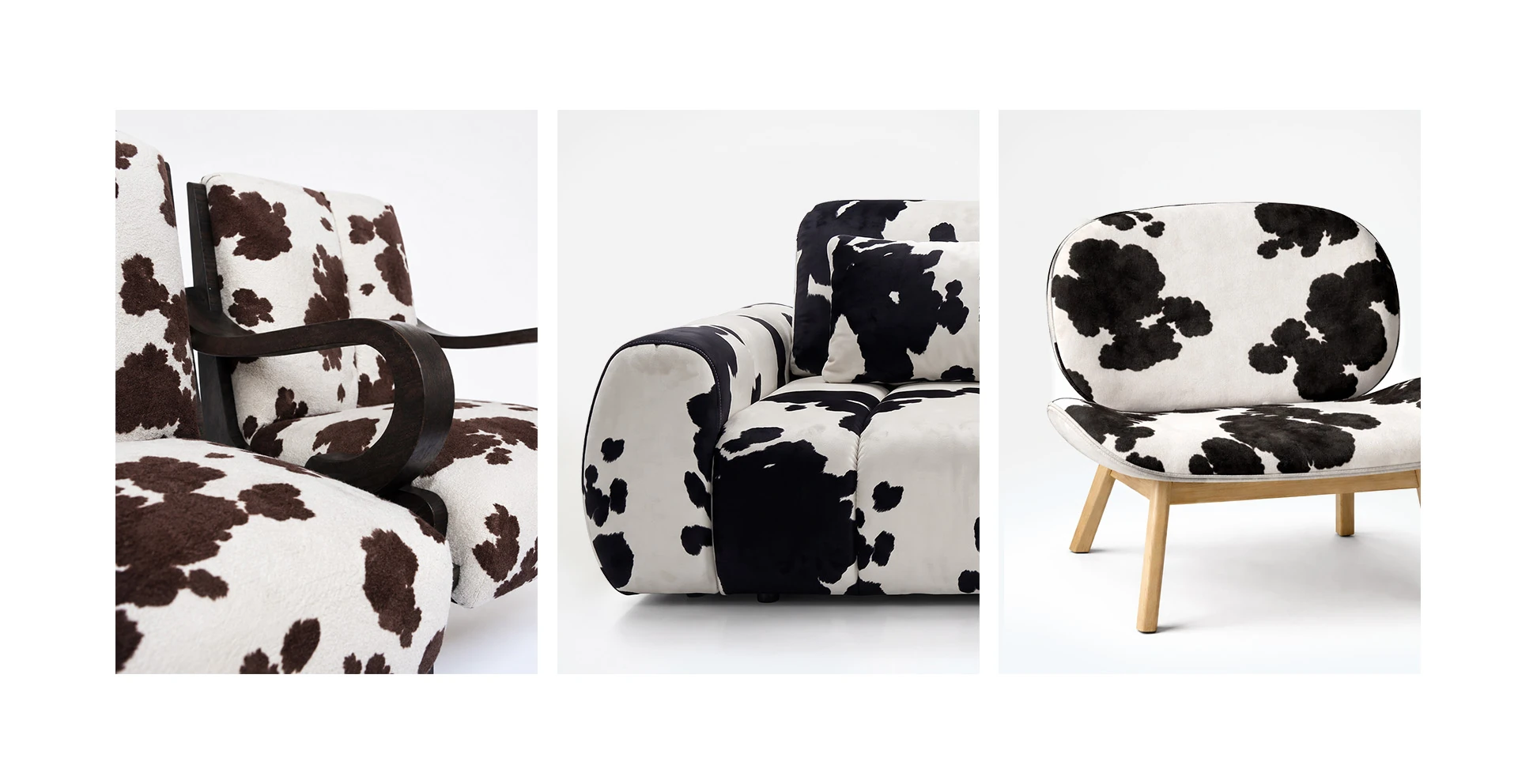
The same principle applies to its palette of four colours. This is not a reduced version of a broad basic collection, but a deliberate selection created for accent pieces. It gives manufacturers clear directions that are easier to translate into furniture forms, campaigns and commercial presentations.
The right company matters
The most interesting interiors do not place every statement element side by side. They build hierarchy.
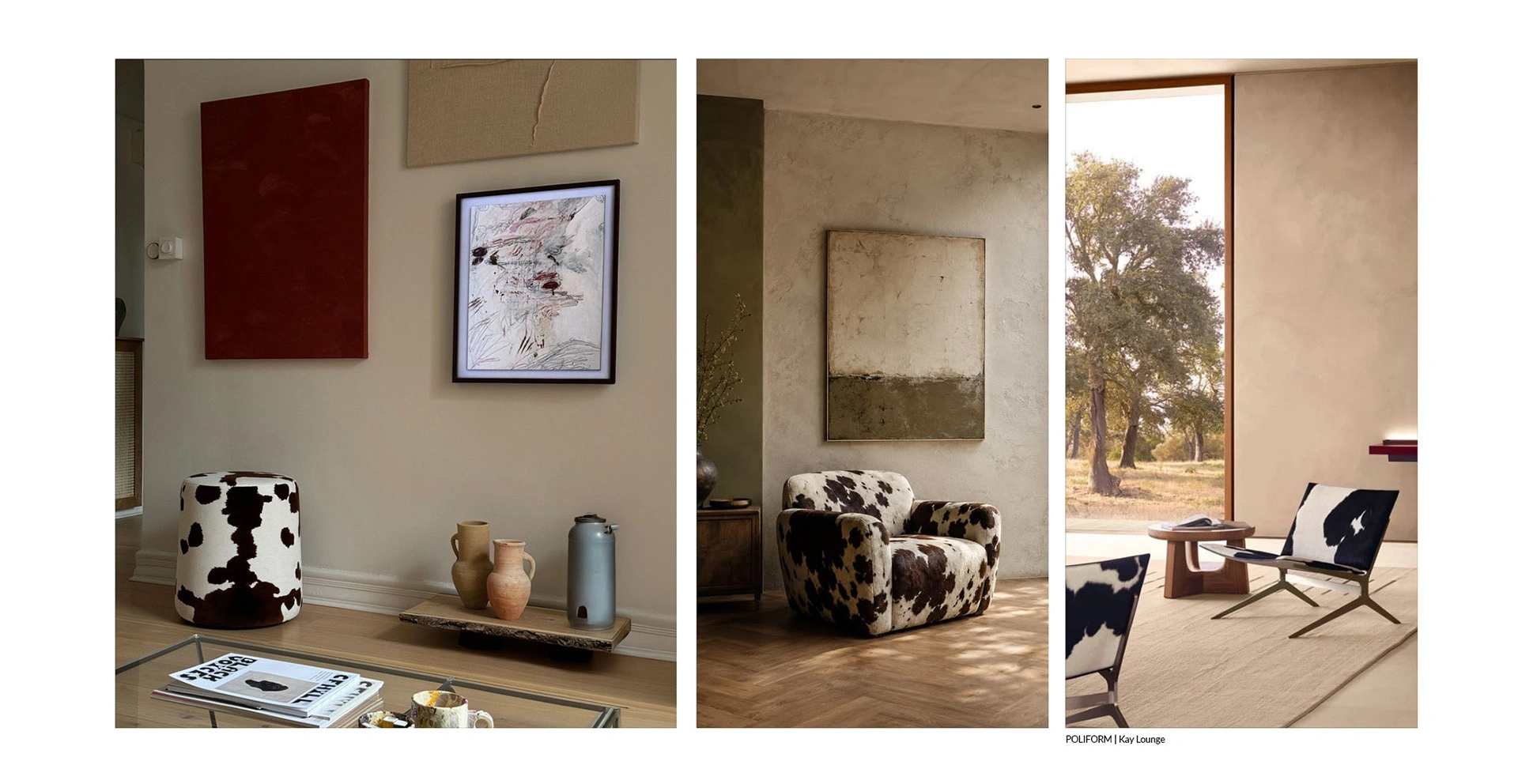
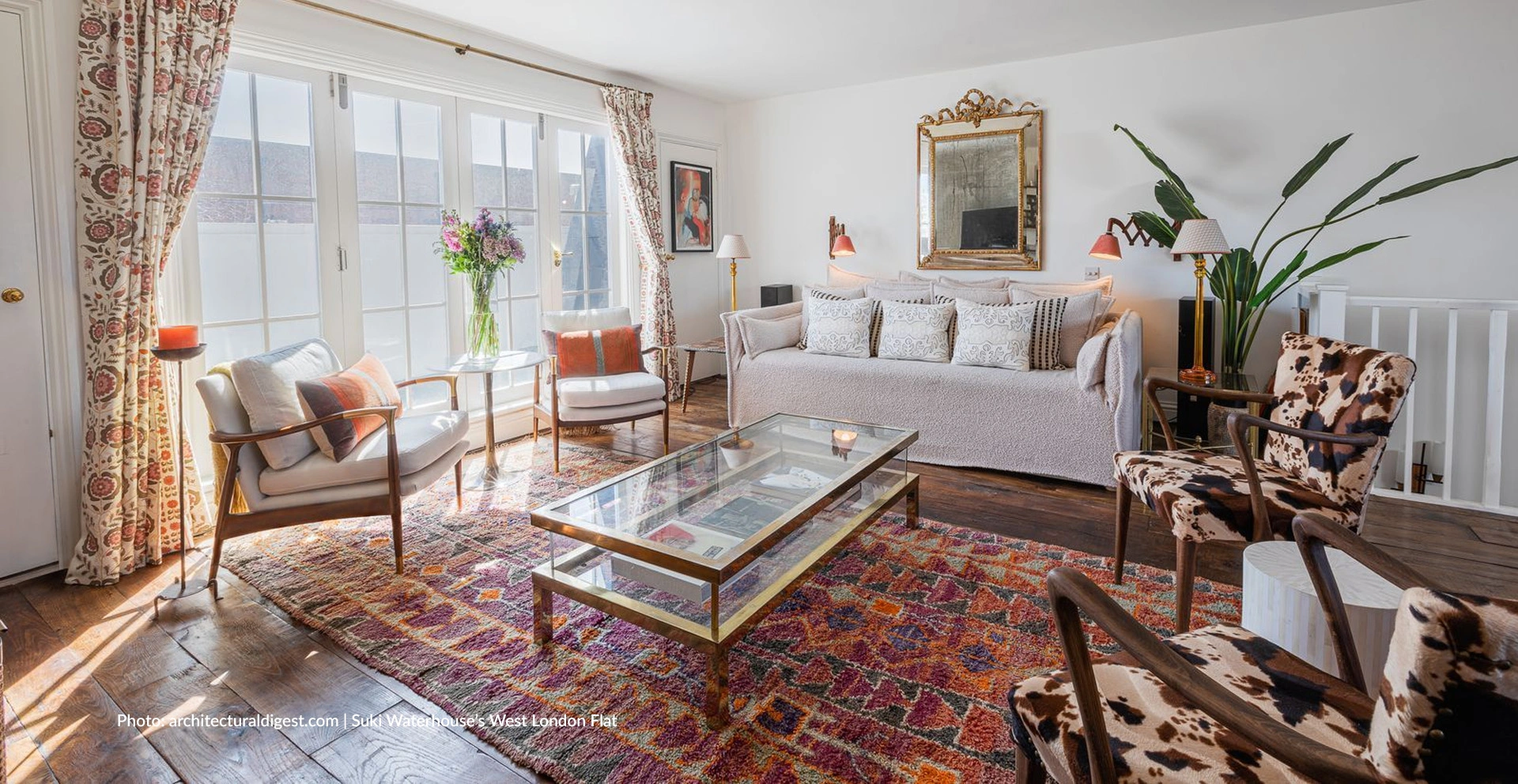
In Suki Waterhouse’s London home, cowhide seating is paired with a large bouclé sofa. The graphic pattern remains on the smaller pieces, while the fuller, tactile surface of the sofa introduces softness.
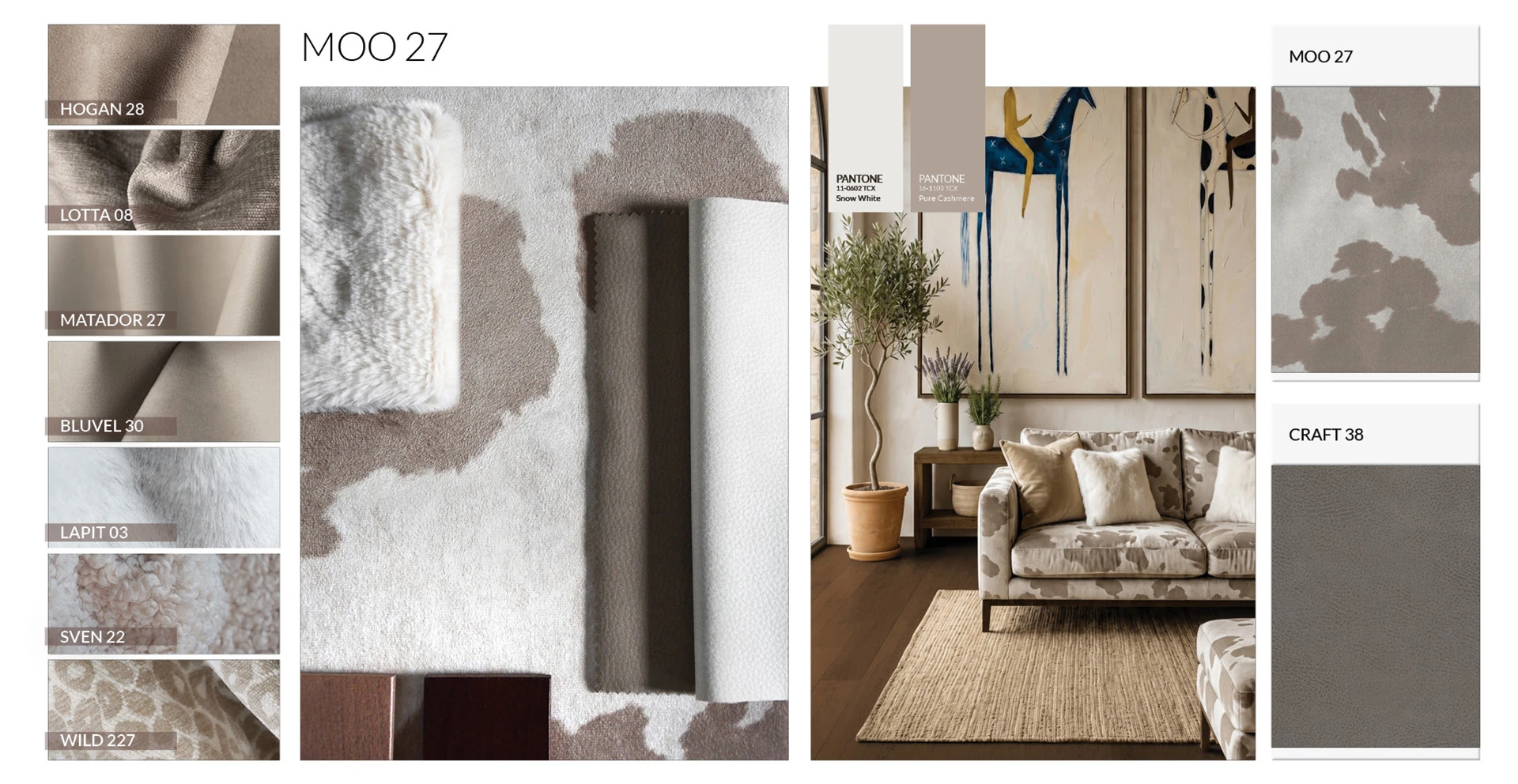
The same logic can be applied across FABB collections. An armchair or pouf upholstered in MOO can sit alongside a larger piece in the furry MELLO or sherpa-like SVEN. MOO brings the graphic element; MELLO and SVEN provide softness. Matador or Hogan can calm the composition and connect both worlds with a more disciplined surface. The objective is not to show as many materials as possible. It is to give each of them a clearly defined role.
Visual impact is only the beginning. Performance comes next
MOO attracts attention, but its role does not end with the campaign image.
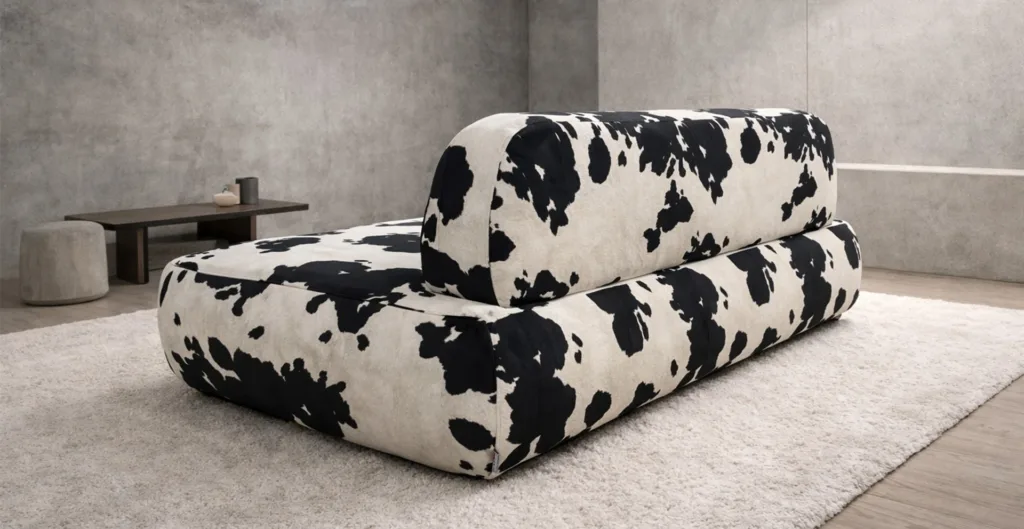
The knit has a weight of 360 g/m², while its soft backing gives it a fuller hand on the finished piece of furniture. A slight degree of stretch helps the material follow softer and more rounded forms. A Martindale result of 50,000 cycles makes it suitable for furniture intended for everyday use, while light fastness of 4–5 is particularly relevant in bright interiors.
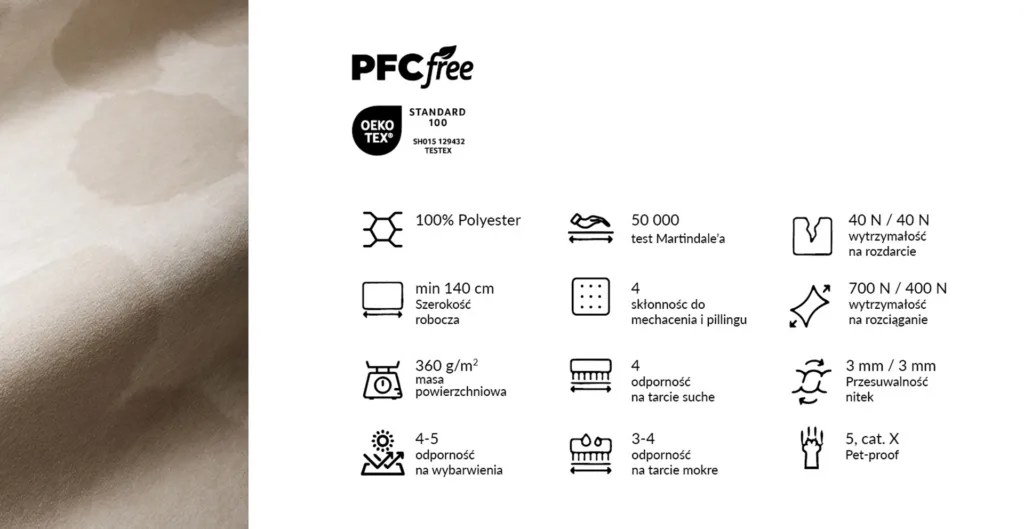
MOO also stands out for its very good snag resistance and passes the cigarette test. This gives sales teams something more substantial than an argument based solely on a fashionable pattern. First, the furniture attracts attention. Then the material’s performance supports the decision.
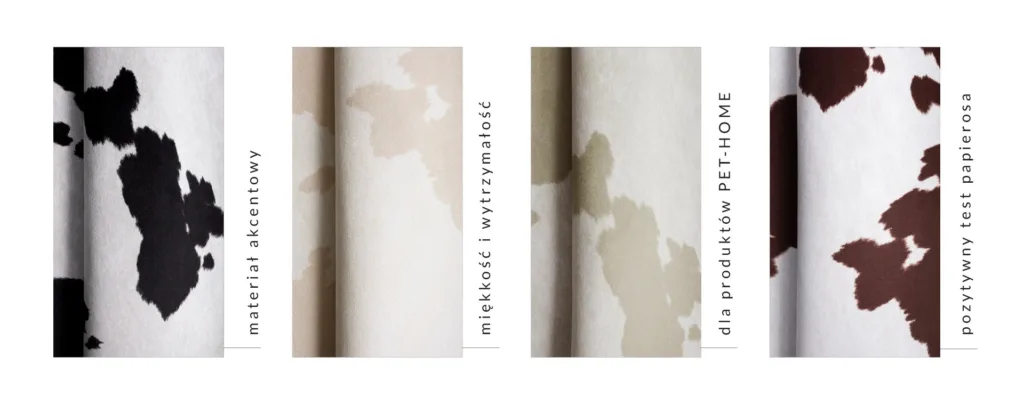
Beyond conventional furniture
Pet-home products are another interesting direction for MOO. The pet furniture market is increasingly moving towards products that combine comfort, durability and considered design. A pet bed is no longer necessarily something hidden in a corner; it can become part of the living-room interior.
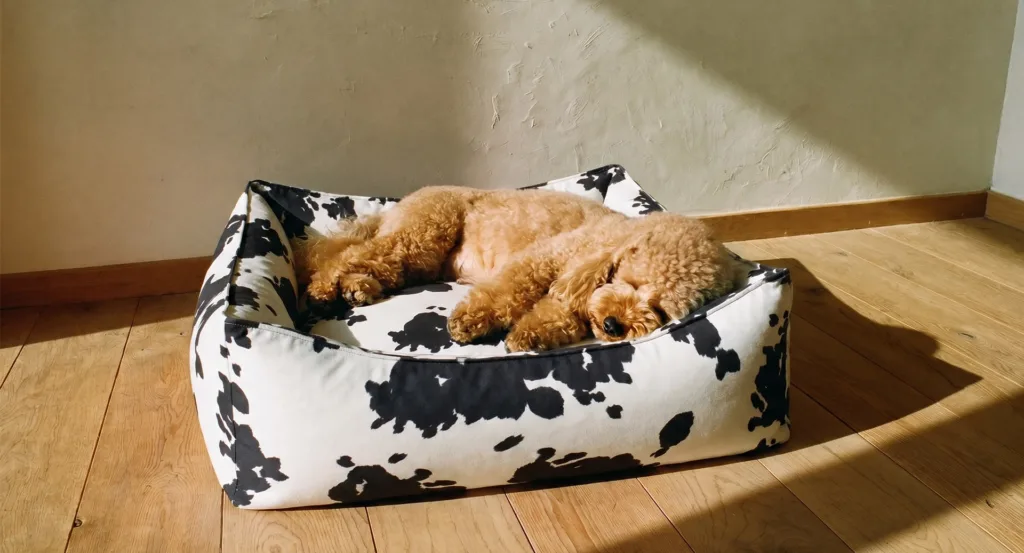
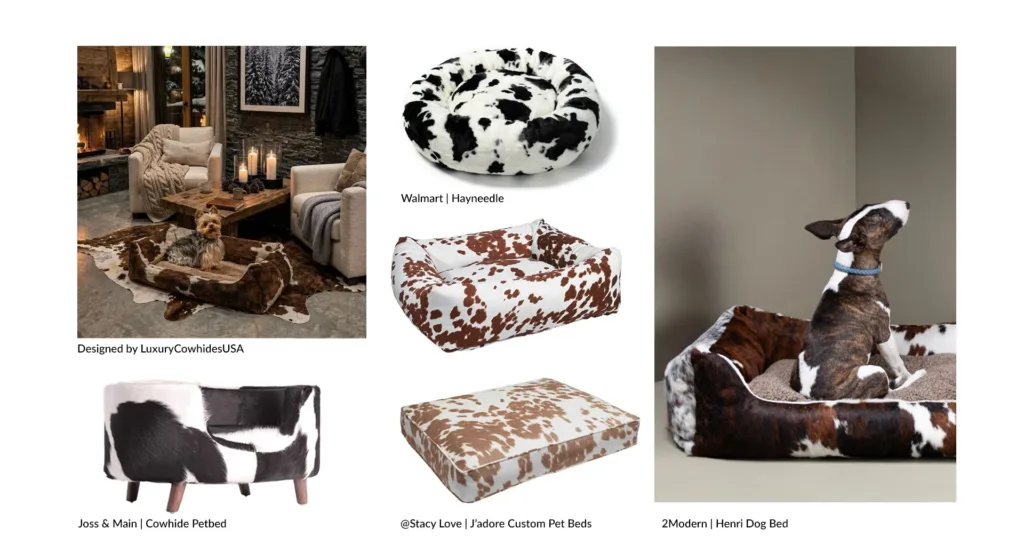
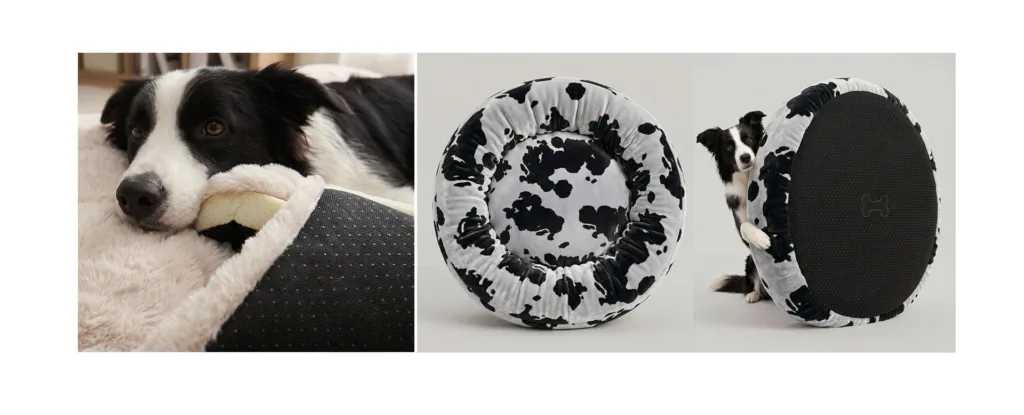
Used on a simple pet-bed form, MOO can give the product the character of a small pouf or soft module placed next to a sofa. Combined with ANTURA, an anti-slip material designed for the underside, it creates a solution with a clear division of functions: MOO provides the look and softness, while ANTURA supports stability.
Not everything has to be neutral
The furniture industry needs commercially reliable beiges, greys and understated textures. They account for a significant part of sales.
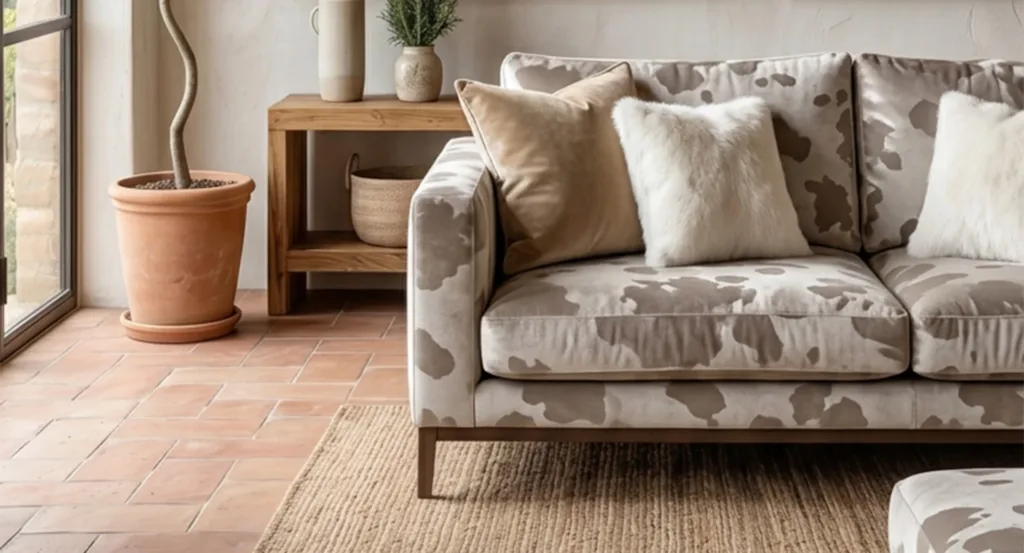
MOO is not intended to replace that neutral foundation. Its role is to give it context, break predictability and create the piece that starts a conversation about the rest of the collection.
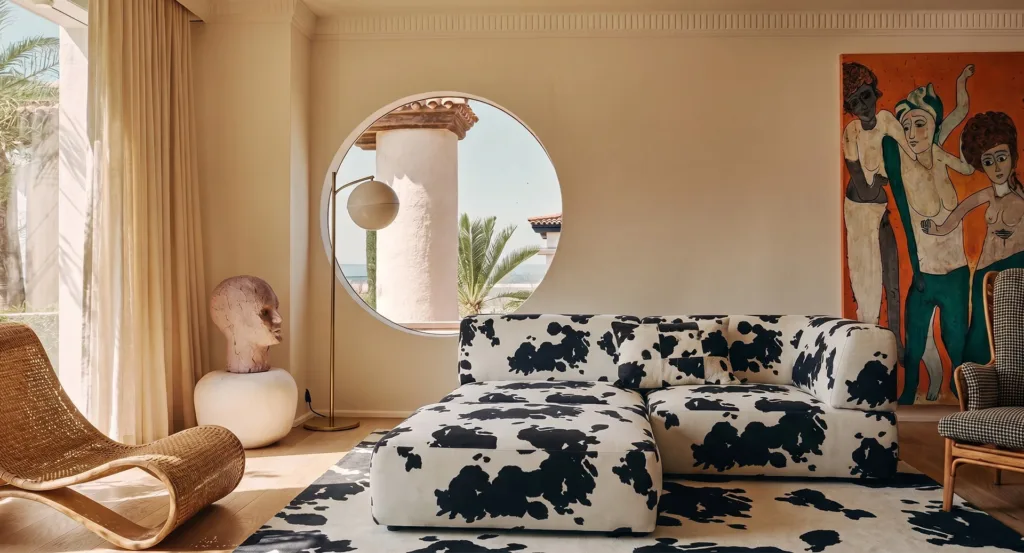
Because sometimes the most important piece in a collection is not the one that sells most often.
It is the one that makes the customer want to see everything else.
Want to see and feel MOO in person? We can send you a sample hanger or arrange meterage for a prototype piece.